


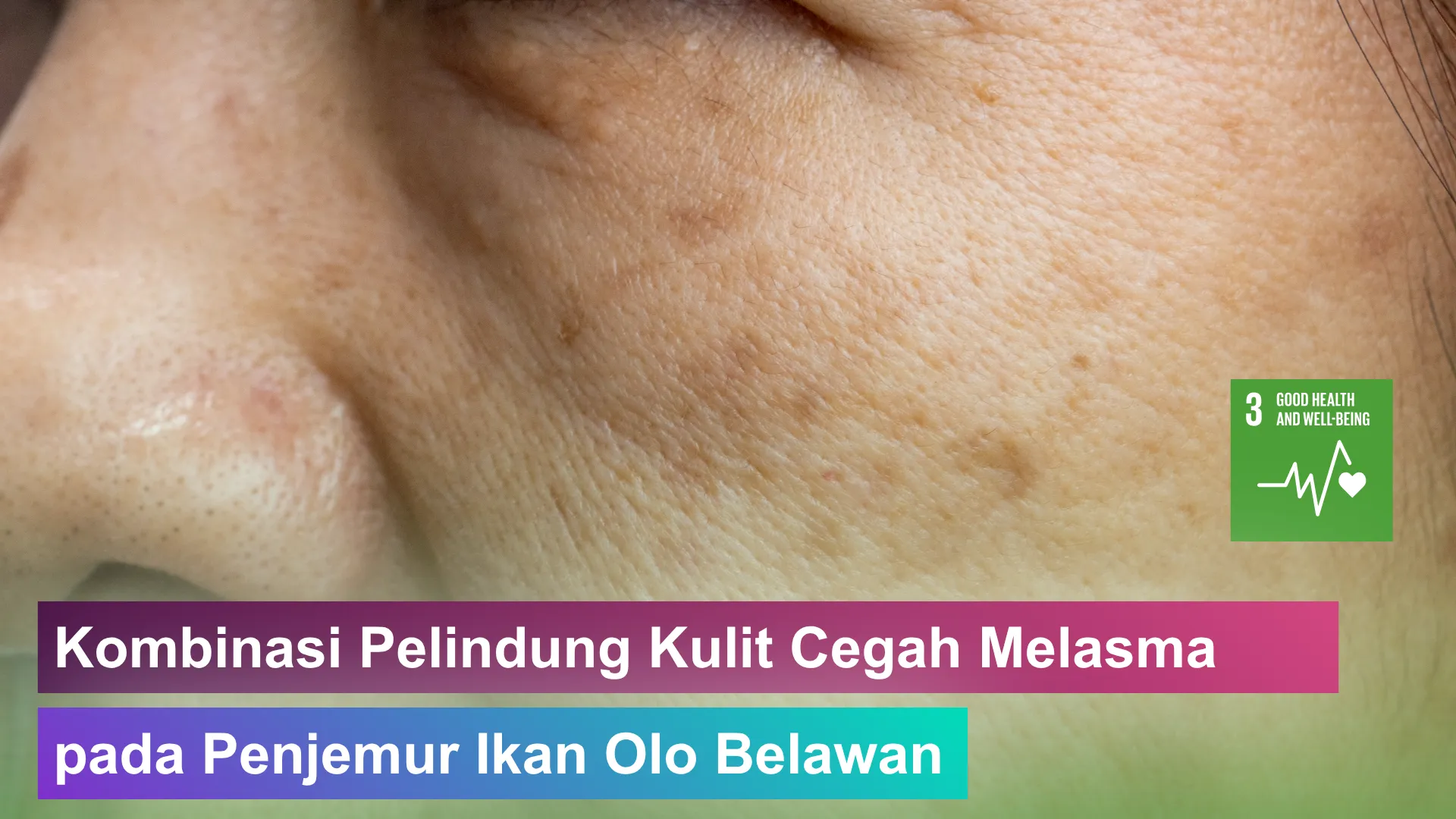
Melasma is a chronic hyperpigmentation disorder that causes dark patches to appear on the face, particularly on the cheeks, forehead, and nose. This condition is influenced by genetic factors, hormones, and exposure to ultraviolet radiation. In Southeast Asia, the prevalence of melasma among women has been reported to reach approximately 40 percent, and the figure can rise to 50 percent during pregnancy. In addition to physical concerns, melasma also affects sufferers' self-confidence and quality of life.
Workers who are exposed to sunlight for extended periods are among the high-risk groups. In Olo Belawan, Medan Belawan, salted fish processing is one of the main economic sectors, and the majority of its workers are women. They typically work from 10:00 a.m. to 6:00 p.m. under intense sunlight. This situation prompted the dermatology and medical science team from Universitas Sumatera Utara (USU) to investigate the most effective methods of protection.
The study was led by Dina Arwina Dalimunthe from the Department of Dermatology and Venereology, Faculty of Medicine, USU, together with Nayla Zahirah from the Medical Education Study Program, Ester Lantika Ronauli Silaen from the Department of Anesthesiology and Intensive Care, and Ferryan Sofyan from the Department of Ear, Nose, and Throat.
Who Was Studied and How
This study was an observational analytical study with a cross-sectional design, conducted at Olo Belawan Beach between July and November 2024. Participants were women working as fish-drying workers, selected using the consecutive sampling method until the required sample size was reached. There were 61 participants in total. All participants were exposed to sunlight for more than five hours per day.
Data were collected through structured interviews using questionnaires on age, sunscreen use, and physical protection. The physical protection methods assessed included hats or head coverings, long-sleeved clothing, gloves, masks, and footwear. Participants using one to two types of protection were classified as having low usage, while those using three to five types were classified as having high usage. The researchers then examined each participant's face and documented three facial views—the front, left, and right sides—to determine whether melasma was present.
What Was Found
Of the 61 participants, 25 (41 percent) had melasma, while 36 did not. A total of 57.4 percent of participants did not use sunscreen, while 42.6 percent did. Physical protection was much more commonly used: 83.6 percent of participants were classified as high users, with hats and long-sleeved clothing being the most frequently used forms of protection.
The association between sunscreen use and melasma was very strong. Of the 25 participants with melasma, 21 did not use sunscreen. Conversely, among the 26 sunscreen users, only 4 had melasma. This difference was statistically significant (p = 0.001).
Physical protection alone did not show a significant association with the incidence of melasma (p = 0.616). A combined analysis of sunscreen and physical protection used together showed a significant association (p = 0.001). The authors concluded that combining both measures provided the best protection.
Implications for Workers and Policymakers
The authors emphasize that physical protection alone is insufficient, particularly for workers who still have areas of skin exposed to sunlight. They recommend education on the importance of regular sunscreen use among women working in coastal areas. This study is also expected to serve as a basis for recommendations on melasma prevention among other groups of outdoor workers.
Key Research Points
A cross-sectional study involving 61 female fish-drying workers at Olo Belawan Beach, Medan, from July to November 2024.
The incidence of melasma was 41 percent. Of the 25 affected participants, 21 did not use sunscreen.
Sunscreen use was significantly associated with a lower incidence of melasma (p = 0.001).
Physical protection alone was not significantly associated with melasma (p = 0.616).
The combination of sunscreen and physical protection was significantly associated with the incidence of melasma (p = 0.001).
The study was observational, with a small sample and a single study location, so its findings cannot yet be generalized.
Author
Khairul Azmi
Source/Researcher
Dr. dr. Dina Arwina Dalimunthe, M.Ked(KK), Sp.D.V.E., Subsp. D.T., FINSDV, FAAD