


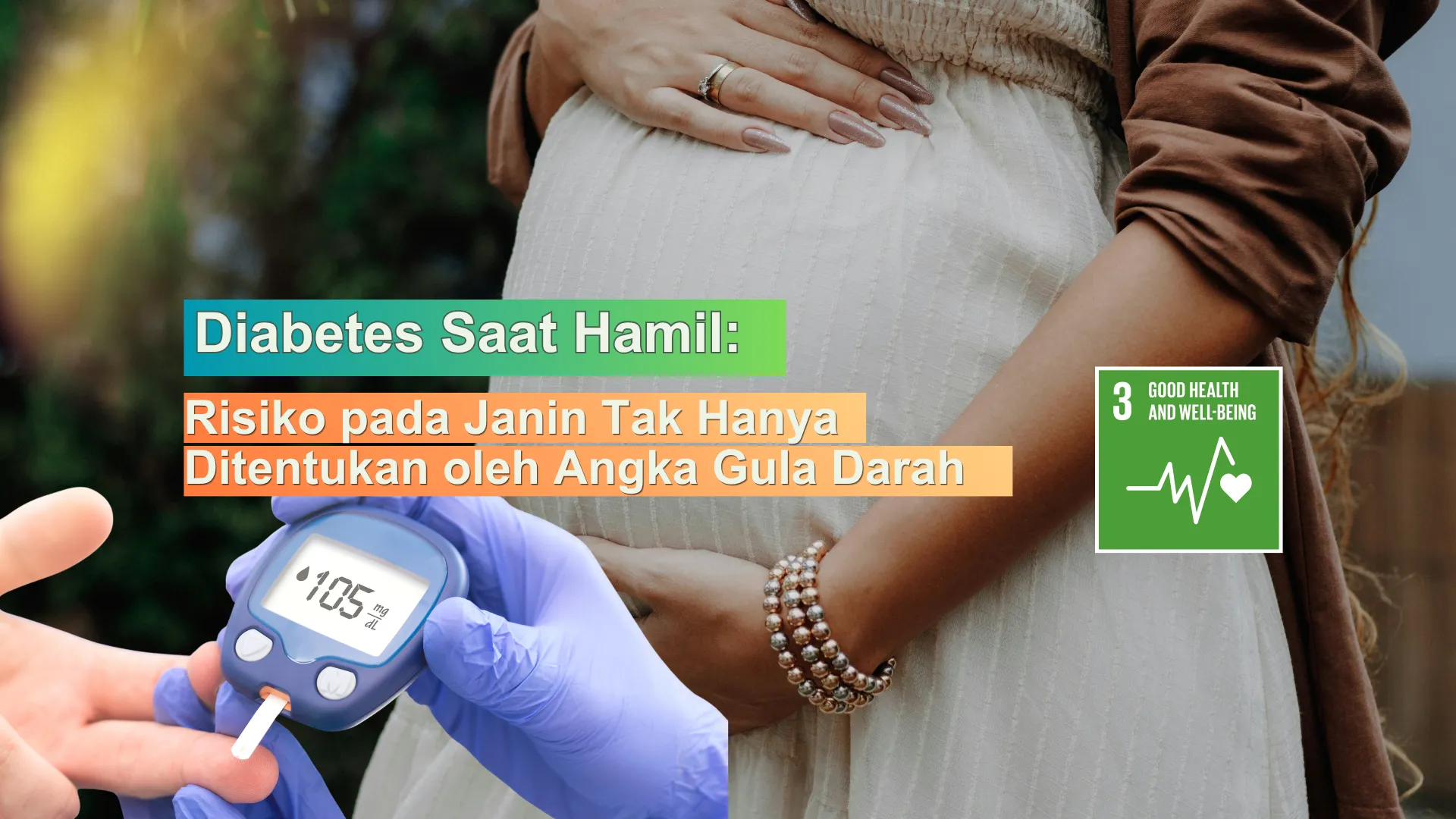
Managing blood sugar levels is an important part of caring for pregnancies complicated by diabetes. However, a systematic review led by Prof. Dr. dr. Sarma Nursani Lumbanraja and 24 other authors shows that the risk of fetal death cannot always be understood based on a single blood sugar test result.
The authors reviewed 39 studies on pregnancies complicated by diabetes, including diabetes that existed before pregnancy and diabetes that developed during pregnancy. They found that the risk of fetal death was still reported even when care followed clinical guidelines. This means that monitoring and managing diabetes remain important, but they cannot always eliminate all risks.
Looking at Changes, Not Just Average Levels
Changes in blood sugar levels over time can provide different indications from simply looking at average levels. Changes in insulin requirements toward the end of pregnancy also emerged as one of the factors requiring attention in the studies reviewed.
In addition to the mother's blood sugar levels, the studies highlighted the placenta—the organ that supplies oxygen and nutrients from the mother to the fetus. Changes in the structure and blood vessels of the placenta, as well as certain signs related to fetal growth and heart development, may also be associated with the risk. These findings illustrate that pregnancy involves many interconnected processes. Therefore, the conditions of the mother, placenta, and fetus can provide a more comprehensive picture than a single test result.
Some Changes May Be Difficult to Detect Early
The authors explain that some processes leading to fetal death may already be developing before clinical signs are detected. Current monitoring methods may not necessarily be able to identify all these changes in time.
For families, this message does not mean that pregnancy examinations or blood sugar management are ineffective. Both remain important parts of care. This review shows that risk can be influenced by many factors, so monitoring results need to be discussed with healthcare professionals based on the conditions of the mother and fetus.
Key Research Points
This review included 39 studies on fetal death in pregnancies complicated by diabetes.
The risk was still identified in the studies reviewed, including in pregnancies receiving care in accordance with clinical guidelines.
Changes in blood sugar levels and insulin requirements can provide indicators in addition to average blood sugar levels.
Placental conditions, fetal growth, and changes in fetal heart development were also discussed as factors associated with the risk.
This review identifies patterns across various studies; it is not a tool for determining the risk in an individual pregnancy.
News Writer:
Khairul Azmi
Source:
Prof. Dr. dr. Sarma Nursani Lumbanraja, M.Ked(OG), Sp.OG(K)