


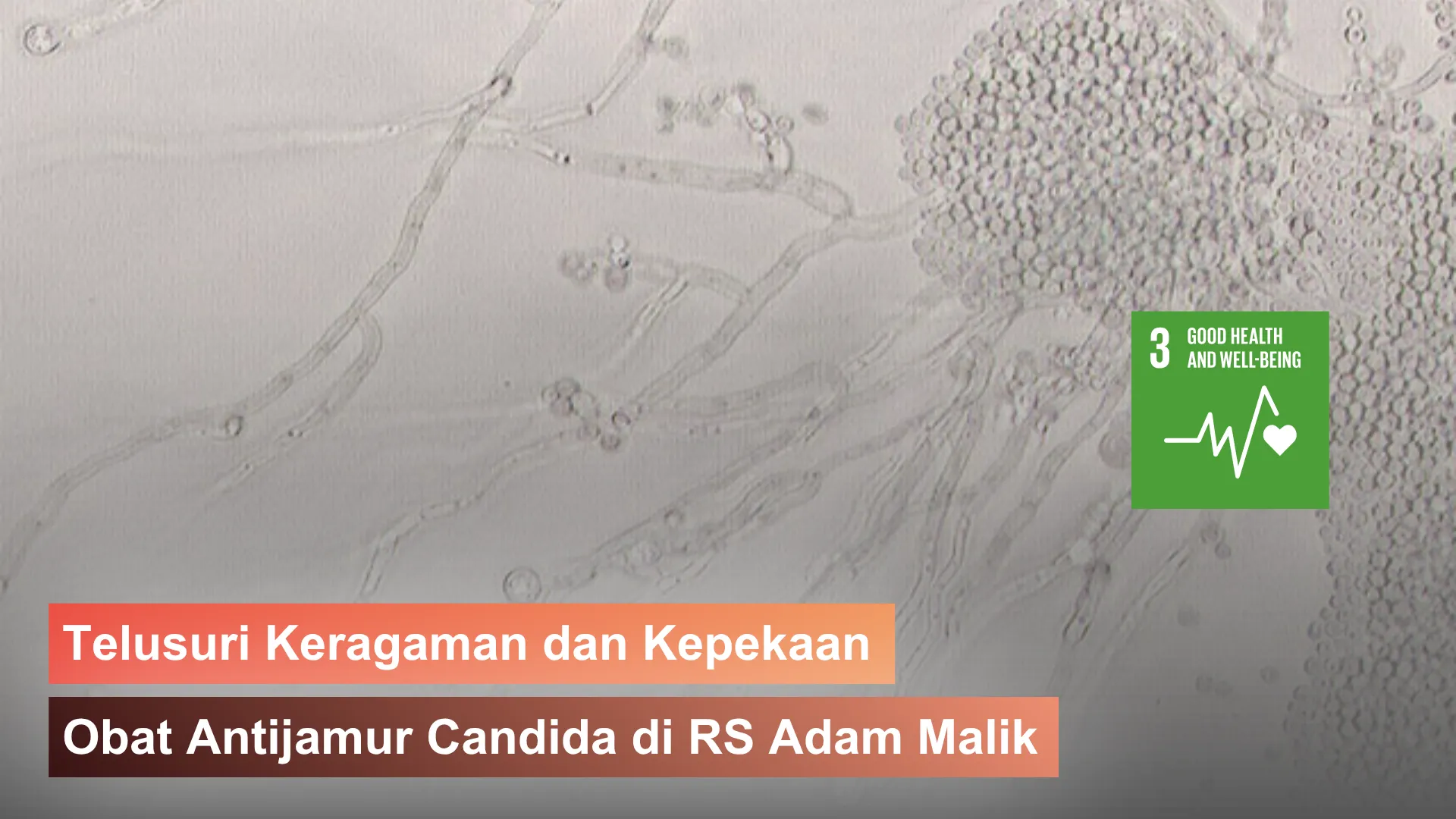
Not all fungi in the human body are harmful. Candida, for example, normally lives on the skin, in the mouth, respiratory tract, and digestive tract. However, in patients with weakened immune systems, those undergoing invasive procedures, receiving prolonged hospital care, or taking multiple antibiotics, this fungus can become a source of serious infection.
Why Monitoring Is Necessary
The researchers cited estimates that approximately 1.565 million people worldwide develop Candida bloodstream infections (candidemia) each year, resulting in around 995,000 deaths. In Indonesia, candidemia is estimated to affect approximately 26,700 people annually. Despite this substantial burden, Indonesia does not yet have comprehensive national data on the distribution of Candida species, and previous studies have generally been limited to specific regions such as Banda Aceh, Surabaya, and Semarang. Monitoring is important because global trends indicate a shift from Candida albicans to non-albicans species such as C. tropicalis, C. glabrata (now also known as Nakaseomyces glabrata), and C. parapsilosis. These species are more frequently associated with reduced drug susceptibility.
Three Years of Data
This retrospective study examined medical records and laboratory data from inpatients whose cultures tested positive for Candida between January 2022 and December 2024. Outpatients were excluded because fungal findings in these patients often merely reflect skin flora or contamination. Species identification was performed using the VITEK2 and MALDI-TOF MS systems, while drug susceptibility testing used VITEK2 AST-YS08 based on CLSI guidelines. The results were as follows.
Of the 2,449 patients, the majority were male (56.84%), admitted to internal medicine wards (59.45%), and aged 55 to 64 years (25.77%).
Most specimens came from the respiratory tract (71.87%), followed by urine (15.84%) and blood (4.74%).
C. albicans remained the most frequently identified species (50.18%), but non-albicans species were nearly as prevalent (49.82%).
The distribution in blood samples was different: C. parapsilosis was the most prevalent (35.34%), followed by C. tropicalis (31.90%) and C. albicans (17.24%).
Among patients under 18 years of age, C. tropicalis accounted for a relatively high proportion (34.92%).
Still Susceptible, with One Major Caveat
Most C. albicans, C. tropicalis, and C. parapsilosis isolates remained susceptible (90% or more) to amphotericin B, caspofungin, flucytosine, fluconazole, micafungin, and voriconazole. For C. albicans, for example, susceptibility to fluconazole reached 96.81% and to voriconazole 97.03%. One striking exception was C. glabrata: only 19.79% of its isolates were classified as susceptible to caspofungin, while 53.80% were intermediate and 26.39% were resistant. Among blood isolates of C. glabrata, susceptibility to caspofungin was only 8%. This finding is important because echinocandins such as caspofungin are a first-line treatment option for C. glabrata infections. However, the authors themselves cautioned that caspofungin susceptibility test results often vary between laboratories and may therefore incorrectly indicate resistance. Confirmation through FKS gene detection or broth microdilution testing could not yet be performed at their facility.
The authors also noted reduced susceptibility to voriconazole among C. parapsilosis isolates from the respiratory tract (80%), which they believe warrants further investigation.
One clinical message emphasized by this study is that the presence of Candida in sputum or urine does not necessarily indicate an infection. Since most isolates came from the respiratory tract and urine, the authors suspect that many of them reflect colonization rather than disease. Clinical data to distinguish between the two were not collected in this study. The authors recommend that doctors comprehensively assess patients' clinical conditions and immune status before administering antifungal drugs, as treatment given for colonization may not necessarily improve patient outcomes. They call for the rational use of azole antifungals to prevent the development of resistance, vigilance regarding the predominance of C. parapsilosis in blood samples (including through central venous catheter management), and further research combining clinical data with molecular confirmation.
Key Research Points
A retrospective cross-sectional study at Adam Malik Hospital Medan (2022–2024) involving 2,449 inpatients with Candida-positive cultures.
C. albicans accounted for 50.18% and non-albicans species for 49.82%, with C. tropicalis and C. glabrata being the two most prevalent non-albicans species in almost all specimen types.
C. parapsilosis was the most prevalent species in blood samples (35.34%).
Respiratory tract specimens predominated (71.87%), meaning that many isolates likely reflected colonization.
Susceptibility was generally high (90% or more) among the three main species, but only 19.79% of C. glabrata isolates were susceptible to caspofungin.
Caspofungin resistance in C. glabrata has not been confirmed through molecular testing or broth microdilution.
The authors recommend continuous monitoring and the rational use of azoles.
Author
Khairul Azmi
Resource Person/Researcher
dr. Evita Mayasari, M.Kes, Ph.D