


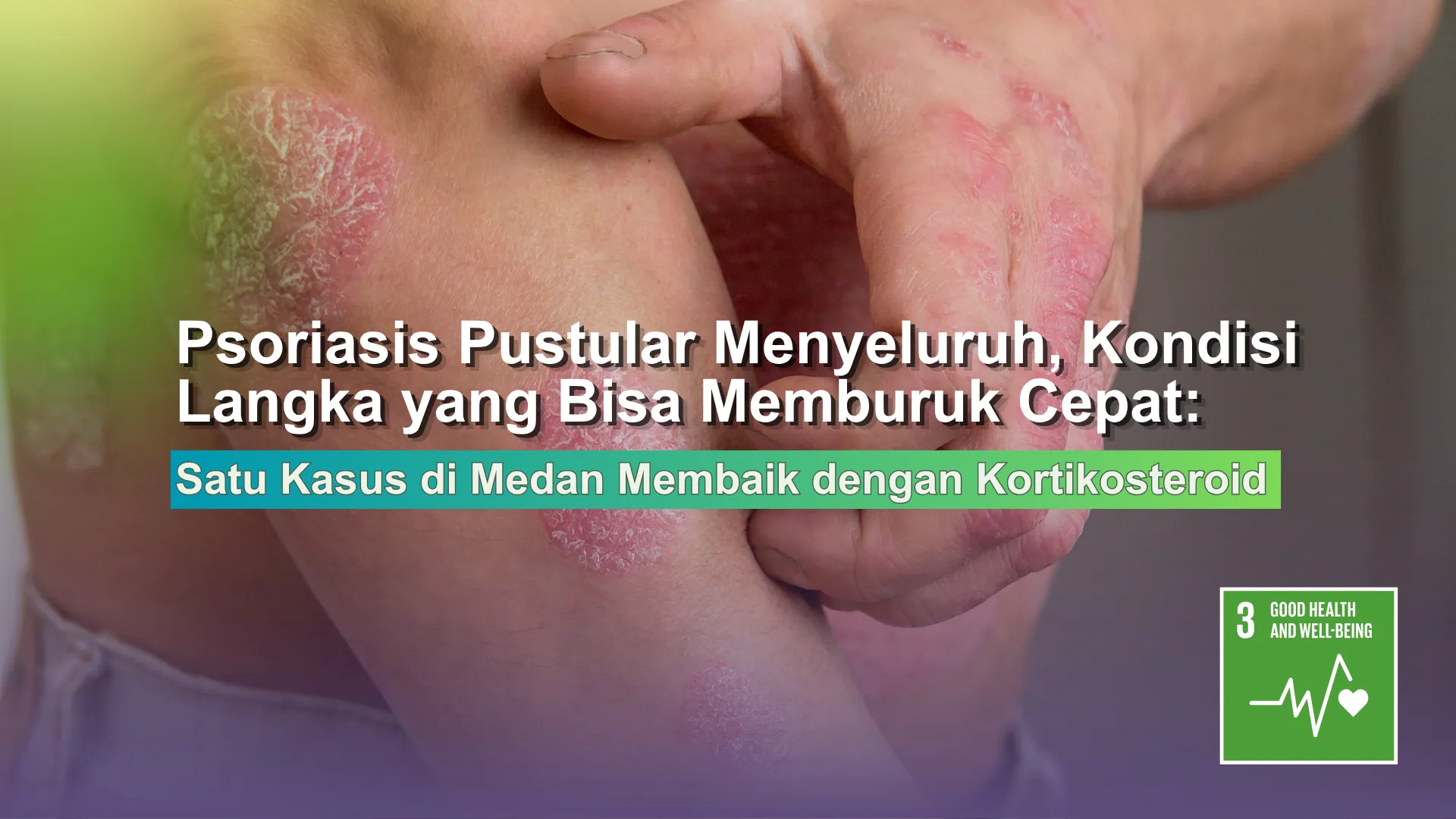
Generalized Pustular Psoriasis Differs from the More Commonly Known Form of Psoriasis
Psoriasis is often recognized by thickened, scaly, reddish patches on the skin. However, generalized pustular psoriasis (GPP) has a different presentation: pustules can spread extensively across inflamed skin, accompanied by fever, malaise, and skin pain.
In the Von Zumbusch form, pustules can merge into extensive areas that look like "lakes of pus." This condition is considered serious because inflammation can be accompanied by systemic disturbances and carries a risk of complications. Pustules in GPP do not mean that the skin has an ordinary infection; doctors need to distinguish it from other conditions that can also cause pustular rashes.
A case report by T. Ibnu Alferraly and colleagues describes the experience of treating a patient with Von Zumbusch-type GPP. This case is noteworthy because the patient showed improvement after receiving conventional corticosteroids under close monitoring, while access to biological therapies may be limited at some healthcare facilities.
High Fever and Pustules Across Almost the Entire Body
The 43-year-old patient came to the hospital with a fever of 38.7°C, severe skin pain, a burning sensation, and pustules spreading across almost his entire body. These symptoms had been present for three days before hospitalization. He also had a history of two similar episodes during the previous year.
Examination revealed small to larger pustules on the trunk, limbs, and armpit folds. Some lesions had merged, while blood tests showed an increased white blood cell count. These clinical findings helped the team assess the severity and consider other possible causes. The history of recurrence, distribution of lesions, skin examination, and laboratory findings were all part of the assessment. In this case, the diagnosis was not established solely from the appearance of the rash; the team also examined a skin tissue sample through a biopsy.
Biopsy Helps Confirm the Diagnosis
The skin sample was examined histopathologically, which involves observing tissue structures under a microscope. The examination revealed several features supporting GPP, including collections of inflammatory cells in the skin layers and characteristic pustules known as Munro microabscesses and Kogoj spongiform pustules.
These findings were combined with the patient's symptoms and medical history to establish a diagnosis of Von Zumbusch-type GPP. Tissue examination also helped doctors distinguish GPP from other skin disorders that can resemble pustular rashes, including certain acute drug reactions.
Accurate diagnosis is important because these conditions may require different treatments. In this report, the combination of clinical and histopathological examinations provided the basis for the team to determine the patient's treatment approach.
Improvement Observed During Treatment
The patient was hospitalized and received systemic corticosteroids through an infusion as well as topical corticosteroids. Other treatments were provided to support skin condition and relieve symptoms. After five days, redness and pain decreased, while the pustules began to dry out. The patient was then discharged with continued treatment that was gradually tapered, while remaining under monitoring.
The Psoriasis Area and Severity Index (PASI) score, which is used to assess the extent and severity of psoriasis, decreased from 18 to below 3. At follow-up examinations in the second and eighth weeks, no new recurrence was found. Regular monitoring also helped the team observe the patient's condition after systemic treatment began to be reduced.
Treatment Options Depend on the Patient's Condition
The report explains that biological therapy is a first-line treatment option in the guidelines referenced by the authors. However, access and treatment costs can be obstacles in some healthcare services. In such situations, short-term systemic corticosteroids may be considered by doctors under close supervision, with gradual dose reduction.
Corticosteroids are not medications that can be used independently to treat rashes or psoriasis. Their use and discontinuation must follow a doctor's assessment, especially in severe conditions that can recur or cause complications. This article describes the clinical decision-making process for one patient, rather than comparing several treatments in a clinical trial.
For the public, fever accompanied by widespread pustules and severe pain requires assessment by healthcare professionals. Early diagnosis and treatment allow doctors to evaluate the condition comprehensively and determine appropriate care for the patient.
One Case as a Source of Clinical Learning
The patient's improvement over eight weeks provides an illustration of the possible use of conventional corticosteroids in this case, particularly when biological therapy is difficult to access. However, because this article reports on only one patient, the results cannot yet be used to conclude that corticosteroids are the best treatment or will be effective for all people with GPP. This patient's experience adds to the understanding of GPP management when biological therapy is difficult to obtain. Tissue examination helped strengthen the diagnosis, while monitoring after treatment was administered and as the dose was reduced allowed the medical team to observe the patient's progress. Experiences from other cases may broaden understanding of treatment responses and recurrence patterns in GPP.
Key Research Points
This article reports the case of a 43-year-old man with Von Zumbusch-type generalized pustular psoriasis.
The patient experienced a high fever, severe skin pain, and widespread pustules, some of which had merged.
The diagnosis was supported by clinical examination and a skin biopsy showing characteristic histopathological features.
The patient received systemic corticosteroids through an infusion and topical therapy, accompanied by monitoring and gradual dose reduction.
The PASI score decreased from 18 to below 3, and no recurrence was found during eight weeks of follow-up.
Because this report covers only one patient, the results describe the clinical experience in that case and do not provide evidence of treatment effectiveness for all patients with GPP.
News Writer
Khairul Azmi
Suggested Resource Person
Dr. dr. T. Ibnu Alferraly, M.Ked(PA), Sp.PA, D. Bioeth.