


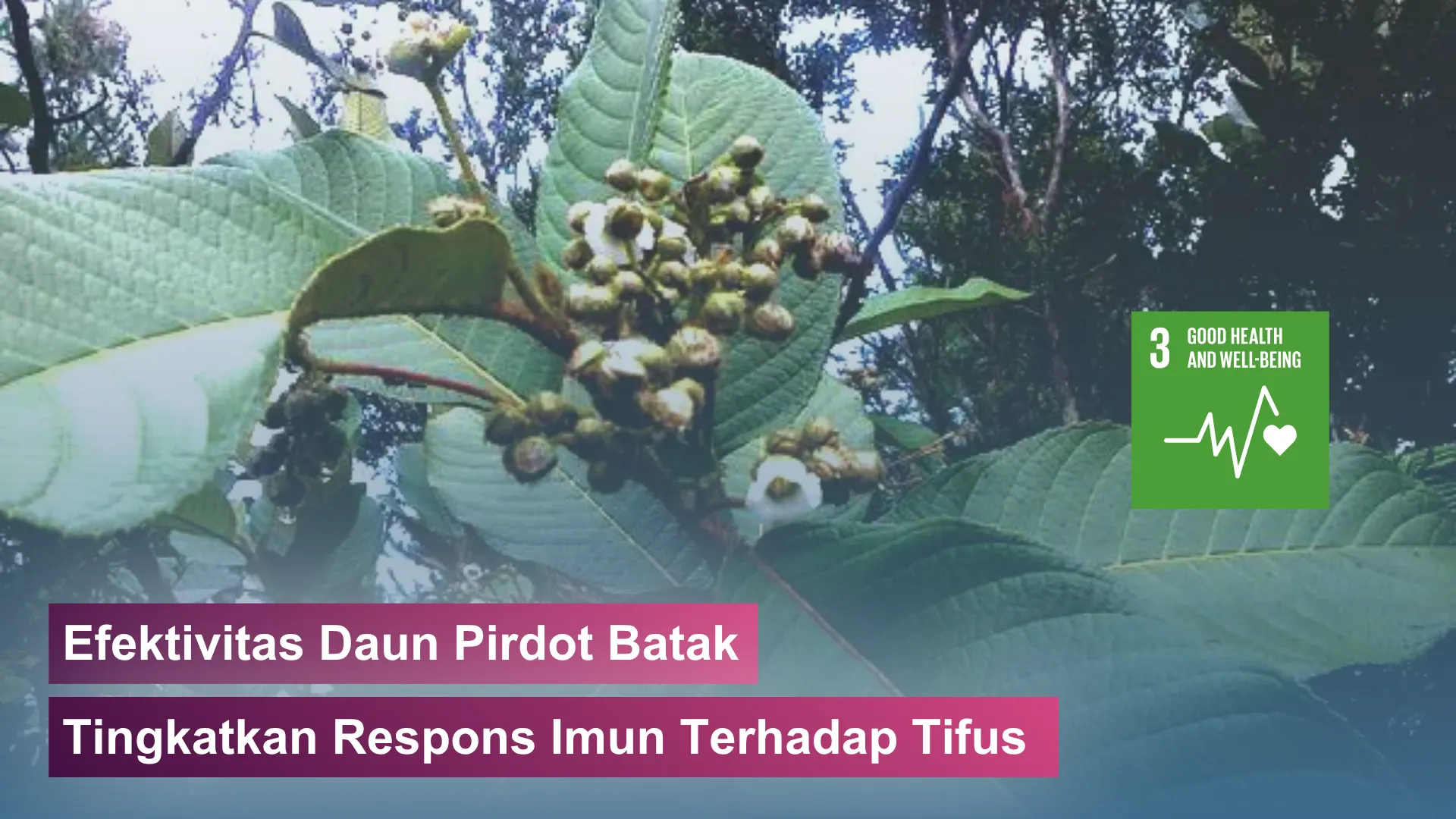
On the slopes of North Sumatra, pirdot leaves have long been known to local communities as a medicinal plant. Now, these leaves have entered the laboratory, raising a more specific question: can they actually help the body fight Salmonella infections?
This question is relevant. Typhoid fever, caused by Salmonella, remains a global health problem, with approximately 11 to 21 million cases and 128,000 to 161,000 deaths each year. In Indonesia, approximately 100,000 cases and 500 deaths are recorded annually. This infection primarily affects the digestive tract but can spread to the liver, an important organ in the immune system.
A research team led by Prof. Yunita Sari Pane from the Department of Pharmacology and Therapeutics, Faculty of Medicine, USU, tested pirdot leaf ethanol extract in rats.
Two Immune Markers Observed
When bacteria enter the body, antigen-presenting cells recognize the pathogens and activate CD4+ T cells. These cells then release interleukin-2 (IL-2), a cytokine that plays a role in the growth and differentiation of lymphocytes and the recruitment of immune cells. Therefore, CD4+ T cells and IL-2 were used as the main markers of immune response in this study.
The study involved 32 male Wistar rats divided into four groups, with eight rats in each group: a normal group without infection, a negative control group infected without treatment, a positive control group given Imboost® (22.5 mg/kg body weight), and a treatment group given pirdot extract (500 mg/kg body weight). All groups except the normal group were infected with Salmonella typhimurium through intraperitoneal injection on the fourth day. Blood and liver samples were collected approximately two weeks after treatment began.
Findings
The highest serum IL-2 level was recorded in the pirdot group, at 2.23 ng/mL. The Imboost® group reached 1.86 ng/mL, the normal group 1.71 ng/mL, and the negative control group 1.64 ng/mL. The differences between groups were statistically significant (P = 0.009), and the pirdot group differed significantly from all three other groups.
In immunohistochemical examinations, the liver CD4+ T-cell immunoreactivity score was also highest in the pirdot group (3.38), followed by Imboost® (2.88), the negative control (1.75), and the normal group (1.00). The pirdot group's score was significantly higher than those of the negative control and normal groups. However, the difference compared with the Imboost® group was not statistically significant.
In terms of liver tissue, the pirdot group showed lower levels of hydropic degeneration and necrosis than the negative control group. Its microscopic appearance was reported to be close to that of a normal liver, whereas the negative control group showed degeneration, necrosis, sinusoidal dilation, and inflammation.
The Role of Active Compounds
Phytochemical screening showed that pirdot extract contains flavonoids, saponins, tannins, glycosides, and steroids. The researchers hypothesized that flavonoids play a role in stimulating IL-2 production and T-cell responses, which subsequently support Th1 differentiation and interferon-gamma release to activate macrophages. This mechanism is based on findings reported in the literature.
This study was conducted on experimental animals using a single extract dose, so it cannot yet be concluded that pirdot is safe or effective for humans. The authors emphasized that clinical studies are still needed to validate its potential as a natural immunomodulator and hepatoprotector. Nevertheless, these findings provide an initial basis for the evidence-based development of medicinal plants native to North Sumatra.
Research Key Points
Pirdot leaf ethanol extract at a dose of 500 mg/kg body weight was tested on male Wistar rats (n = 32) infected with Salmonella typhimurium.
The highest serum IL-2 level was found in the pirdot group (2.23 ± 0.18 ng/mL), significantly different from the normal, negative control, and positive control groups (P = 0.009).
The liver CD4+ immunoreactivity score in the pirdot group (3.38 ± 1.19) was significantly higher than that of the negative control group (P = 0.025), but not significantly different from that of the Imboost® group (P = 0.478).
Hydropic degeneration and liver necrosis were lower in the pirdot group than in the negative control group.
The extract contained flavonoids, saponins, tannins, glycosides, and steroids.
These are preliminary findings from an animal study; clinical studies are needed.
Author
Khairul Azmi
Resource Person/Researcher
Prof. Dr. dr. Yunita Sari Pane, M.Si.