


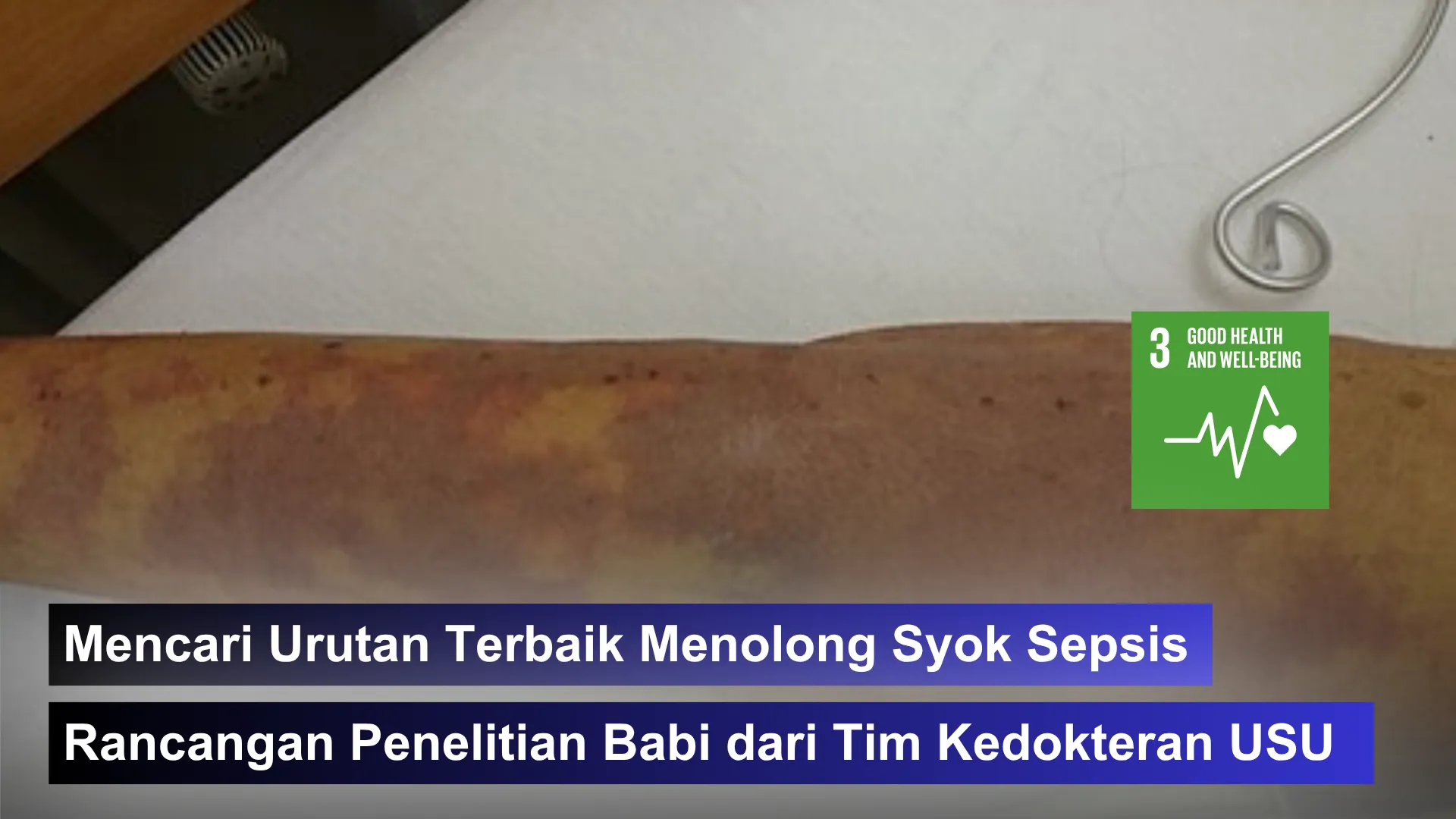
Sepsis occurs when the body's response to an infection becomes uncontrolled, causing damage to its own organs. In its most severe form, septic shock, blood vessels dilate, their walls become leaky, blood pressure drops dramatically, and blood flow to the organs is no longer sufficient. In intensive care units, doctors face a question that has not yet been fully answered: what should be administered first? The standard option is intravenous fluids to restore blood volume. However, excessive fluid administration can cause fluid accumulation, including in the lungs. An alternative is blood pressure-raising medication (vasopressors), such as norepinephrine, which constricts blood vessels. To date, evidence directly comparing fluids alone, vasopressors alone, or a combination of both in terms of hemodynamic changes remains limited.
Why Pigs
Pigs have cardiovascular physiology that is relatively similar to that of humans and are large enough to be fitted with monitoring equipment such as that used in ICUs. The researchers used the PiCCO system, an invasive monitoring method that can assess intrathoracic blood volume, cardiac function, vascular resistance, and extravascular lung water (EVLW).
Research Design
The study is planned to use 15 male pigs (Sus scrofa domestica) aged 16 to 20 weeks and weighing 40 to 60 kg, along with three control pigs without sepsis. Septic shock will be induced through an infusion of Escherichia coli lipopolysaccharide (endotoxin) until the mean arterial pressure (MAP) falls below 65 mmHg. The animals will then be randomly assigned to three groups:
Fluids first: crystalloid fluids at 30 mL/kg over 30 minutes, repeated if necessary, followed by norepinephrine if blood pressure remains low.
Vasopressors first: norepinephrine at 0.1 mcg/kg/min accompanied by crystalloid fluids at 3 mL/kg, with the doses gradually increased if necessary.
Combination: fluids at 30 mL/kg and norepinephrine at 0.1 mcg/kg/min administered simultaneously, with the norepinephrine dose gradually increased if necessary.
The treatment target is an MAP of at least 65 mmHg. The researchers will compare changes in hemodynamic parameters (MAP, cardiac index, vascular resistance, stroke volume, intrathoracic blood volume, and lung water), laboratory markers (including lactate), and oxygen transport. Treatment failure is defined as failure to achieve the target MAP after three protocol escalations. Randomization will be conducted using the Random.org website by a research assistant who is not involved in the interventions. The study will be conducted at the IPB University Veterinary Teaching Hospital in Bogor, with approval from the animal ethics committee, and will follow the ARRIVE 2.0 reporting guidelines.
The authors hope this study will provide mechanistic insights into the interactions between intravascular volume, vascular tone, and tissue perfusion in septic shock. They acknowledge several limitations: differences in baseline blood volume among animals, a small sample size, and an endotoxin model that does not fully represent an actual infection. The authors also note that this study will not measure cumulative fluid balance.
Key Research Points
Type of article: research protocol (study protocol), with no results yet, and peer review status still pending.
Main question: the optimal sequence of fluid administration, norepinephrine, or a combination of both in septic shock.
Model: pigs with septic shock induced by E. coli endotoxin, monitored invasively using PiCCO.
Design: 15 pigs randomly assigned to three groups (fluids first, vasopressors first, and combination), plus three controls without sepsis.
Treatment target: MAP of at least 65 mmHg, with treatment failure defined after three protocol escalations.
Outcomes: hemodynamic parameters (including lung water), lactate and other markers, as well as oxygen transport.
Acknowledged limitations: small sample size, biological variation, and the endotoxin model.
Author
Khairul Azmi
Resource Person/Researcher
dr. Aridamuriany Dwiputri Lubis, M.Ked(Ped), Sp.A(K)