


Red, Scaly Patches Appear on Various Parts of the Body
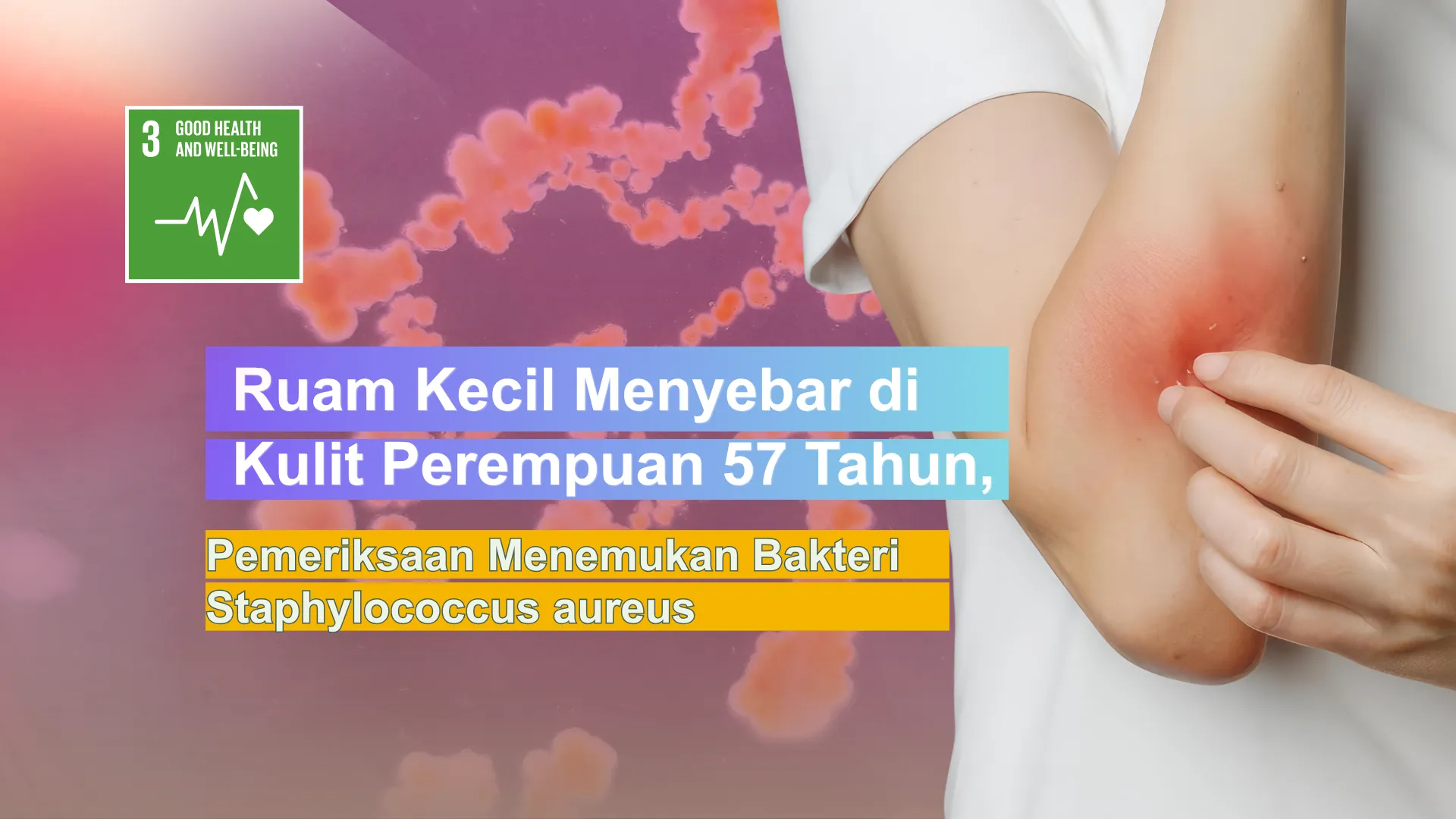
A 57-year-old woman visited a dermatology clinic with itchy red patches. The patches appeared on her scalp, torso, back, arms, and legs. Some appeared raised and covered with white scales. The patient also reported that similar rashes had recurred over the past month.
The doctor performed a skin examination and several supporting tests, including collecting a throat sample. The throat swab examination showed the growth of Staphylococcus aureus bacteria. This bacterium can be found in humans and can cause infections under certain conditions.
The case was reported by Cut Putri Hazlianda and Adina Miltania Tasmil in an article in the Journal of Pakistan Association of Dermatologists. The authors discuss the bacterial finding as a possible trigger associated with the onset of guttate psoriasis in this patient.
Guttate Psoriasis Appears as Small Spots
Guttate psoriasis is a type of psoriasis that usually appears suddenly as numerous small reddish spots or patches, often with scales on their surfaces. The word guttata comes from a word meaning “droplets,” because the lesions can resemble small droplets. The rash can appear on the torso and limbs, although its pattern and extent may vary from person to person.
Psoriasis is an inflammatory skin condition involving the body's immune response. Infections, hereditary factors, and environmental factors may play a role in its development. Throat infections caused by Streptococcus bacteria are known as one of the triggers frequently associated with guttate psoriasis. This report highlights the possibility that another bacterium, namely S. aureus, may also be associated with the condition.
Examination Detects Bacteria in the Throat Swab
In addition to the skin examination, the patient underwent a skin tissue examination and a throat swab test. The tissue examination helped the doctor assess whether the changes in the skin were consistent with psoriasis. Meanwhile, the throat swab test was used to identify bacteria that might be associated with an infection.
The culture results showed the growth of S. aureus. The bacterial susceptibility test also recorded that the bacterium was not susceptible to several antibiotics tested, including ampicillin, penicillin, and piperacillin. This information can help healthcare professionals consider infection management based on the test results and the patient's condition.
The detection of bacteria in a single patient is not sufficient to confirm that the bacterium caused psoriasis. This report provides one clinical example that may warrant further investigation, particularly when patients with guttate psoriasis also show signs of or have a history of infection.
Skin Condition Improves After Treatment
The patient received treatment to relieve her skin symptoms, including topical anti-inflammatory medication, medication to relieve itching, and other treatments tailored to the affected areas of the skin. At the fourth-week follow-up visit, the redness and scaling were reported to have decreased, although mild itching persisted.
The score used to assess the extent and severity of psoriasis decreased from 15.9 to 7.5. The score measuring the impact of the skin disease on quality of life also improved from 6 to 2. These changes indicate improvement in this patient after treatment, but they cannot establish which part of the treatment had the greatest effect or whether similar results would occur in other patients.
New Clues About Triggers of Guttate Psoriasis
This case suggests that Staphylococcus aureus infection may be associated with the onset of guttate psoriasis in some patients. So far, Streptococcus infections have been more frequently associated with the condition. This finding provides further reason for doctors to consider infection testing when assessing patients' skin complaints. Since this study reports only one patient, the association between the bacterium and the rash cannot yet be established as a cause-and-effect relationship. Treatment for both infection and psoriasis should still be tailored to the test results and the patient's condition.
Key Research Points
The study focuses on the possible association between Staphylococcus aureus infection and guttate psoriasis.
The research takes the form of a single case report, not a clinical trial or a study comparing multiple patients.
The patient was a 57-year-old woman with red, scaly patches on several parts of her body.
The examination detected the growth of S. aureus in the throat swab sample.
The patient's progress showed a reduction in symptoms and psoriasis severity scores after treatment.
The significance of the finding is that bacteria other than Streptococcus may be associated with guttate psoriasis in certain cases.
The limitation of a single case report is that it cannot prove that S. aureus causes psoriasis or that the findings apply to all patients.
News Writer
Khairul Azmi
Source
Dr. dr. Cut Putri Hazlianda, M.Ked(DV), Sp.D.V.E, SubSp.D.A.I, FINSDV