


When Itching and Rashes Become Recurring Problems
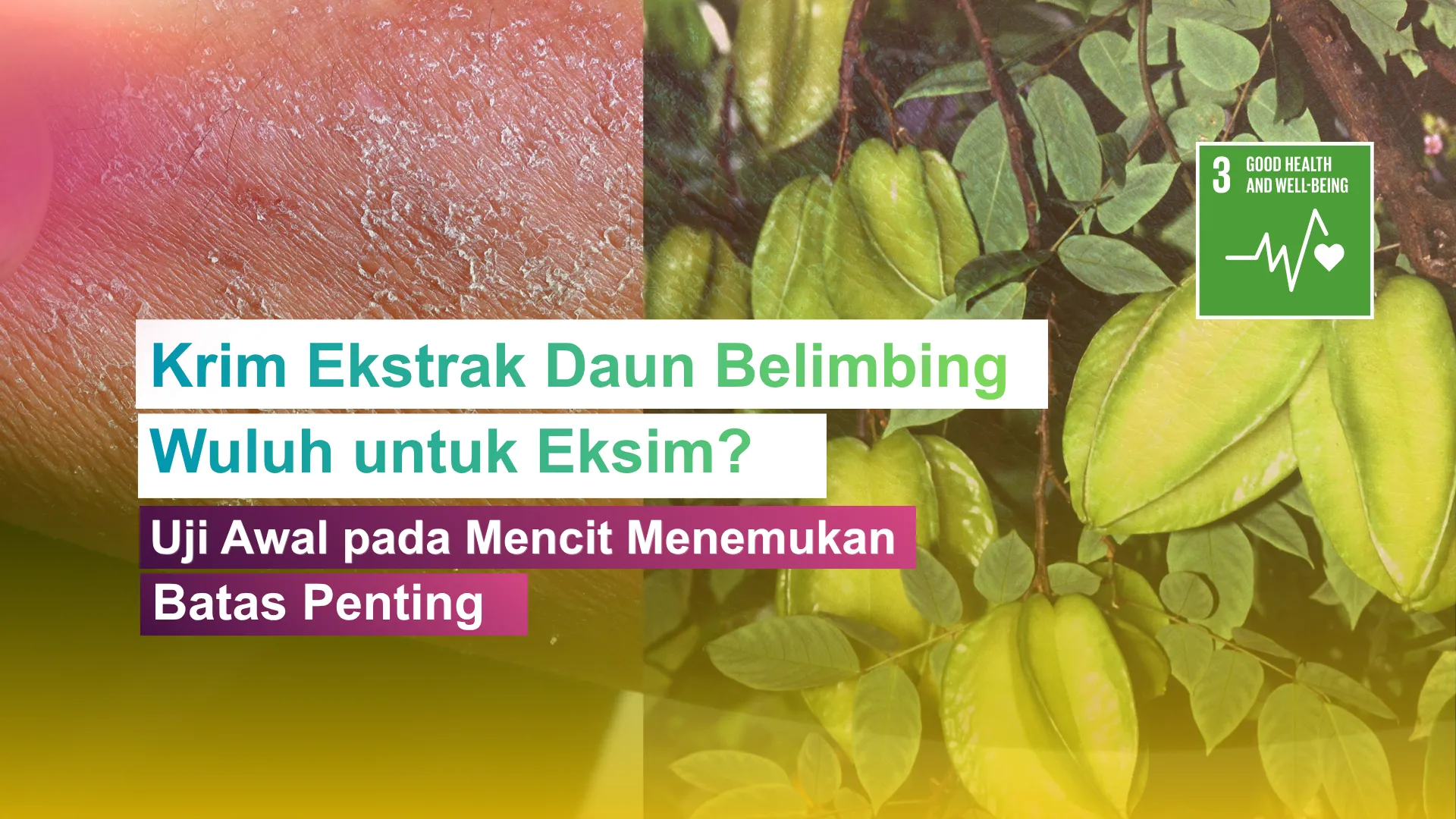
Atopic dermatitis, often referred to as atopic eczema, can cause dry, itchy, and inflamed skin. Symptoms can recur, making daily care an important part of maintaining skin comfort. This condition also involves more than one process: the immune system can trigger inflammation, while the skin barrier can become weakened. One marker studied in skin inflammation is interleukin-22, or IL-22. Meanwhile, filaggrin is a protein that helps maintain the strength of the skin barrier. Research by Cut Putri Hazlianda and her team tested whether a cream containing ethanol extract of starfruit leaves could affect these two factors in a mouse model of atopic dermatitis.
Testing the Cream on Six Groups of Mice
This study involved 30 male BALB/c mice divided into six groups, with five mice in each group. Inflammation resembling atopic dermatitis was induced through exposure to a triggering substance for 28 days. Afterward, the mice received a base cream, a comparison medication cream, no cream, or a starfruit leaf extract cream at one of three concentrations: 0.01%, 0.02%, and 0.04%. The creams were applied every 12 hours for 14 days. The researchers then measured IL-22 levels in skin tissue and assessed filaggrin expression. By comparing several groups, they could observe changes under the experimental conditions.
IL-22 Levels Decreased, but the Role of the Extract Remains Unclear
IL-22 levels differed among the study groups. The groups receiving the 0.02% and 0.04% extract creams showed lower levels than the dermatitis group that did not receive any cream. However, the group receiving only the base cream also showed a reduction. When compared directly with the base cream group, the extract groups did not show a statistically significant difference. This finding is important because the base cream itself may affect skin conditions. Its ingredients include liquid paraffin and beeswax, which can help retain moisture or form a protective layer on the skin's surface. Therefore, the decrease in IL-22 among the groups receiving the cream cannot yet be considered evidence that starfruit leaf extract was responsible.
Filaggrin Shows No Significant Changes
Unlike the IL-22 results, this study found no significant differences in filaggrin expression among the mouse groups. The researchers also found no pattern indicating that higher extract concentrations produced greater changes in filaggrin. This means that the experiment has not demonstrated that the extract cream can improve this skin barrier protein. The small number of mice in each group and the measurements taken at only one time point after treatment also limit the conclusions that can be drawn. These results do not prove that the extract has no biological effects whatsoever, but no statistically distinguishable changes were observed under the experimental conditions.
From Laboratory Findings to Human Care
Studies in mice can help test preliminary ideas about a substance, but their results cannot be directly applied as treatment recommendations for humans. Human and mouse skin are not entirely the same, while the cream in this study has not yet been tested to determine its safety and benefits in patients.
The researchers also noted the need for a more detailed analysis of the extract's chemical composition. In this study, phytochemical testing was conducted qualitatively, without analysis to establish the levels of specific compounds or consistency between batches of the extract. This is important so that future experiments can use standardized materials and their results can be compared more reliably.
Key Research Points
This study tested a cream containing ethanol extract of starfruit leaves in a mouse model of atopic dermatitis.
A total of 30 mice were divided into six groups, including groups receiving the base cream, a comparison medication, no cream, and three extract concentrations.
IL-22 levels in the groups receiving the 0.02% and 0.04% extract creams were lower than those in the dermatitis group that did not receive any cream.
The base cream also showed a reduction in IL-22, so the specific effect of starfruit leaf extract has not been established.
Filaggrin expression showed no significant differences, and no response pattern associated with increasing extract concentrations was found.
Because the study was conducted in mice with a small number of animals in each group, its results do not yet prove the benefits or safety of this cream for treating eczema in humans.
News Writer
Khairul Azmi
Resource Person/Researcher
Dr. dr. Cut Putri Hazlianda, M.Ked(DV), Sp.D.V.E, SubSp.D.A.I, FINSDV