


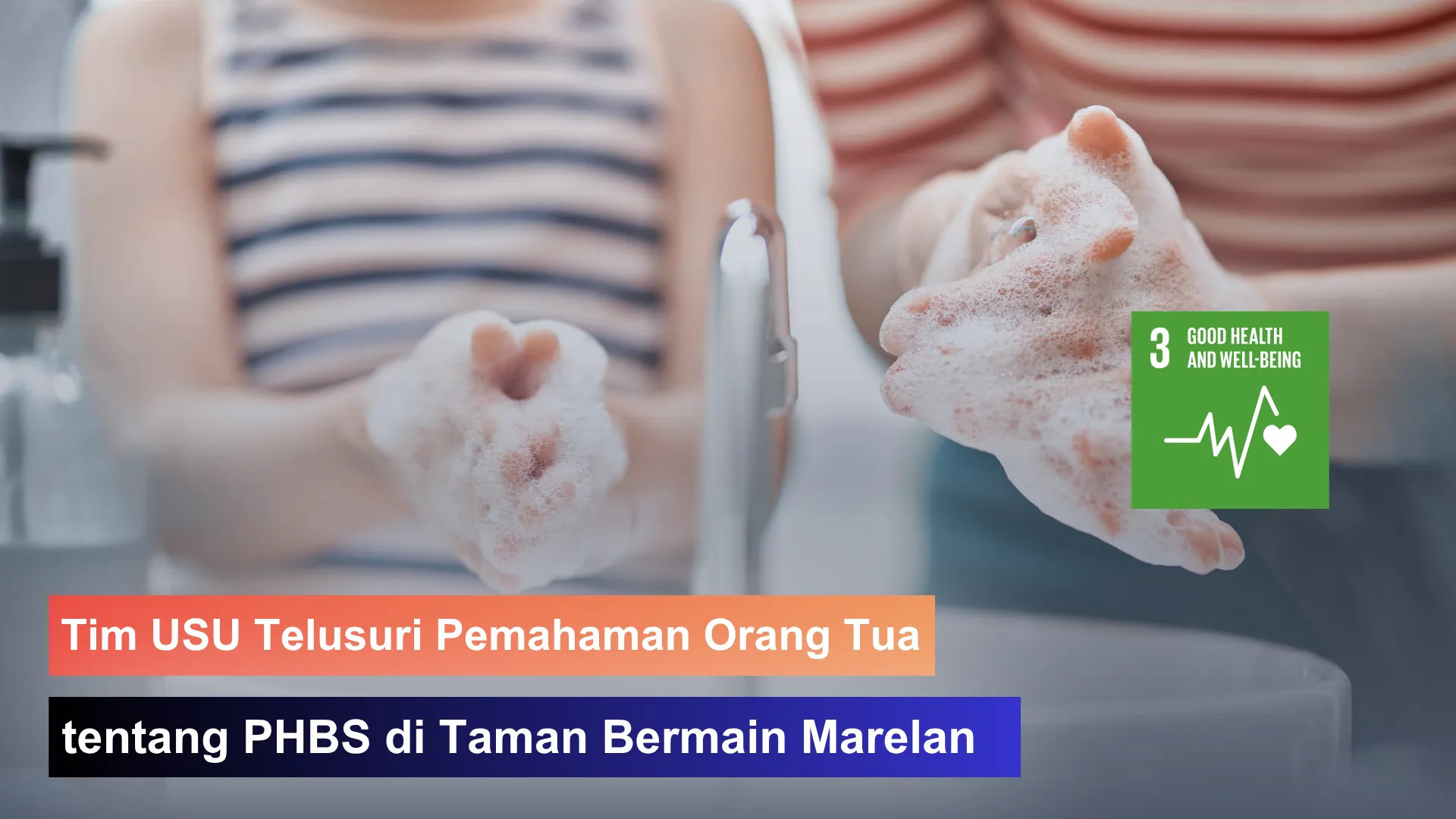
Children spend most of their early developmental years at home and in their school environment. Habits such as washing hands with soap, keeping toilets clean, and disposing of waste properly are usually learned from parents at an early age. Therefore, parents' understanding of clean and healthy living behaviors (PHBS) is considered an initial step in disease prevention, particularly for diseases transmitted through bacteria and viruses.
Based on this understanding, a team of lecturers and students from Universitas Sumatera Utara conducted a community service activity at Amanah Kahmi Preschool in Medan Marelan District. The activity was supported by the USU Institute for Community Service. In addition to providing education, the team also sought to determine how well parents understood and practiced PHBS, starting at home.
The findings were published in the Journal of Saintech Transfer in 2025. The lead author was Rusdiana from the Department of Biochemistry, Faculty of Medicine, USU, together with colleagues from the Department of Community Medicine, Faculty of Public Health, and Faculty of Dentistry, USU.
How the Activity Was Conducted
The activity was carried out in a single session. Before the educational session began, 26 parents were asked to complete a questionnaire. The team then provided education on PHBS, including proper handwashing practices using videos and teaching aids. The questionnaire responses were subsequently scored, recorded, and processed using SPSS.
What Was Found
Of the 26 parents, 4 received high scores (8 to 9), 14 received moderate scores (6 to 7), and 8 received low scores (4 to 5). In percentage terms, approximately 15 percent were classified as having good knowledge, 54 percent as having adequate knowledge, and 31 percent as having insufficient knowledge.
Regarding attitudes, all 26 respondents accepted the practice of washing hands with running water and soap. However, other behaviors showed lower figures. A total of 18 out of 26 parents acknowledged the importance of disposing of waste properly, while 19 out of 26 acknowledged the importance of using clean and healthy toilets.
The authors concluded that the parents' knowledge level in the area was in the moderate category, and the education provided was expected to improve their understanding and implementation of PHBS at home.
The Importance of Parents' Roles
The authors referred to health behaviors as being influenced by factors such as knowledge, attitudes, and beliefs, as well as support from facilities and the environment. In early childhood, the age range of 0 to 6 years is often referred to as the golden period of development, when healthy habits are easiest to establish. Therefore, mothers and parents who understand PHBS are considered better equipped to instill these habits in children, both at home and at school.
The authors also cited several previous studies showing that good knowledge does not always translate directly into healthy behavior. In some studies, children who already understood PHBS still did not practice it consistently. Educational sessions using visual media and demonstrations were also considered more effective in changing habits.
Key Research Points
A community service activity at Amanah Kahmi Preschool, Marelan, Medan, involving 26 parents of students.
PHBS education was provided in a single session, with questionnaires distributed before the educational session.
Approximately 15 percent of parents had good knowledge, 54 percent had adequate knowledge, and 31 percent had insufficient knowledge.
All respondents accepted handwashing with soap, while acceptance of proper waste disposal and toilet use was lower.
The authors concluded that parents' knowledge was at a moderate level and that education should be continued.
The descriptive design and one-time session limit conclusions about the impact of the educational activity.
Author
Khairul Azmi
Resource Person/Researcher
Dr. dr. Rusdiana, M.Kes