


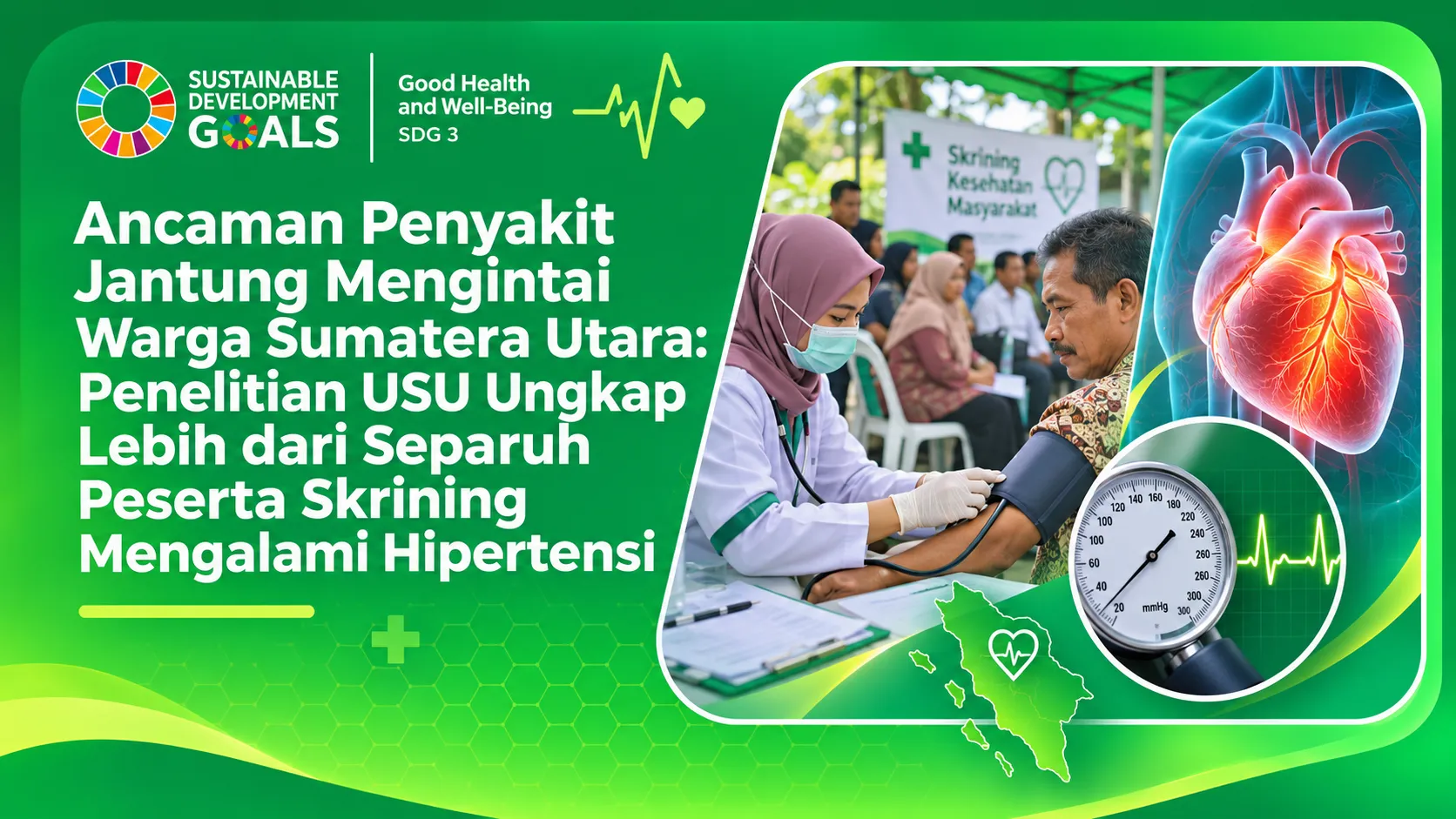
Heart disease and stroke are often regarded as health threats that strike suddenly. In reality, before these conditions develop into serious illnesses, the body may already harbor various risk factors that do not always cause symptoms. This phenomenon became the focus of collaborative research by Universitas Sumatera Utara (USU) and several healthcare institutions in Singapore after they found high rates of hypertension, obesity, diabetes, and cholesterol disorders among the population of North Sumatra.
The study, titled Prevalence of Cardiovascular Risk Factors in a Semi-Urban Population in Indonesia, published in the journal BMC Public Health in 2026, provides an overview of the threat of cardiovascular disease in semi-urban areas of Indonesia. The study was part of the Early Detection of Cardiovascular Risk Factors as Primary Prevention amongst North Sumatera Adults (ECARDIA-NS) program, which focuses on the importance of early detection as a measure to prevent heart disease.
The research team included Yasmine Fitrina Siregar, Anggia Chairuddin Lubis, and several academics from the Faculty of Medicine USU, together with Paul Jie Wen Tern, Jack Wei Chieh Tan, and other researchers from healthcare institutions in Singapore. The collaboration aimed to identify cardiovascular risk factors through direct health examinations while also evaluating public knowledge about their prevention.
The study took place from March to December 2024 and involved 1,208 participants aged 40 and above. Participants were recruited from 15 health screening locations in Medan City, Tebing Tinggi City, and Langkat Regency. Notably, none of the participants had a previously known cardiovascular disease diagnosis when they took part in the study, allowing the examinations to help uncover previously undetected health risks.
Unlike surveys that rely primarily on interviews, this study used physical and laboratory examinations. Participants underwent measurements of blood pressure, weight, height, and waist circumference, as well as electrocardiogram examinations. Blood samples were then analyzed to determine HbA1c levels as an indicator of diabetes and lipid profiles to detect cholesterol disorders.
The results revealed conditions that warrant serious attention. A total of 56% of participants were found to have hypertension, while 44% had dyslipidemia, or abnormal blood lipid levels. In addition, 17% of participants were identified as having diabetes. These findings indicate that heart disease risk factors are quite prevalent, even among people not previously known to have cardiovascular disease.
Weight-related issues were also a major concern. The study recorded that 69% of participants fell into the obesity category based on the body mass index thresholds used by the researchers, while another 15% were overweight. Even more concerning, 83% of participants had waist circumferences exceeding the normal limits. These conditions are associated with an increased likelihood of metabolic disorders and cardiovascular disease.
Statistical analysis showed significant associations between increasing age and various health risk factors. Compared with participants aged 40–49, those aged 70 and above had approximately 7.7 times higher odds of having hypertension after accounting for other factors. This age group also had approximately three times higher odds of having diabetes.
Obesity was also associated with an increased likelihood of hypertension. Participants with obesity had approximately 1.92 times the odds of hypertension compared with those whose body mass index was normal. Meanwhile, excessive waist circumference was associated with approximately twice the odds of hypertension and 1.89 times the odds of diabetes. These findings reinforce the importance of weight management and metabolic health monitoring.
Differences in health conditions between regions were also observed. Participants from Tebing Tinggi had approximately 3.83 times the odds of having dyslipidemia compared with participants from Medan after adjustment for several characteristics. These results indicate variations in the burden of cholesterol disorders across the study locations, although the causes of these differences cannot yet be determined through this study design.
Another equally important finding was the large number of risk factors that were discovered only after examinations were conducted. Most participants who tested positive for hypertension, diabetes, or dyslipidemia had not previously reported receiving a diagnosis of these conditions. In fact, some participants who already knew about their conditions still had examination results indicating that their health conditions were not being optimally controlled.
The study also evaluated health knowledge, attitudes, and practices among 773 participants using questionnaires. The results showed that the median knowledge score was only 5 out of 10, while the median combined score was 9 out of 14. Education level was associated with health knowledge and behavior scores, but these scores did not show statistically significant associations with the presence of hypertension, dyslipidemia, or diabetes.
These findings serve as a reminder that knowing about health risks may not be enough to ensure that a person is free from disease. Objective examinations remain necessary to identify conditions that may not cause symptoms. Therefore, the researchers emphasized the importance of expanding community-based screening programs, particularly through primary healthcare facilities.
Programs such as the Integrated Non-Communicable Disease Development Posts (Posbindu PTM), regular health checkups, and metabolic risk factor monitoring can be important components of prevention efforts. Through these activities, people have the opportunity to learn about their blood pressure, blood sugar, cholesterol, and weight before these conditions develop into more serious complications.
Nevertheless, this study has limitations because it used opportunistic participant recruitment and the majority of respondents were women. Therefore, the percentages identified cannot be directly considered representative of the entire population of North Sumatra.
Ultimately, the ECARDIA-NS study delivers an important message: heart disease prevention must begin before symptoms appear. Through collaboration among academics, healthcare workers, the government, and the community, early detection can be expanded so that risk factors are identified sooner and appropriate treatment can be provided. These efforts also support the achievement of Sustainable Development Goal (SDG) 3, which aims to ensure healthy lives and promote the well-being of all people.
Key Research Findings
A total of 1,208 participants aged 40 and above took part in screening at 15 locations in Medan, Tebing Tinggi, and Langkat from March to December 2024.
56% of participants had hypertension, 44% had dyslipidemia, and 17% had diabetes.
69% of participants had obesity, 15% were overweight, and 83% had excessive waist circumference.
A total of 1.3% of participants had atrial fibrillation, a heart rhythm disorder.
Participants aged 70 and above had 7.70 times higher odds of hypertension compared with the 40–49 age group.
Obesity was associated with 1.92 times higher odds of hypertension, while excessive waist circumference was associated with 2.01 times higher odds of hypertension and 1.89 times higher odds of diabetes.
Participants in Tebing Tinggi had 3.83 times higher odds of dyslipidemia compared with participants in Medan after adjustment for other factors.
A survey of 773 participants showed a median health knowledge score of 5/10 and a combined knowledge, attitude, and practice score of 9/14.
Most of the identified risk factors were newly discovered through screening, underscoring the importance of regular health checkups.
Writer
Khairul Azmi
Source/Researcher
dr. Yasmine Fitrina Siregar, M.Ked(Cardio), Sp.JP