


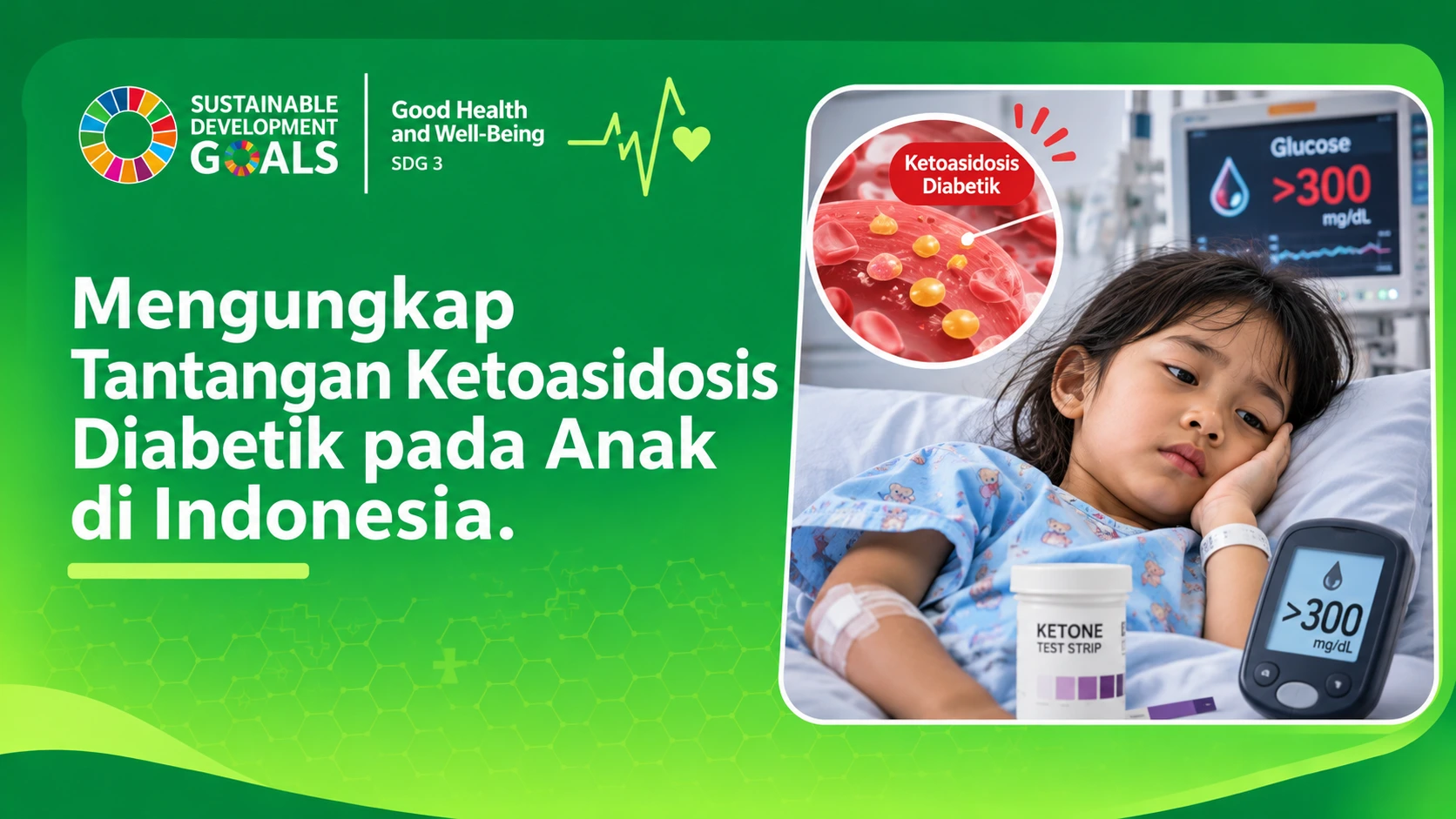
Diabetic ketoacidosis (DKA) is one of the most serious acute complications of diabetes mellitus in children and adolescents. This condition occurs when the body experiences an insulin deficiency, causing glucose levels to rise, ketone production to increase, and the blood to become more acidic. If not promptly recognized and treated, DKA can cause severe dehydration, electrolyte disturbances, acute kidney injury, brain swelling, and even death. This issue presents a significant challenge for developing countries, including Indonesia, because delayed diagnosis, limited healthcare facilities, and a lack of public understanding can result in children arriving at hospitals in already severe condition.
These challenges are the focus of a study entitled Bridging the Gap in Pediatric Diabetic Ketoacidosis: Insights from Indonesia and Pathways to Sustainability, written by Siska Mayasari Lubis, Shofiyya Imtiyaz, and Allam Ahmed. The article was published in the journal World Journal of Science, Technology and Sustainable Development, Volume 21, Number 6, pages 475–492, on July 10, 2026. The study was conducted using data from pediatric patients at Adam Malik Hospital Medan, North Sumatra, a tertiary referral hospital that receives patients from various regions across North Sumatra and its surroundings.
Medically, DKA is characterized by three main conditions: hyperglycemia, or elevated blood sugar levels; ketosis, or increased ketone production; and metabolic acidosis, or increased blood acidity. These conditions occur due to insulin deficiency, which prevents the body from optimally using glucose as an energy source. The body then breaks down fat and produces acidic ketones. This process can result in substantial fluid loss and electrolyte imbalances. Therefore, DKA management requires comprehensive examinations, including glucose levels, blood pH, bicarbonate, and electrolytes, accompanied by the appropriate administration of fluids and insulin.
This study used a retrospective cross-sectional design by reviewing the medical records of pediatric patients diagnosed with DKA between January 2023 and December 2025. The data collected included demographic characteristics, clinical symptoms, diabetes history, precipitating factors, laboratory examinations, and complications. Laboratory examinations covered blood glucose, HbA1c, C-peptide, blood pH, bicarbonate, and electrolytes. DKA severity was classified as mild, moderate, or severe based on pH and bicarbonate values. Overall, the study analyzed 30 pediatric patients.
The results showed that nearly half of the patients experienced severe DKA. A total of 14 patients, or 46.7%, were classified as severe, nine patients (30%) had moderate DKA, and seven patients (23.3%) had mild DKA. These findings indicate that severe DKA cases remain predominant among pediatric patients treated at the referral hospital. Another noteworthy finding was that 84.6% of patients had no previous diabetes diagnosis. This means that most patients were only found to have diabetes when they arrived at the hospital in an emergency condition due to ketoacidosis. This situation indicates that gaps remain in symptom recognition and diabetes screening at an early stage.
In terms of clinical symptoms, patients presented with various complaints, such as frequent urination, excessive thirst, increased appetite, weight loss, fatigue, nausea, vomiting, abdominal pain, fever, and Kussmaul breathing. One important finding was the significant association between decreased consciousness and DKA severity. A total of 64.7% of patients who experienced loss of consciousness were classified in the severe DKA group, while only 5.9% were in the mild group (p=0.020). This finding demonstrates that changes in consciousness are warning signs that require immediate attention and medical treatment.
The laboratory examination results also provided important insights into the patients' conditions. Blood glucose levels upon hospital admission showed no significant differences among the mild, moderate, and severe DKA groups (p=0.299). This indicates that high blood sugar levels alone are insufficient to determine DKA severity. In contrast, blood pH and bicarbonate levels showed highly significant associations. The average pH decreased from 7.29 in the mild group to 7.21 in the moderate group and 7.04 in the severe group. Meanwhile, median bicarbonate levels decreased from 14.5 mmol/L to 8 mmol/L and 4.7 mmol/L. These decreases reflect the increasing severity of metabolic acidosis experienced by the patients.
Another finding of concern was the association between C-peptide levels and DKA severity. C-peptide is a biomarker that provides information about the ability of pancreatic beta cells to produce insulin. The study results showed that median C-peptide levels decreased from 1.38 ng/mL in the mild group to 0.34 ng/mL in the moderate group and 0.15 ng/mL in the severe group. This association was statistically significant (p=0.003). In addition, chloride levels also showed significant differences among the severity groups (p=0.019). These results demonstrate that certain biomarker examinations can help healthcare professionals understand patients' metabolic conditions and consider the need for more intensive monitoring.
Complications were found in approximately 73% of patients. Acute Kidney Injury (AKI) was the most frequently reported complication. The study also identified a combination of AKI and cerebral edema in five patients, or 16.7% of all cases, as well as a combination of AKI and pulmonary edema in three patients, or 10%. More complex complications were frequently found in the severe DKA group. This condition reinforces that DKA is not merely a matter of elevated blood sugar, but a metabolic emergency that can affect various organs in the body.
Based on these findings, the authors propose three main strategies to improve the quality of pediatric diabetes care in Indonesia. First, increasing the capacity of healthcare facilities, particularly in rural areas and primary healthcare services. Early glucose and HbA1c testing, training healthcare professionals to recognize diabetes symptoms, and improving the capacity to perform pH and bicarbonate examinations are important steps. Healthcare facilities must also be capable of providing initial stabilization before patients are referred to better-equipped hospitals.
Second, implementing standardized DKA management protocols. These protocols need to regulate treatment based on severity, monitoring of electrolyte balance, fluid and insulin administration, and monitoring for complications such as acute kidney injury and cerebral edema. The use of C-peptide testing may also be considered where facilities allow. Third, community-based education needs to be strengthened by involving families, parents, caregivers, health volunteers, and schools. Education should cover recognizing early symptoms of diabetes, the importance of medical examinations, insulin use, blood sugar monitoring, and adherence to treatment.
This study has limitations because it used retrospective medical record data and only involved patients from one hospital. Therefore, its results cannot yet represent the overall situation of children with DKA throughout Indonesia. The authors recommend further research through prospective patient registries, more standardized data recording, and evaluations of educational programs and patient follow-up after hospital discharge.
Ultimately, this study emphasizes that managing diabetic ketoacidosis in children cannot rely solely on hospitals' ability to handle emergency conditions. Early detection, equitable distribution of healthcare facilities, increased public awareness, and continuity of care are essential components of addressing this problem. These efforts align with SDG 3, namely Good Health and Well-being, particularly in strengthening the prevention and management of noncommunicable diseases. By integrating clinical services, community education, and healthcare system strengthening, Indonesia is expected to develop more equitable, high-quality, and sustainable pediatric diabetes care.
Research Key Points:
- The study was conducted at Adam Malik Hospital Medan using a retrospective cross-sectional design and data from January 2023–December 2025.
- A total of 30 pediatric patients with DKA were analyzed in the study.
- A total of 46.7% of patients experienced severe DKA, 30% moderate DKA, and 23.3% mild DKA.
- A total of 84.6% of patients had no previous diabetes diagnosis.
- Decreased consciousness was significantly associated with DKA severity (p=0.020).
- Blood glucose levels showed no significant differences among the severity groups (p=0.299).
- C-peptide levels were significantly associated with DKA severity (p=0.003).
- Blood pH and bicarbonate levels decreased as DKA severity increased (p<0,001)
- Chloride levels showed significant differences among the groups (p=0.019).
- Complications were found in approximately 73% of patients, with acute kidney injury being the most frequently reported complication.
- The study proposes three main strategies: increasing healthcare facility capacity, implementing standardized management protocols, and strengthening community-based education.
- The study supports the achievement of SDG 3 by strengthening early detection and sustainable pediatric healthcare services.