


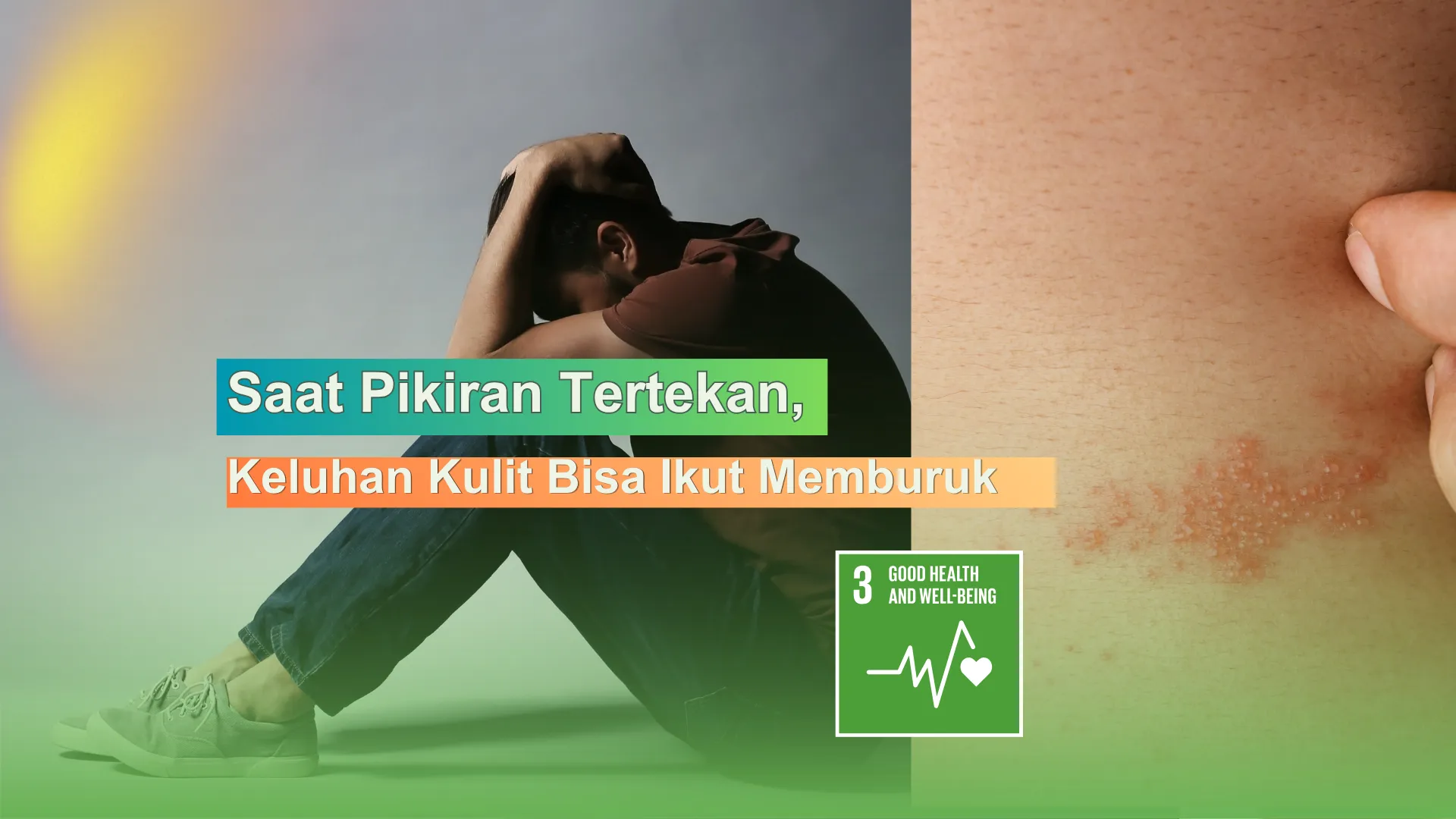
When under stress, some people feel that their skin problems also worsen. This relationship is the focus of an article by Deryne Anggia Paramita and colleagues, which summarizes research on psychological stress, cortisol, and skin inflammation.
The article discusses psoriasis, eczema or atopic dermatitis, and acne. The authors explain that the body's response to stress involves the brain, hormones, immune system, and skin. Cortisol is one part of this relationship, but its levels do not always increase in the same pattern in every person or condition.
The Brain and Skin Send Signals to Each Other
When a person experiences stress, the body activates a system that helps regulate its response to pressure. One result is the release of cortisol. The skin also has cells and mechanisms that can respond to hormonal signals and influence inflammation.
This relationship can work in both directions. Stress may worsen symptoms in some people, while itching, pain, or changes in skin appearance can also increase psychological distress. Therefore, a person's skin condition and emotional state can influence each other.
Cortisol Is Not Always the Sole Explanation
This review highlights that the relationship between cortisol and skin diseases is not as simple as “stress increases cortisol, which then causes skin inflammation.” Cortisol patterns can vary depending on the time of measurement, the type of sample used, the patient's condition, and the treatment they are receiving.
Corticosteroid medications applied to the skin can also affect assessments of the hormone's activity. Differences in how cortisol is measured and other factors make the findings of various studies difficult to compare directly.
Stress Management Can Complement Skin Treatment
Stress management approaches, such as mindfulness exercises and cognitive behavioral therapy, are discussed as methods that may support mental health and skin care, alongside certain medication-based approaches that are still being explored in relation to stress pathways and cortisol.
The review did not directly test these methods in patients or establish a single treatment for everyone. For the public, stress management can be part of a broader approach to overall health, but it does not replace skin examinations and treatment by healthcare professionals. Specific medications or therapies should still be selected in consultation with a doctor.
An Overview of Existing Research
This article summarizes various previous studies rather than reporting a new trial involving patients. Because the studies discussed used different methods of measuring cortisol and involved diverse patient groups, their conclusions provide a general overview of the relationship between stress and skin inflammation, rather than certainty about the cause of symptoms in every individual.
This means that someone experiencing stress and skin problems does not automatically have a cortisol disorder. Skin problems can have many contributing factors, so their assessment still needs to consider symptoms, medical history, and the treatments being used.
Key Research Points
This article is a review of research on psychological stress, cortisol, and inflammatory skin diseases.
Psoriasis, atopic dermatitis or eczema, and acne are among the conditions discussed.
Stress and skin problems may be related, but cortisol patterns vary and are influenced by many factors.
Stress management can complement treatment, but it does not replace examinations or treatment by healthcare professionals.
News Writer
Khairul Azmi
Source
dr. Deryne Anggia Paramita, M.Ked (KK), Sp.D.V.E, Subsp. D.A, FINSDV, FAADV