


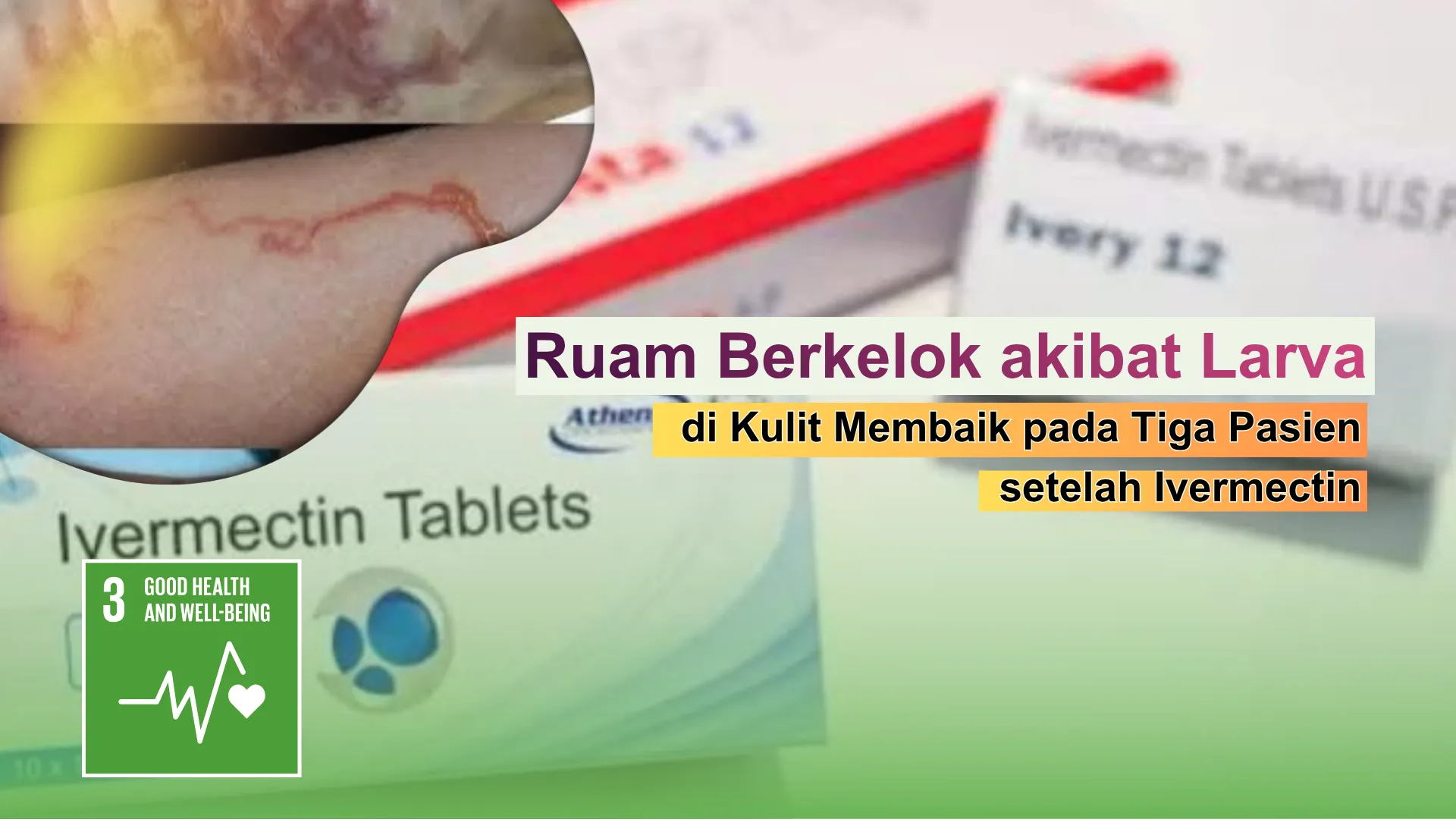
Red, itchy rashes that look like winding lines can be a sign of worm larvae moving through the upper layers of the skin. This condition is known as cutaneous larva migrans. The larvae usually originate from animal hookworms and can be found in soil or sand contaminated with animal feces.
Dina Arwina Dalimunthe and her colleagues reported their experience treating three patients with this condition at a dermatology clinic. All three received ivermectin, an oral antiparasitic medication. Following treatment, their rashes and itching improved until the skin lesions disappeared.
Itchy Rashes in the Form of Winding Lines
Larvae can enter the skin when someone walks barefoot or engages in activities on contaminated soil or sand. After entering, the larvae move through the skin layers and produce winding reddish lines, usually accompanied by itching. Rashes may appear, for example, on the feet, hands, or other parts of the body that come into direct contact with these surfaces.
The three patients in this report had experienced rashes and itching for several weeks. Two patients had not previously improved after using the anthelmintic medication mebendazole or betamethasone cream. The cream can relieve inflammation and itching, but it does not eliminate the larvae causing the infection.
Symptoms Disappear after Treatment
Each patient received a single oral dose of ivermectin. They also received cetirizine to help relieve itching. During follow-up examinations over approximately one to three weeks, no new rashes were found, and the itching had disappeared. No side effects were recorded in any of the three patients.
These findings provide an indication that ivermectin may be one treatment option for this condition. However, the report did not compare ivermectin with other medications. The improvement in itching was also assessed in the context of patients who received cetirizine as well.
Results from Three Cases, Not a Guarantee for All Patients
This study is a case series report involving only three patients. All three were treated at the same clinic and monitored for a limited period. Because there was no comparison group, the findings describe the recovery of these three patients but are insufficient to establish that the same treatment outcomes and safety profile will apply to everyone with similar symptoms.
The public should not use ivermectin on their own based on this report. Itchy rashes can be caused by various conditions, so examination by a healthcare professional is necessary to determine the cause and appropriate treatment. Wearing footwear when walking or engaging in activities on soil and sand can help reduce direct contact with potentially contaminated surfaces.
Key Research Points
The study reported three patients with winding, itchy rashes caused by cutaneous larva migrans.
All three received a single oral dose of ivermectin and cetirizine to help relieve itching.
The rashes and itching disappeared during follow-up examinations; no side effects were recorded in any of the three patients.
Because the report involved only three cases without a comparison group, its findings do not establish that this treatment will produce similar results in all patients.
News Writer
Khairul Azmi
Source
Dr. dr. Dina Arwina Dalimunthe, M.Ked(KK), Sp.D.V.E., Subsp. D.T, FINSDV, FAADV