


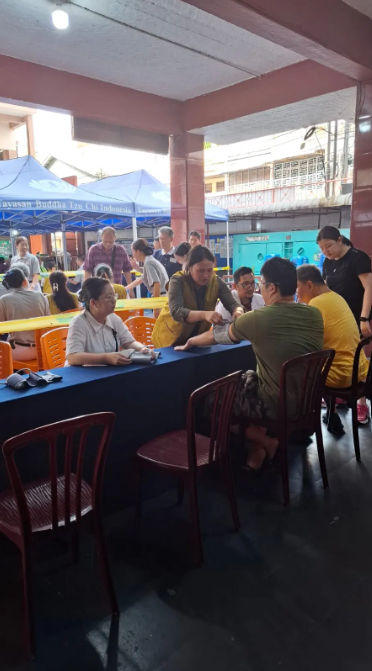
A drop of blood can bring great hope to someone fighting to stay alive. For patients experiencing severe bleeding, undergoing surgery, suffering from blood disorders, or requiring transfusions due to certain illnesses, an adequate and safe blood supply is an essential part of healthcare services. Recognizing the importance of this need, the Department/Study Program of Clinical Pathology, Faculty of Medicine, Universitas Sumatera Utara (USU), carried out a community service activity entitled “Blood Donation at WR. Supratman School” on July 27, 2025. The activity was led by dr. Nindia Sugih Arto, M.Ked(Clin.Path), Sp.P.K., Subsp.N.R.(K), together with Dr. dr. Jelita Siregar, M.Ked(Clin.Path), Sp.P.K., Subsp.G.E.H.(K); dr. Almaycano Ginting, M.Kes, M.Ked(Clin.Path), Sp.P.K.; dr. Ida Adhayanti, Sp.P.K., Subsp.B.D.K.T.(K); and dr. Nur Isti Hasanah. Holding the activity in a school environment was one form of the university's contribution to bringing humanitarian activities closer to the educational community. Blood donation is important because blood cannot be fully replaced by artificial products for all medical transfusion needs. Its availability depends on the voluntary participation of members of the public who meet the health requirements for donors. Therefore, blood donation activities are not only related to blood collection but also carry social significance in fostering awareness of compassion, responsibility, and a spirit of helping others in need.
In healthcare services, donated blood plays an important role in supporting the treatment of various medical conditions, ranging from accidents involving severe bleeding and surgical procedures to childbirth complications and diseases that cause impaired blood cell production or blood loss. Blood components such as red blood cells, platelets, and plasma can be used according to patients' clinical needs after undergoing appropriate processing and testing. Nevertheless, blood donation must be carried out with consideration for the safety of both donors and recipients. Prospective donors need to undergo eligibility examinations, which may include assessments of their health condition, hemoglobin levels, blood pressure, and other requirements in accordance with applicable blood transfusion service regulations. The collected blood must also undergo testing and processing by an authorized blood service facility before being used for transfusions. Through the blood donation activity at WR. Supratman School, the USU Clinical Pathology team presented a community service initiative closely related to the competencies of laboratory medicine and healthcare services. The school environment also has the potential to serve as a place to foster an understanding of the importance of social contributions in the health sector. Education about blood donation can help reduce public misconceptions, including the belief that donating blood is always harmful to one's health. For individuals who meet the requirements, blood donation is generally a safe procedure when carried out using appropriate procedures and supervision. Furthermore, humanitarian activities in educational settings can foster concern for the needs of others and strengthen relationships among educational institutions, healthcare workers, and the community.
The community service activity carried out by the Department/Study Program of Clinical Pathology, Faculty of Medicine, USU, also demonstrates the importance of university involvement in supporting the sustainability of healthcare services through social activities that provide direct benefits to the community. Blood availability requires ongoing support from voluntary donors because blood components have limited storage periods and demand can fluctuate according to the conditions of hospital services. Therefore, awareness of the importance of supporting blood donation needs to be fostered through the dissemination of accurate information, safe services, and cooperation with various parties. Holding the activity at WR. Supratman School is expected to provide a means of expanding awareness of blood transfusion needs while instilling the value of humanitarian solidarity. However, measuring the activity's achievements requires information on the number of participants, donors who meet the eligibility requirements, and the number of blood bags successfully collected. Through this activity, Universitas Sumatera Utara demonstrates its commitment to integrating medical knowledge with concern for community needs. The program aligns with the achievement of the Sustainable Development Goals (SDGs), particularly SDG 3 on Good Health and Well-Being, SDG 4 on Quality Education, and SDG 17 on Partnerships for the Goals. By strengthening public awareness and participation in humanitarian activities, blood donation is expected to continue becoming part of a culture of mutual assistance in support of better and more sustainable healthcare services.