


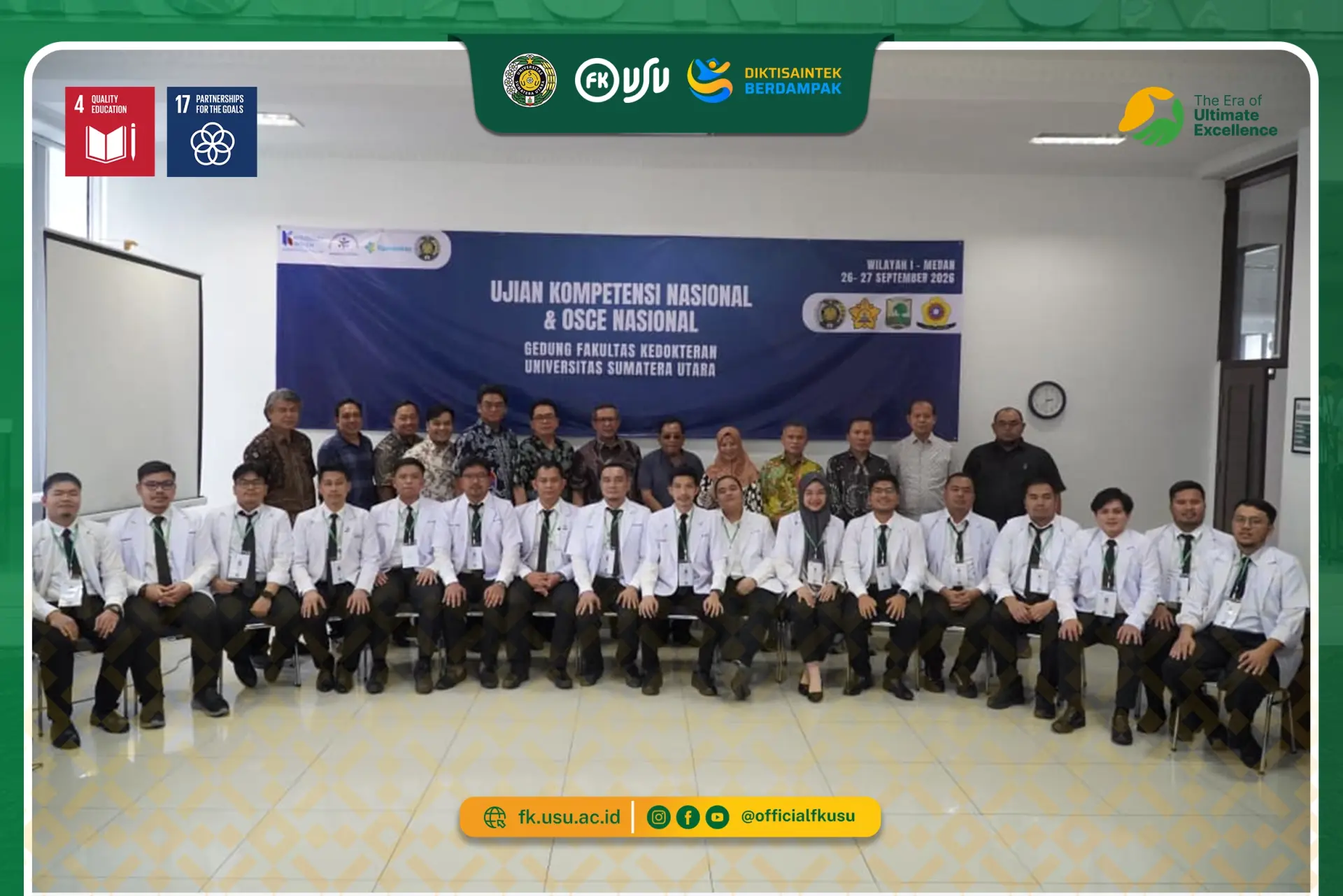
The Faculty of Medicine Universitas Sumatera Utara (FK USU) hosted the implementation of the National Competency Examination (Ukomnas) and the National Objective Structured Clinical Examination (OSCE) of the Indonesian College of Surgeons Region 1. This activity is an important stage in the education and competency evaluation process for prospective surgeons to ensure that graduates meet the standards of competency, professionalism, and clinical readiness in accordance with the demands of healthcare services.
The series of activities was held over two days, namely the National Competency Examination on September 26, 2026, and the National OSCE on September 27, 2026, at the Skill Lab Building of the Faculty of Medicine Universitas Sumatera Utara.
The activity was attended by participants from the Surgery Residency Program (PPDS) of four higher education institutions in Sumatra, namely Universitas Sumatera Utara (USU), Universitas Syiah Kuala (USK), Universitas Sriwijaya (UNSRI), and Universitas Andalas (UNAND).
At the National Competency Examination held on September 26, 2026, there were 17 participants, with the following breakdown:
- Universitas Syiah Kuala (USK): 1 participant
- Universitas Sumatera Utara (USU): 7 participants
- Universitas Sriwijaya (UNSRI): 2 participants
- Universitas Andalas (UNAND): 7 participants
Meanwhile, at the National OSCE held on September 27, 2026, the number of participants reached 30, with the following breakdown:
- Universitas Syiah Kuala (USK): 8 participants
- Universitas Sumatera Utara (USU): 9 participants
- Universitas Sriwijaya (UNSRI): 8 participants
- Universitas Andalas (UNAND): 5 participants
The implementation of the National Competency Examination and National OSCE is an important part of ensuring that every prospective surgeon meets the established competency standards. Through a structured and objective evaluation process, participants are assessed not only in terms of knowledge but also in clinical skills, decision-making abilities, communication, and professionalism in providing patient care.
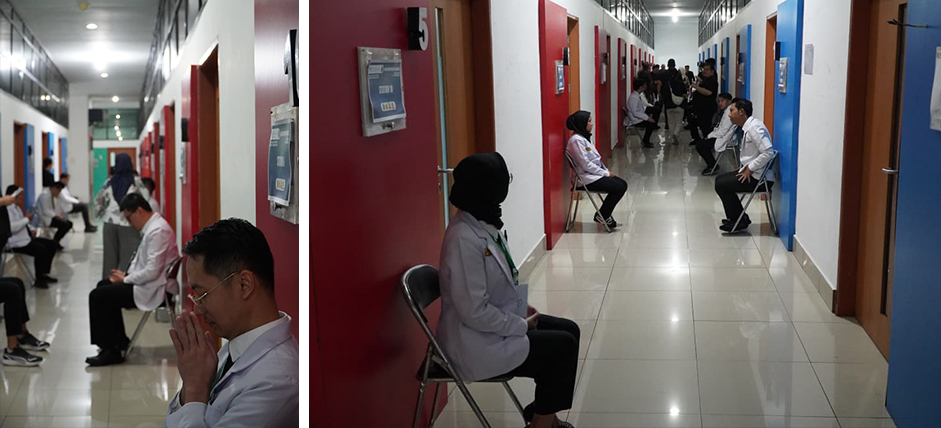
As the host institution, FK USU supported the smooth implementation of the activity by providing Skill Lab facilities that supported the examinations, while also strengthening the role of FK USU in supporting improvements in the quality of specialist medical education and the development of healthcare professionals in Indonesia.
The activity also served as an opportunity to strengthen collaboration and academic networks among institutions providing surgery residency education in Sumatra, particularly in maintaining and improving the quality of education and graduate competency standards.
The Faculty of Medicine Universitas Sumatera Utara expresses its appreciation to the Indonesian College of Surgeons, all participating institutions, the committee, examiners, and all parties who contributed to the implementation of the National Competency Examination and National OSCE of the Indonesian College of Surgeons Region 1. Efforts to improve the competencies of prospective surgeons also support Sustainable Development Goal (SDG) 3: Good Health and Well-being. Standardized education and competency evaluation for medical professionals are an important part of preparing specialists who are able to provide safe, high-quality healthcare services in accordance with community needs.
From an educational perspective, the implementation of the National Competency Examination and National OSCE is also in line with SDG 4: Quality Education. The structured evaluation process provides a means of ensuring that students' learning outcomes meet competency standards while encouraging the continuous development of knowledge, clinical skills, and professionalism.