


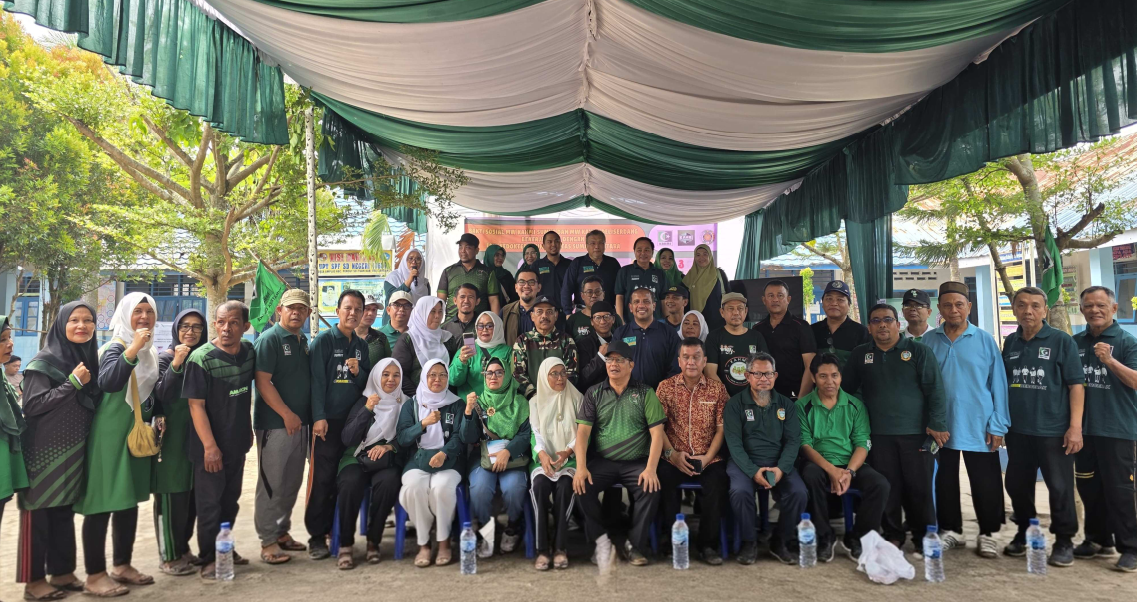
Amid the ease with which the public can obtain information through social media and various digital platforms, the spread of inaccurate health information has become a particular challenge in disease prevention efforts, including cervical cancer. Various myths about the causes of cancer, vaccine safety, and health examinations can create confusion and influence a person's decision to seek medical services. Recognizing the importance of this issue, the Doctoral Program in Medical Sciences, Faculty of Medicine, Universitas Sumatera Utara (USU), carried out a community service activity entitled “The Influence of Disinformation on Cervical Cancer Prevention Programs in Amplas Village, Percut Sei Tuan Subdistrict, Deli Serdang Regency” on June 29, 2025. The activity was led by dr. Muhammad Rizki Yaznil, M.Ked(OG), Sp.OG, Subsp.Onk, with a team involving Prof. Dr. dr. M. Rusda Harahap, Prof. Dr. dr. Arlinda Sari Wahyuni, Prof. Dr. dr. Elmeida Effendy, and Dr. dr. Cut Adeya Adella. The community service theme highlighted the importance of public understanding of accurate health information as part of efforts to protect women's health. Cervical cancer is a malignancy that develops in the cervix, and most cases are associated with persistent infection with high-risk human papillomavirus (HPV). The disease can develop gradually and often causes no clear symptoms in its early stages. Therefore, prevention through HPV vaccination and screening examinations in accordance with medical recommendations are important measures to reduce the risk of disease and detect precancerous changes at an earlier stage.
Health disinformation can hinder the implementation of cervical cancer prevention programs when the public places greater trust in information that lacks a scientific basis than in explanations provided by healthcare professionals. Misleading information, such as the belief that the HPV vaccine always causes fertility problems or that cervical examinations are only necessary when someone experiences symptoms, can potentially cause fear and delays in seeking healthcare services. In fact, HPV vaccination aims to protect against certain HPV infections associated with cancer, while screening helps detect cell changes or high-risk infections before they develop into more serious diseases. Examinations can be performed using available and recommended methods according to age, individual conditions, and healthcare service policies, including HPV DNA testing, Pap smears, or visual inspection with acetic acid in certain circumstances. Prevention also needs to be supported through open communication between the public and healthcare professionals. Medical information should be obtained from healthcare facilities, professional organizations, and official institutions so that decisions are not based on rumors or personal experiences that may not necessarily align with scientific evidence. In the context of USU's community service activity in Amplas Village, discussing the influence of disinformation was relevant to strengthening awareness that health literacy is not merely the ability to read information, but also the skill of assessing the reliability of sources, understanding risks, and determining preventive measures responsibly. An accessible educational approach is expected to help the public avoid misunderstandings about cervical cancer.
This community service activity also demonstrates the importance of university involvement in addressing health issues influenced by developments in communication technology. Cervical cancer prevention requires more than simply providing screening and vaccination facilities; it also requires public trust in medically reliable information. The roles of families, healthcare professionals, community leaders, and educational institutions are important in building an environment that supports women in accessing preventive services without fear or stigma. Ongoing education has the potential to help the public recognize misleading information, understand the benefits of regular examinations, and increase awareness of reproductive health. However, the success of the activity needs to be assessed through evaluation data, such as the number of participants, their level of understanding before and after the educational session, and behavioral changes related to the use of cancer prevention services. Through this activity in Amplas Village, the Doctoral Program in Medical Sciences, Faculty of Medicine, USU, demonstrated its contribution to connecting medical knowledge with community health needs. This program aligns with the Sustainable Development Goals (SDGs), particularly SDG 3 on Good Health and Well-Being, SDG 4 on Quality Education, and SDG 5 on Gender Equality. By strengthening health literacy and increasing access to accurate information, cervical cancer prevention is expected to become more widely understood as a measure to protect women's health that needs to be carried out continuously.