


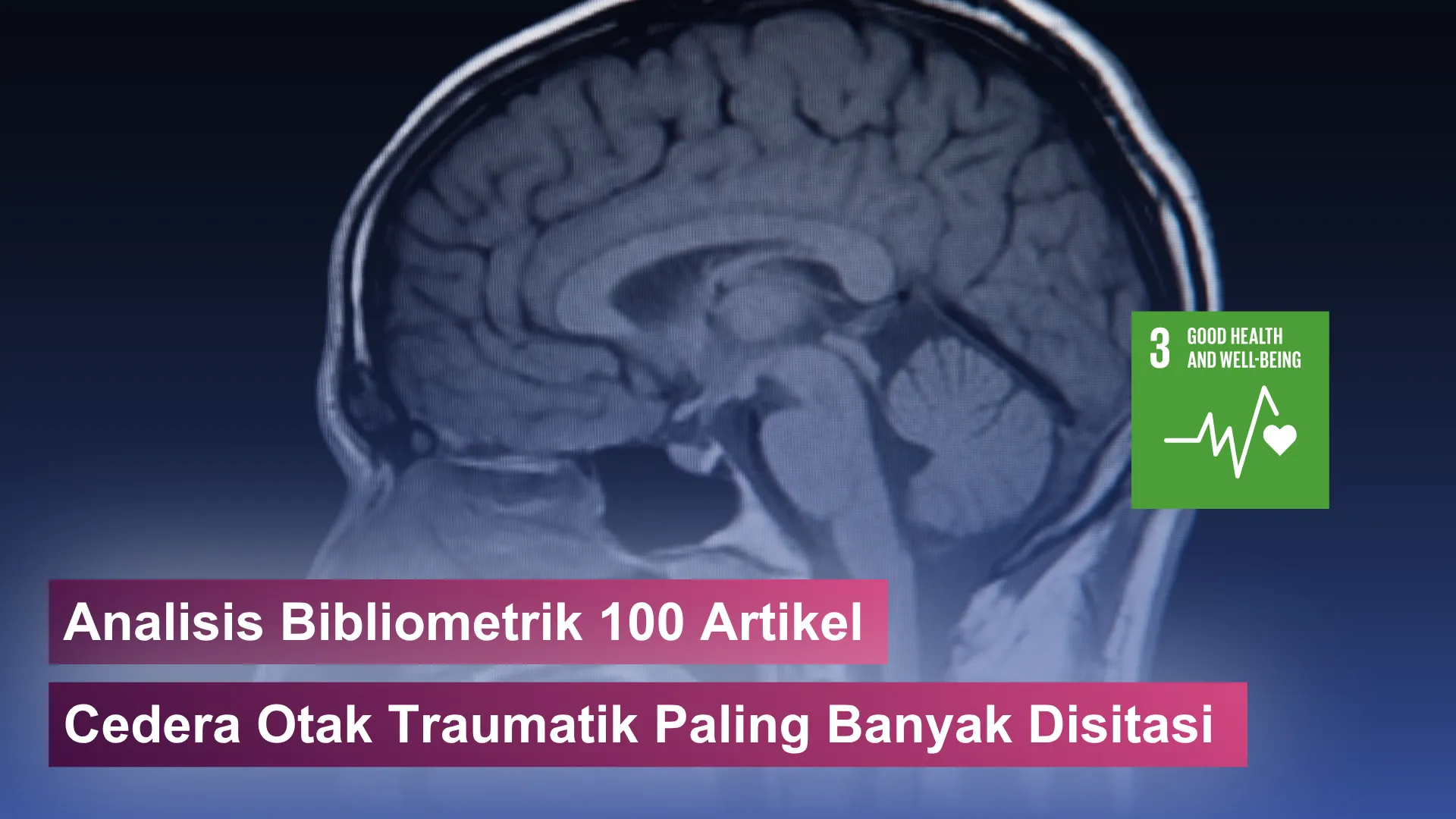
Traumatic brain injury (TBI) remains a global public health problem. In 2021, an estimated 20.8 million cases occurred worldwide, 56.6 percent of which were classified as moderate to severe. East Asia recorded the highest number of cases, at 4.3 million, with 69 percent classified as moderate or severe. These figures may still be underestimated because many mild cases go unreported. Despite this substantial burden, TBI research remains difficult to consolidate. Study designs, case definitions, outcome measures, and patient populations vary widely, making it difficult to develop uniform clinical guidelines. To help map research directions, a team of researchers from the Department of Neurosurgery, Faculty of Medicine, Universitas Sumatera Utara (USU), conducted a bibliometric analysis of the most frequently cited TBI articles.
How the Research Was Conducted
The team searched the Dimensions database on July 1, 2025, and identified 79,608 TBI publications from 2000 to 2025. From this list, the 100 articles with the highest citation counts were selected. The team included only primary research articles. Systematic reviews, meta-analyses, guidelines, and commentaries were excluded. To identify 100 eligible articles, the team screened 122 articles. Three reviewers conducted independent assessments, and any disagreements were resolved through discussion. Collaboration network maps were created using VOSviewer.
What Was Found
Of the 100 articles, 82 were human studies, and 18 were preclinical studies, consisting of 15 animal studies, two biomechanical studies, and one cell study. Among the animal studies, the controlled cortical impact (CCI) model was the most frequently used, appearing in 8 of the 15 studies. Among the human studies, cross-sectional designs were the most common (18 studies), followed by randomized controlled trials (17), cohort studies (16), and epidemiological reports (11).
The most striking finding was the absence of randomized trials on mild traumatic brain injury. All 17 randomized trials examined moderate to severe injuries, focusing on intensive care, medications such as progesterone and tranexamic acid, and surgical procedures such as decompressive craniectomy. In contrast, 16 of the 41 observational studies examined mild traumatic brain injury or concussion. The authors suggest that this may be related to ethical and practical challenges in randomizing patients with subtle and temporary symptoms.
Research involving children was also limited. Only 6 of the 100 articles specifically examined pediatric patients. The authors considered this figure notable because children have different injury and recovery patterns from adults.
In terms of institutions, Imperial College London and the University of California, Los Angeles, each contributed six articles. The United States contributed 70 articles, followed by the United Kingdom (17) and the Netherlands (7). The most cited article was the Global Burden of Disease 2016 report on TBI and spinal cord injuries (James et al., Lancet Neurology, 2019), with 3,921 citations. The journal with the highest number of articles was the New England Journal of Medicine (11 articles).
Why This Matters
Most influential studies were produced in the United States and Europe, even though East Asia bears the greatest burden. The authors believe this reflects differences in research infrastructure, funding, and language barriers in the dissemination of scientific knowledge. For countries such as Indonesia, which bear substantial costs for TBI healthcare services, context-specific local research is considered essential. They highlighted the absence of articles published between 2021 and 2025 in the top 100 list. They explained that this was primarily due to citation delays, as new articles need five to ten years to accumulate comparable citation counts. This period coincided with the COVID-19 pandemic, and its impact has not yet been formally analyzed. Raw citation counts tend to favor older articles. The analysis also used only one database, meaning that rankings may differ in Web of Science or Scopus. Self-citations were not excluded. The analysis was also descriptive, without inferential statistical testing.
Key Research Findings
A bibliometric analysis of the 100 most cited TBI articles from 79,608 publications (2000 to 2025) using Dimensions and VOSviewer.
82 articles were human studies, and 18 were preclinical studies.
None of the 17 randomized trials examined mild traumatic brain injury; all focused on moderate to severe injuries.
Only 6 articles (6 percent) examined pediatric patients.
The United States contributed 70 articles, while countries in East Asia, which have the highest TBI burden, were underrepresented.
No articles from 2021 to 2025 were included in the list, which the authors attributed to citation delays, with the possible influence of the pandemic.
The authors recommend randomized trials for mild traumatic brain injury, standardized outcome reporting, research on pediatric TBI, and stronger research efforts in regions with a high disease burden.
Authors
Khairul Azmi
Resource Person/Researcher
Dr. dr. Andre Marolop Pangihutan Siahaan, M.Ked(Neurosurg), Sp.BS