


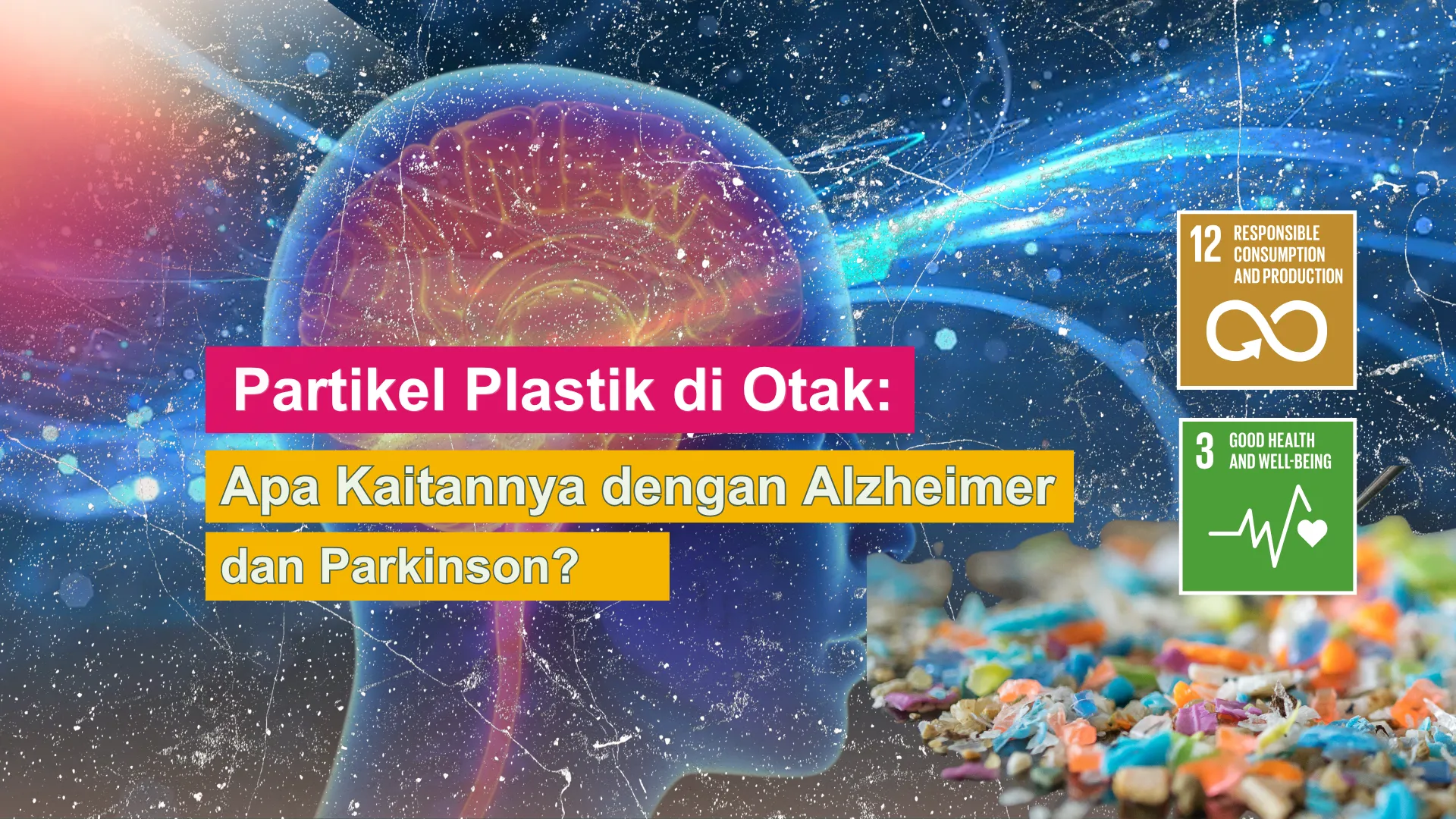
Tiny Plastic Particles, Big Questions About Brain Health
Plastic does not always appear in the form of bottles, bags, or packaging. Over time, plastic objects can break down into much smaller particles: microplastics and nanoplastics. Their size makes these particles difficult to observe without specialized equipment, but their presence in the environment and in certain body tissues has prompted researchers to raise new questions.
One of these questions concerns their possible connection to brain health. Specifically, is exposure to plastic particles associated with biological processes involved in Alzheimer's and Parkinson's diseases?
To examine what is currently known, Muhammad R.A. Harahap and colleagues conducted a scoping review, or mapping review. This approach summarizes the scope of available research and identifies areas that still require stronger evidence. Of the 93 records identified, 13 studies were included in the review: two involving humans and eleven consisting of preclinical research.
Inflammation and Disrupted Cellular Energy Metabolism in the Spotlight
In preclinical studies, exposure to microplastics and nanoplastics, particularly polystyrene, was associated with several changes in the nervous system. These included oxidative stress, inflammation, impaired mitochondrial function, disruption of cellular component recycling processes, and neuronal cell death. Mitochondria help provide energy for cells. If their function is disrupted, cells may have difficulty performing their tasks. Meanwhile, oxidative stress and inflammation can alter the conditions surrounding cells and affect their ability to survive. These findings offer clues about biological processes that require further investigation. However, preclinical studies have not directly explained what happens in humans under everyday exposure conditions.
Protein Changes Associated with Alzheimer's and Parkinson's Diseases
In Alzheimer's models, several studies included in the review reported changes in tau protein and the accumulation of amyloid-beta. In Parkinson's models, studies observed changes in alpha-synuclein, the loss of dopamine-producing neurons, and movement disorders. These proteins are associated with processes studied in Alzheimer's and Parkinson's diseases. The changes observed in research models help scientists develop hypotheses about how exposure may affect nerve cells. However, these hypotheses still need further testing before they can be linked to disease development in humans.
Evidence from Human Brain Tissue Still Raises Questions
Two human studies provide an initial picture of the possible presence of plastic particles in brain tissue. However, the evidence remains limited, and the detection methods are still a subject of debate. The high fat content of brain tissue can make measurements difficult, so researchers need to ensure that the detected particles are indeed plastic and that their quantities can be measured reliably.
Measurement accuracy is important because research conclusions depend on the data collected. If the methods are not sufficiently reliable, the types and quantities of particles found are also difficult to establish. Therefore, preliminary results need to be interpreted cautiously and tested using validated methods.
Can Plastic Particles Trigger Neurological Diseases?
This review has not proven that microplastics or nanoplastics cause Alzheimer's or Parkinson's diseases in humans. Findings on inflammation, mitochondrial dysfunction, and protein changes mainly come from preclinical studies. Human evidence remains too limited to establish a cause-and-effect relationship. This means that the research cannot yet be used to estimate an individual's risk of developing neurological diseases. Its main value lies in identifying leads that warrant further investigation and explaining why additional research is needed.
Experiments Need to Better Reflect Actual Exposure
More than 90 percent of the preclinical studies included in the review used polystyrene. However, the types of plastic particles found in humans are not limited to polystyrene. Differences in materials and exposure conditions mean that experimental results may not necessarily reflect the exposure humans experience in their everyday environments. The authors emphasize the need for validated measurement methods, exposure conditions that better reflect environmental conditions, and long-term research. With this approach, future studies can help determine whether preclinical findings also apply to humans. For now, this research shows that questions about plastic and brain health warrant continued investigation. If such a relationship is eventually established, the findings could help determine more appropriate measures for health protection and pollution control. However, these benefits remain possibilities for the future, rather than conclusions of this study.
Key Research Points
This study mapped the evidence on the possible relationship between microplastics and nanoplastics and neurodegenerative diseases, particularly Alzheimer's and Parkinson's diseases.
The authors used a scoping review to summarize the scope of research and identify patterns in the available findings.
Of the 93 records identified, 13 studies were included in the review. Two studies involved humans, while the other eleven were preclinical studies.
In preclinical studies, exposure to plastic particles was associated with oxidative stress, inflammation, mitochondrial dysfunction, and protein changes relevant to Alzheimer's or Parkinson's diseases.
Nevertheless, the available evidence has not demonstrated a cause-and-effect relationship between exposure to plastic particles and these diseases in humans.
Research still faces challenges in reliably measuring particles in brain tissue. Most experiments also used polystyrene.
The authors recommend validated detection methods, exposure conditions that better represent the environment, and long-term research.
News Writer
Khairul Azmi
Resource Person
Andre Marolop Pangihutan Siahaan