


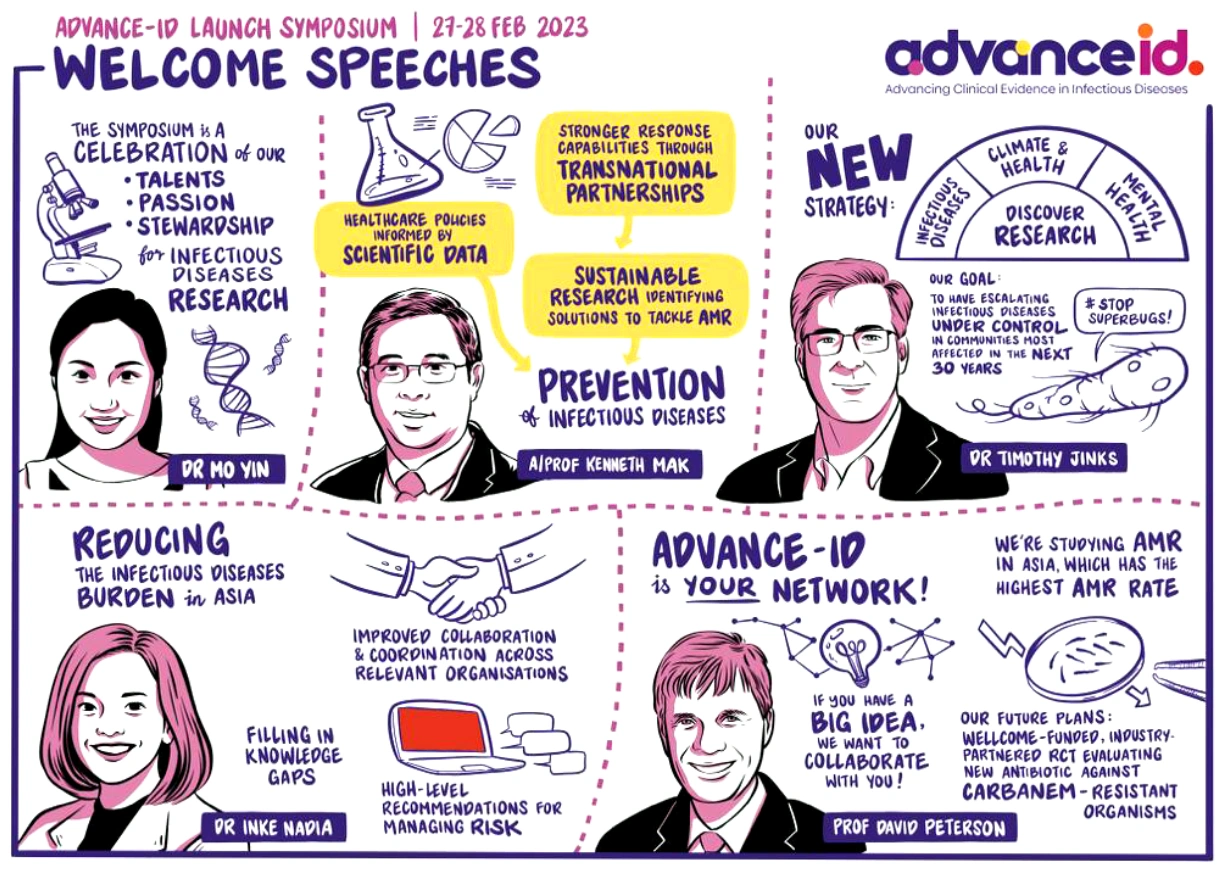

ADVANCE-ID (ADVANCing Clinical Evidence in Infectious Diseases Network) Launch Symposium is a meeting with the aim of discussing the topic of AMR (antimicrobial resistance) in infectious diseases based on clinical symptoms that occur. AMR by 2050 is projected to be one of the biggest challenges for the world of health and is often referred to as a “silent pandemic”. Prof. David Paterson from NUS Saw Swee Hock School of Public Health said, “When carbapenems (re: betalactam antibiotics) can no longer work against antibiotic-resistant germs, we are in a serious situation”.
The meeting, which was held on February 27-28, 2023, at NUSS Kent Ridge Guilt House Singapore, was opened by Dr. Mo Yin a researcher from ADVANCE-ID Singapore, followed by opening remarks by Prof. Kenneth Mak, as Director of Health Services, Ministry of Health Singapore. Dr. Timothy Jinks from the Wellcome Trust UK also gave opening remarks and expressed the Wellcome Trust's commitment to supporting research collaborations focusing on communities most at risk from infectious diseases.
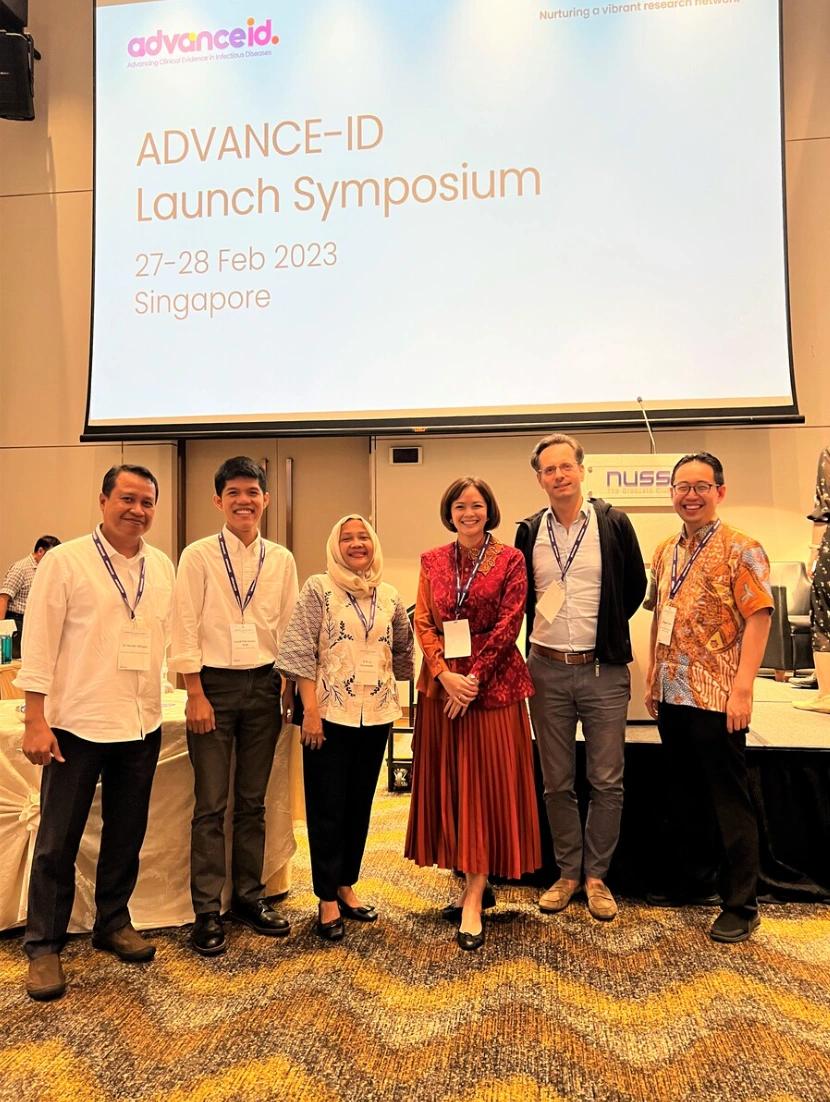
Vice Dean III of Faculty of Medicine USU, dr. Inke Nadia Diniyanti Lubis, M.Ked(Ped), Sp.A, Ph.D., was also invited as a keynote speaker to share information related to “The Impact of Infectious Diseases in LMICs in Asia”. As a representative of Universitas Sumatera Utara, Dr. Inke Nadia Diniyanti Lubis, M.Ked(Ped), Sp.A, Ph.D., explained how infectious diseases such as HIV, tuberculosis and malaria impact Low-Middle Income Countries in Asia. Asian countries classified as LMICs are vulnerable to infectious diseases due to poor health systems, lack of hygiene and nutrition which are closely related to poverty factors.
The meeting also featured speakers from countries such as Israel, the Philippines, Italy, Australia, Thailand, Malaysia, Singapore, Cambodia, Mongolia, Vietnam, Nepal, India and Bangladesh. At least 120 participants from 30 countries in Asia attended it. On the second day, Indonesian speaker Dr. Hendri Wijaya, M.Ked (Ped), Sp.A, presented information related to “Infectious Diseases Priorities in My Country” was given. Infectious disease issues that are prioritized in Indonesia are the high number of Tuberculosis, HIV/AIDS, and Malaria cases. The programs carried out related to contagious diseases in Indonesia are freeing Indonesia from neglected tropical diseases (NTDs), implementing the One Health Zoonotic Disease Prioritization Program (OHZDP), improving the national surveillance system related to vaccine-preventable diseases, and the last is the challenge of health services and health facilities in Indonesia, where health workers, especially doctors, are still not sufficient for national needs.
On the last day of the ADVANCE-ID launch symposium, participants were given the opportunity to visit health facilities in Singapore, such as NUH (National University Hospital) and NCID (National Center for Infectious Diseases). Activities carried out at NUH included visiting the main ward and ICU, and explaining microbiology, ASP infection control, and epidemiology. They ended with a visit to the NUS TRP infectious disease laboratory. While the activities during the visit to NCID explained the facilities and functions of NCID, visiting the NCID High-Level Isolation Unit (HLIU) and Negative Pressure (NEP) rooms.