


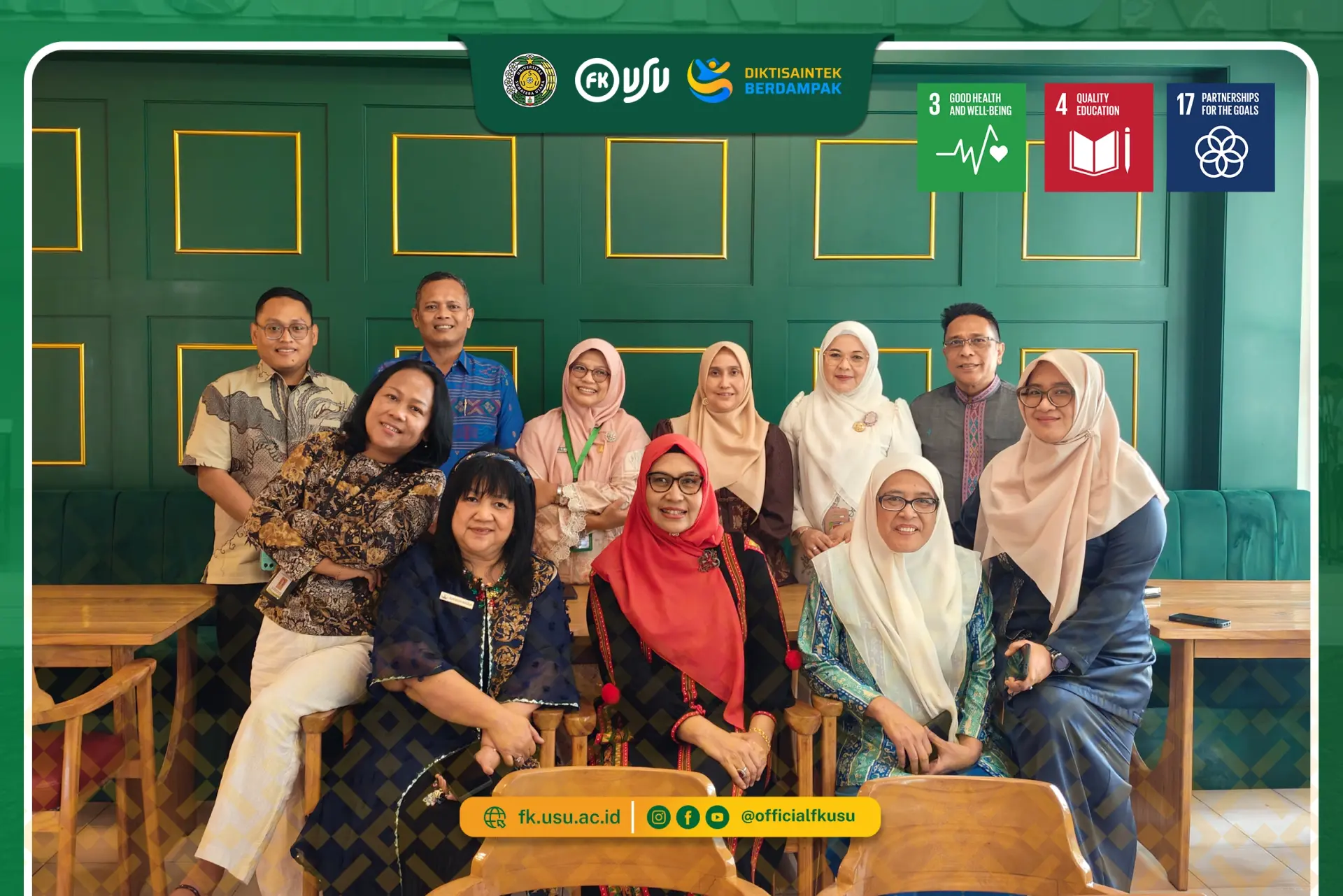
Medan, July 31, 2026 — The Faculty of Medicine, Universitas Sumatera Utara (FK USU), through the Department of Community Medicine (Ilmu Kedokteran Komunitas/IKK), conducted a Monitoring and Evaluation (Monev) of Educational Sites for Students in the Undergraduate Program in Medicine and Medical Profession Program at FK USU. The activity was attended by the Head of the Department of Community Medicine, Prof. dr. Putri Chairani Eyanoer, Ms.Epi., Ph.D., FISPH., FISCM., Sp.KKLP, the Secretary of the Department of Community Medicine, dr. Fauzi Budi Satria, MPH, Ph.D., and the Heads of Puskesmas serving as educational sites for students. Of the 11 Puskesmas invited, nine Heads of Puskesmas attended.
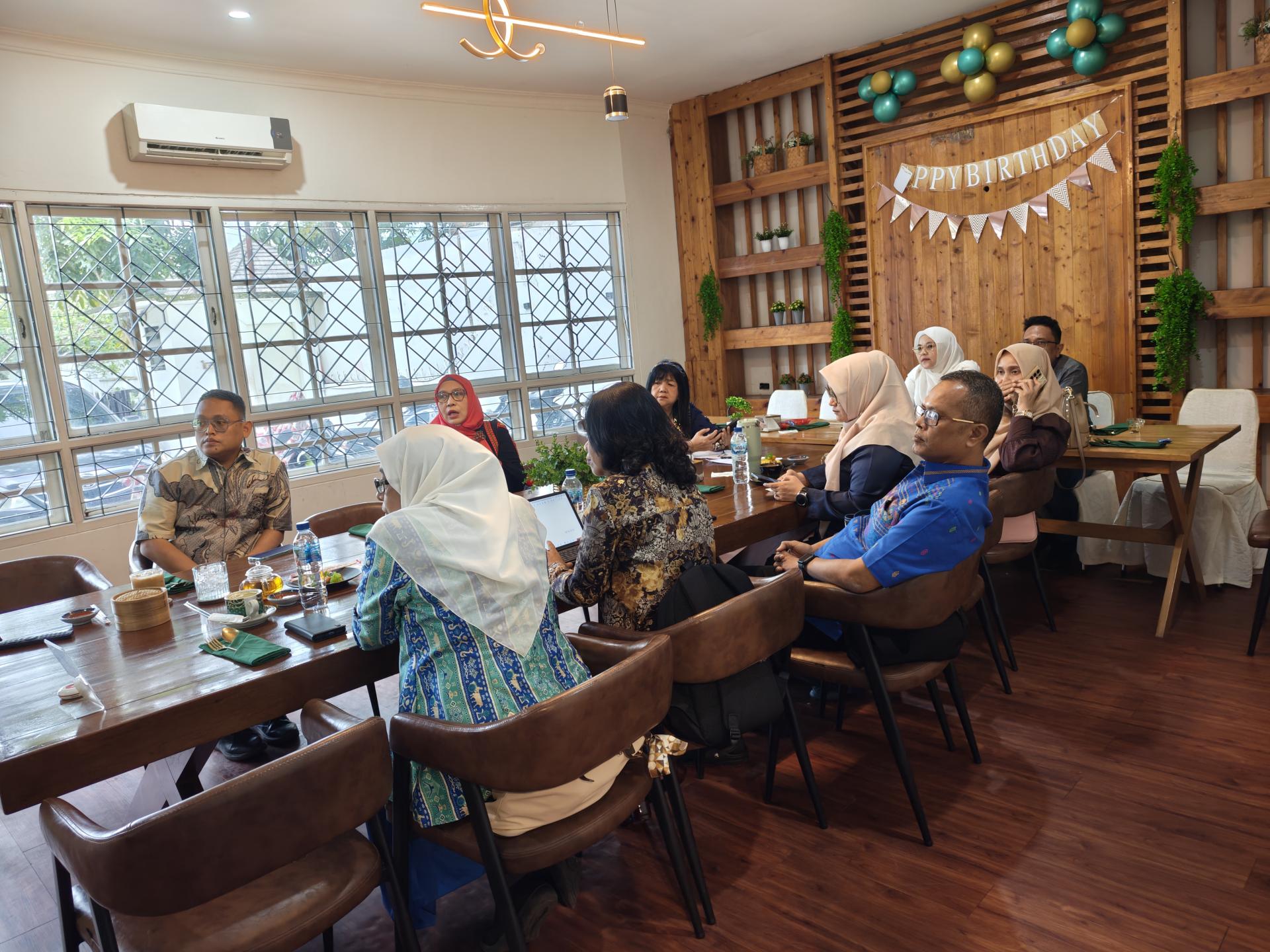
The monitoring and evaluation discussed the implementation of student education through the Global Health Block in Semesters 6 and 7, the evaluation of students in the Medical Profession Program at Puskesmas, as well as the mechanism for conducting regular monitoring and evaluation. The activity served as a forum to strengthen coordination between FK USU and Puskesmas in supporting the achievement of learning objectives.
In the Global Health Block for Semester 6, students will conduct field-based learning at Puskesmas, primary clinics, and hospitals. Students will not only conduct observations but also assess service processes, identify problems and gaps, and develop potential improvement strategies. The findings will subsequently be discussed and presented to the health facilities as an external evaluation, providing additional perspectives to support improvements in service quality.
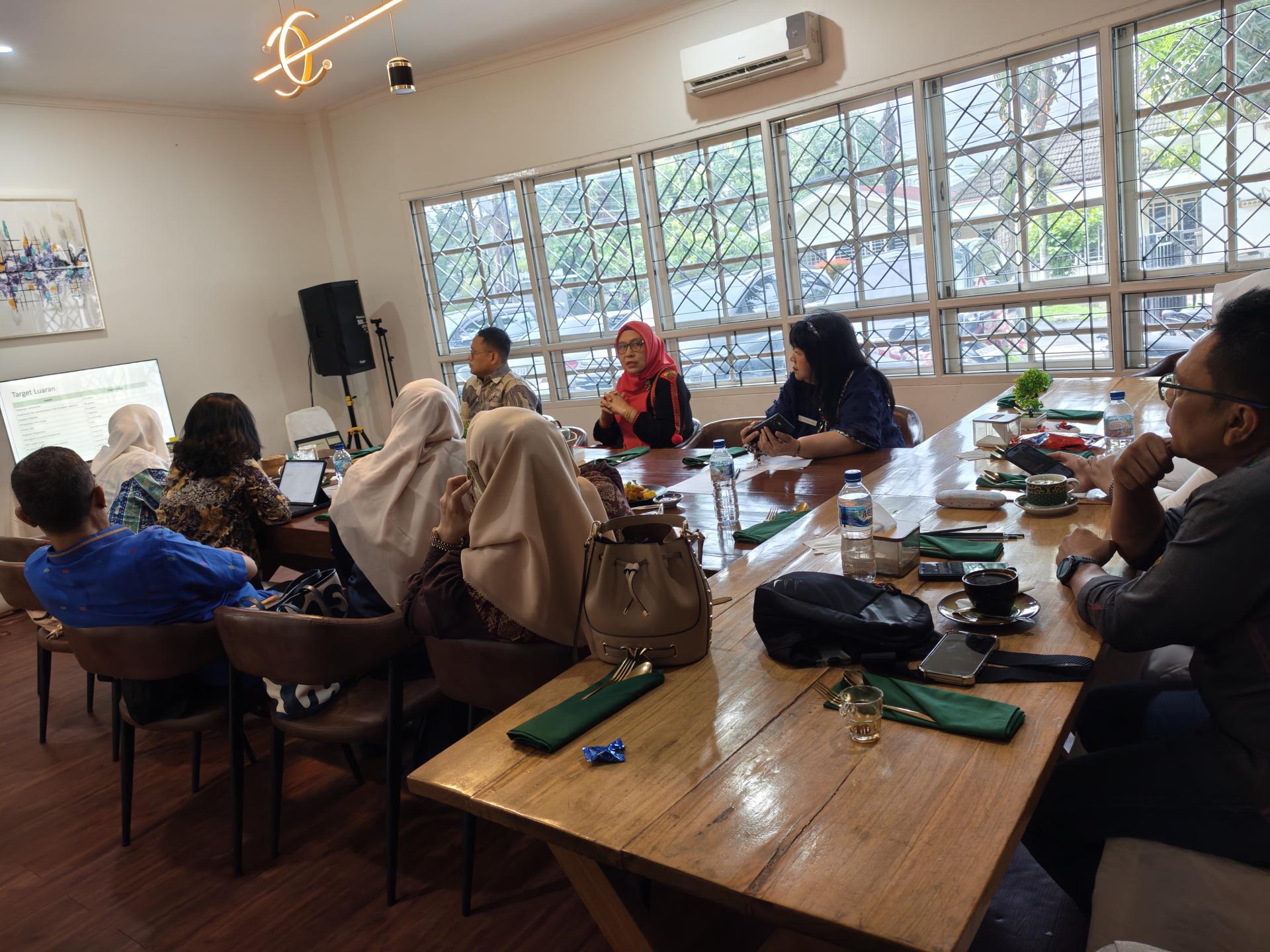
The activity supports SDG 3: Good Health and Well-Being by strengthening future doctors' capacity to understand health services and identify opportunities to improve service quality. Direct learning experiences at health facilities also enable students to gain a more practical understanding of community healthcare needs.
Meanwhile, Semester 7 students will study community resilience, referring to the ability of communities to withstand, adapt to, and recover from various changes and pressures, including environmental changes, natural disasters, social conflicts, and socioeconomic changes. The Heads of Puskesmas will also support the selection of observation sites based on the conditions of their respective service areas.
This community-based learning approach is aligned with SDG 4: Quality Education, as it provides contextual learning experiences while developing students' abilities in health problem analysis, communication, education, and collaboration.
Regarding the evaluation of education in the Medical Profession Program, it was agreed that monitoring and evaluation visits to each Puskesmas would be conducted twice each semester, while joint monitoring and evaluation involving all FK USU educational-site stakeholders would be conducted at least once a year. Students will undertake their education at Puskesmas for four weeks, with approximately 2–5 students assigned to each site depending on its capacity.
During the rotation, students will gain experience in clinical services, health promotion, Posyandu activities, home visits, chronic disease programs, health problem analysis, field epidemiology, health education, and interprofessional collaboration.
The continued partnership between FK USU and Puskesmas also supports SDG 17: Partnerships for the Goals by strengthening collaboration between educational institutions and healthcare facilities. This synergy is expected to ensure the optimal implementation of educational activities while providing benefits for students, Puskesmas, and the wider community.
The monitoring and evaluation activity was conducted successfully and received positive responses from the Heads of Puskesmas. The results will serve as a basis for strengthening coordination and the implementation of FK USU student education at Puskesmas as educational sites that support high-quality learning and respond to community needs.