


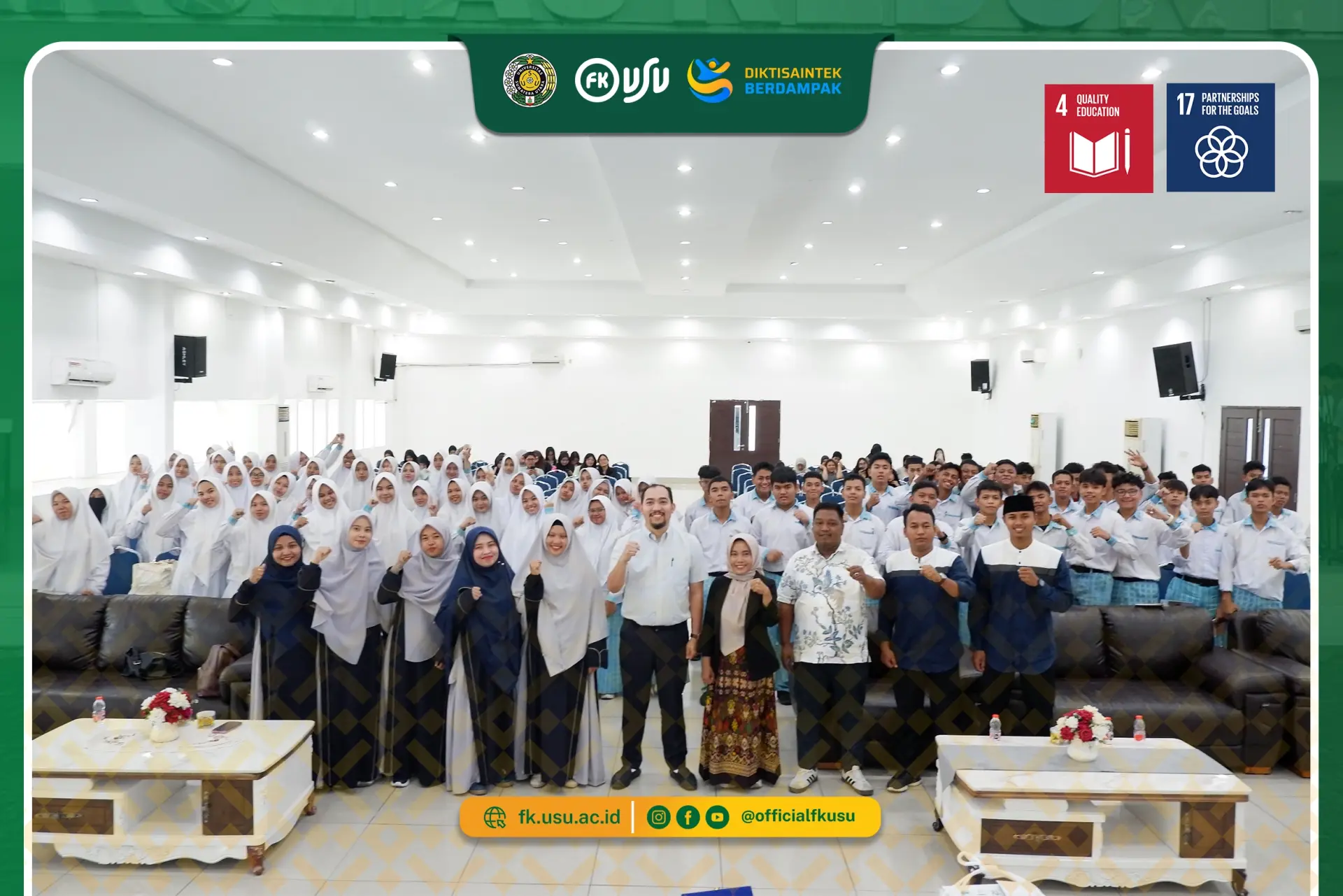
Medan, 6 August 2026 — The Faculty of Medicine, Universitas Sumatera Utara (FK USU), welcomed students from Permata Hati IT Private High School on Thursday, 6 August 2026. The visit provided students with an opportunity to learn more about the medical education environment while gaining an overview of the learning process and facilities available at FK USU. The initiative supports SDG 4: Quality Education, particularly by expanding access to educational information and helping young people explore higher education pathways and environments.
As part of the visit, the students attended an introductory session on medical education at FK USU delivered by dr. O.K. Ilham Abdullah Irsyam, Sp.OT, CF, AIFO-K. The session provided insights into academic life at a medical school, the medical education process, and the competencies and experiences students need to prepare for a future in medicine. Early exposure to higher education can help students prepare more effectively and build motivation to pursue further education with clear goals.
Beyond the classroom presentation, the students were also allowed to explore several learning facilities used by FK USU medical students. The facilities visited included the Computer-Based Test (CBT) Laboratory, Skills Lab, and Anatomy Laboratory. The experience gave students a closer look at how technology, clinical skills training, and anatomy education form essential components of medical education.
The school visit is expected to provide an educational and inspiring experience for students as they learn more about the medical profession and health education. Interaction between secondary schools and higher education institutions also creates opportunities to build positive partnerships that support the educational development of young people. This aligns with SDG 17: Partnerships for the Goals through stronger collaboration between schools and universities in advancing sustainable education.
Through initiatives such as this, FK USU continues to share knowledge and introduce the world of medical education to younger generations as part of its contribution to developing knowledgeable, skilled, and future-ready human resources.