


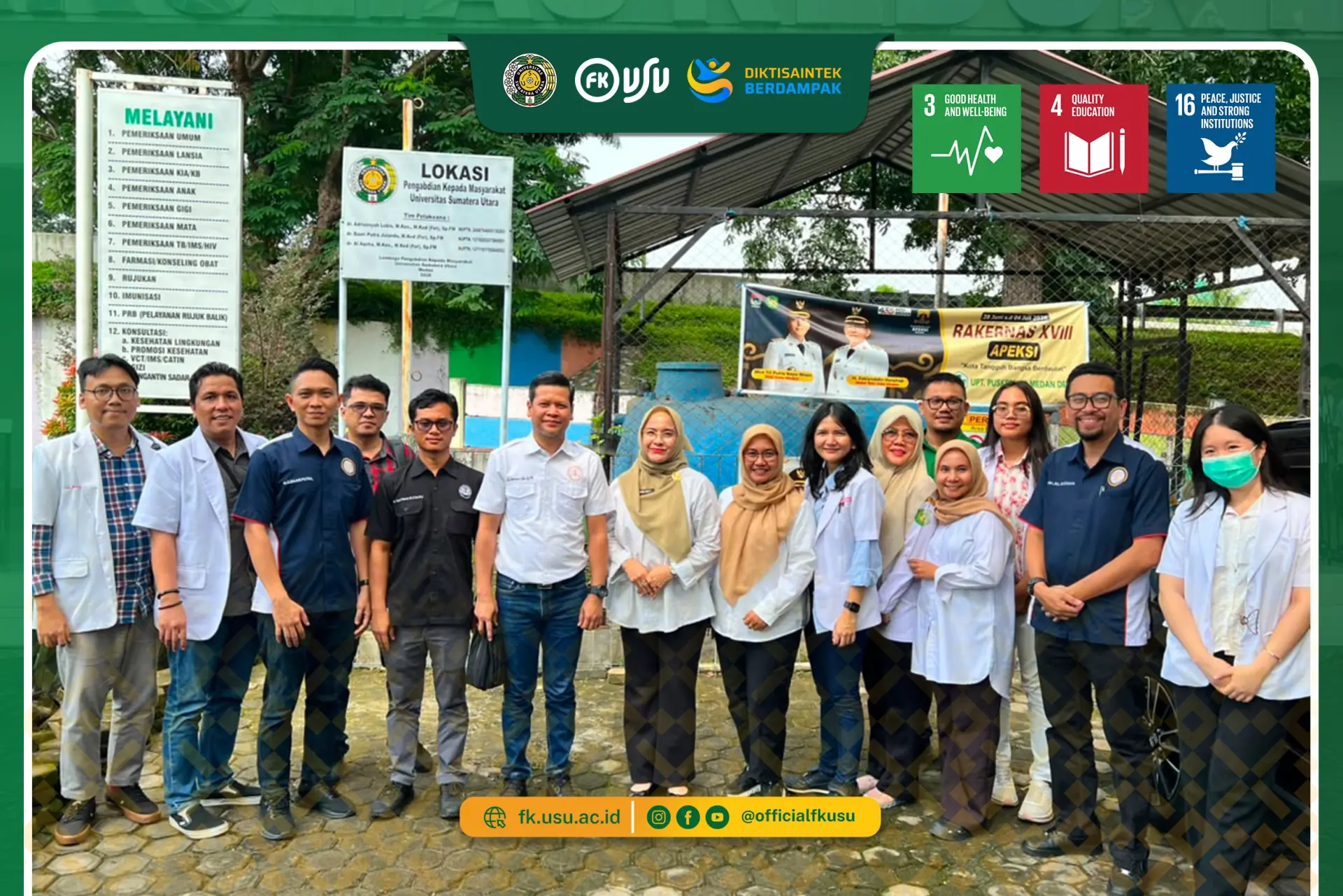
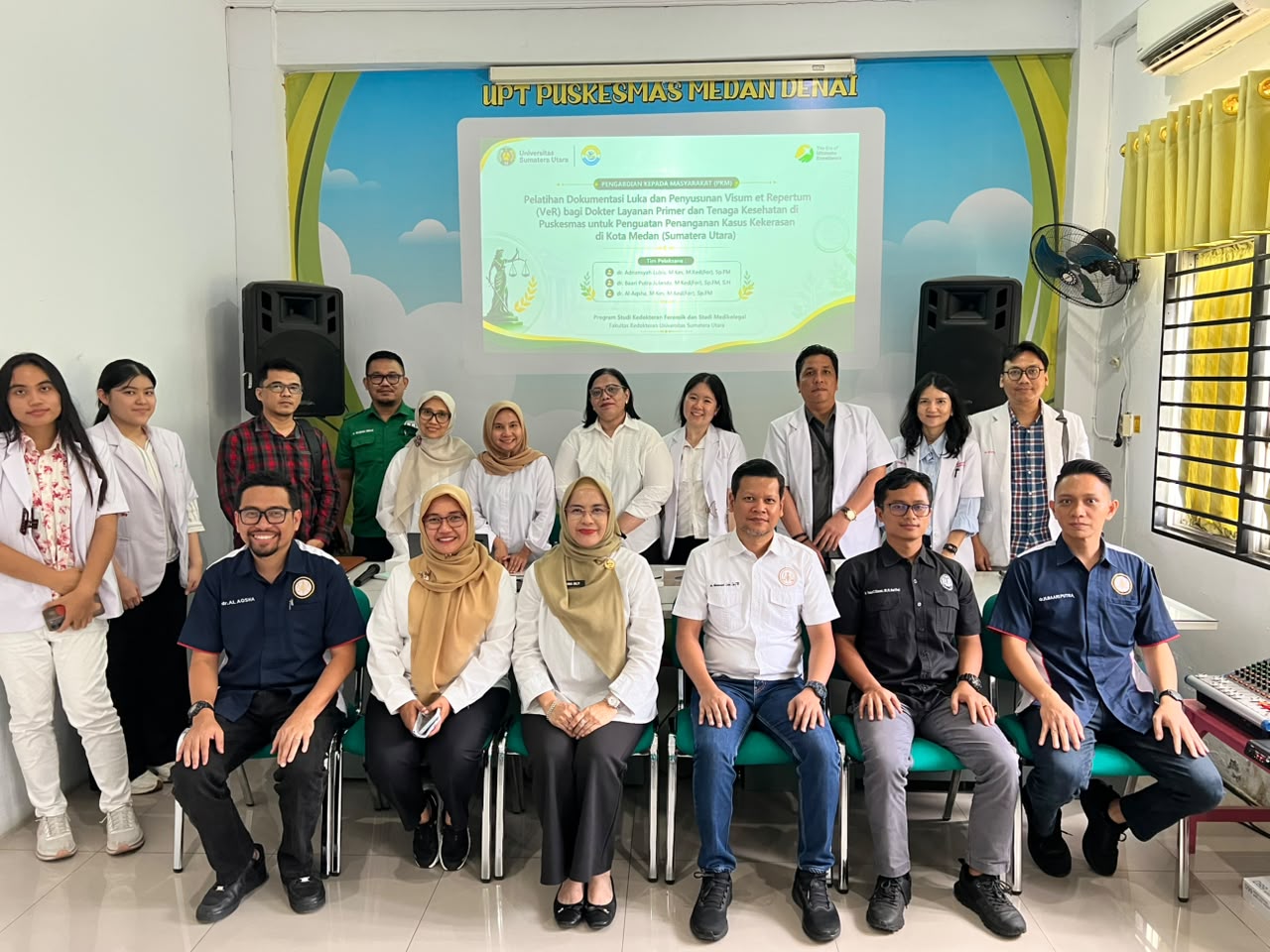
The Forensic and Medicolegal Specialist Program (Sp-1), Faculty of Medicine, Universitas Sumatera Utara (FK USU), conducted a Community Service Program entitled “Training on Wound Documentation and the Preparation of Visum et Repertum (VeR) for Primary Care Physicians and Healthcare Professionals at Community Health Centers to Strengthen the Management of Violence Cases in Medan” at the Medan Denai Community Health Center (UPT Puskesmas Medan Denai) on Wednesday, July 22, 2026.
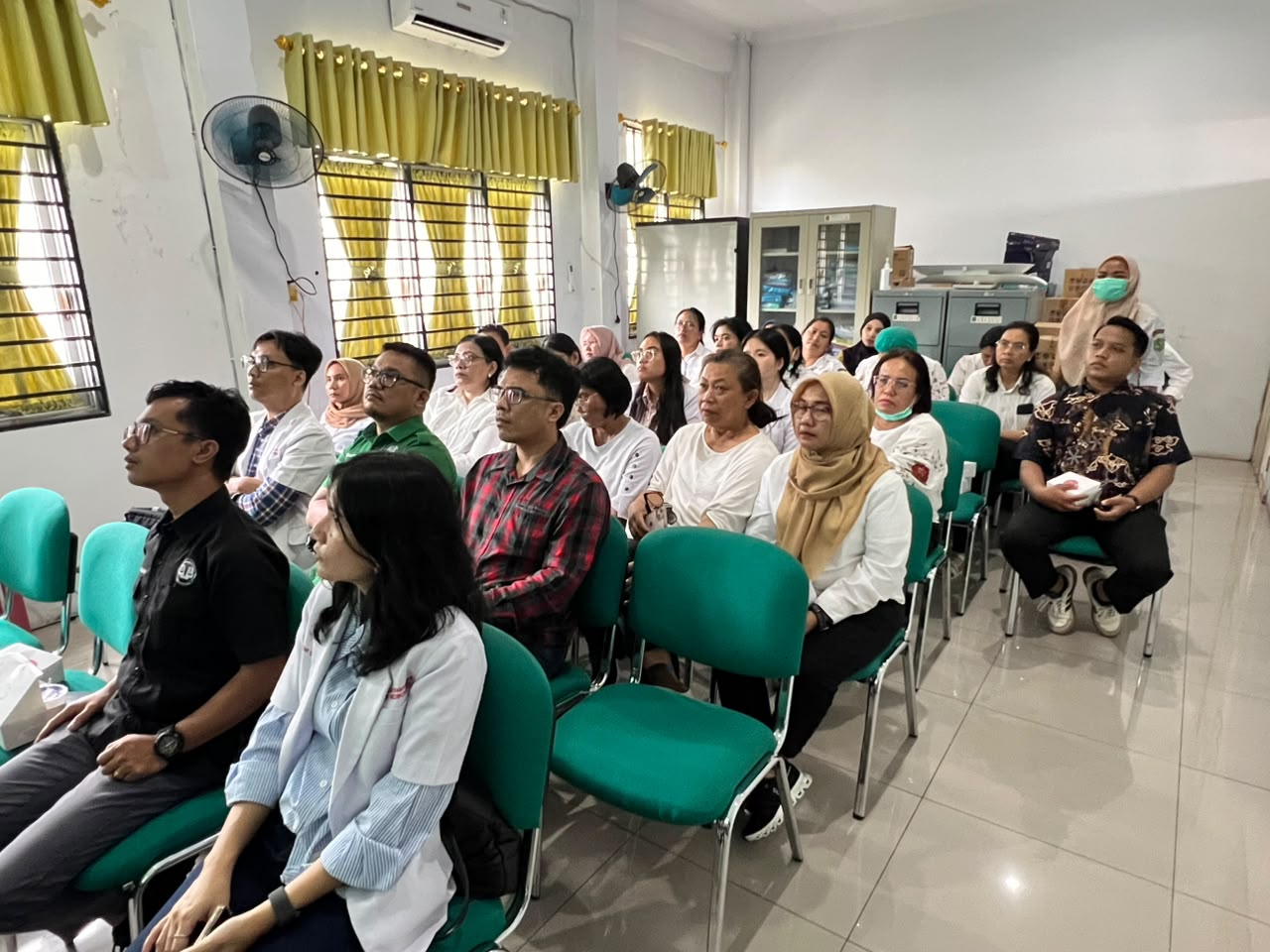
The activity aimed to strengthen the competencies of primary care physicians and healthcare professionals in documenting wounds and preparing Visum et Repertum (VeR) reports in accordance with medical, ethical, and legal principles. Accurate medical documentation is an important aspect of managing cases of violence, as it serves as supporting evidence in law enforcement proceedings while also contributing to the protection of victims.
The training was facilitated by a team of lecturers from the Forensic and Medicolegal Specialist Program at FK USU, consisting of dr. Adriansyah Lubis, M.Kes., M.Ked(For), Sp.F.M.; dr. Baari Putra Julanda, M.Ked(For), Sp.F.M., S.H.; and dr. Al Aqsha, M.Kes., M.Ked(For), Sp.F.M. The speakers delivered sessions on wound documentation techniques, forensic medical examinations of victims of violence, and the preparation of Visum et Repertum reports in accordance with professional standards.
In addition to the presentations, participants took part in an interactive discussion addressing various cases commonly encountered in primary healthcare facilities. Through the activity, participants were expected to apply the knowledge gained to their professional practice, enabling cases of violence to be managed in a more comprehensive and integrated manner.
The activity represents an implementation of the Tri Dharma of Higher Education, particularly community service, while also contributing to the achievement of the Sustainable Development Goals (SDGs), namely SDG 3 (Good Health and Well-being) through improving the quality of healthcare services, SDG 4 (Quality Education) through strengthening healthcare professionals’ competencies, and SDG 16 (Peace, Justice and Strong Institutions) through high-quality medical documentation that supports the legal process.