


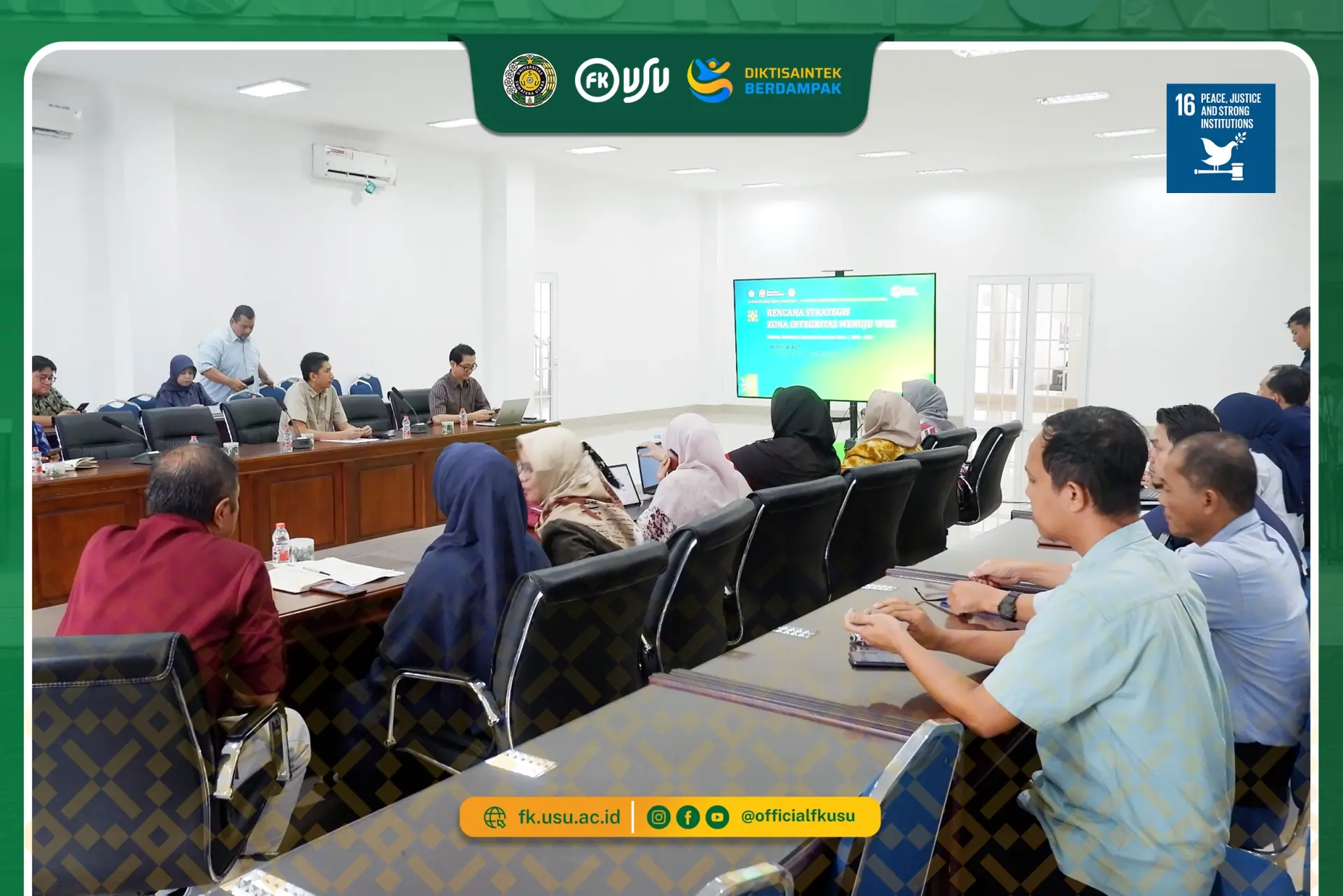
Medan, August 26, 2026 — The Faculty of Medicine, Universitas Sumatera Utara (FK USU), held a Strategic Plan (Renstra) Meeting for the Integrity Zone toward a Corruption-Free Area (ZI-WBK) on Wednesday, August 26, 2026. The meeting took place in the Meeting Room on the First Floor of FK USU and was attended by faculty leaders and relevant teams involved in the development of ZI-WBK within FK USU.
The meeting was opened by the Vice Dean for Administration, Finance, Human Resources, and Academic Infrastructure of FK USU, Prof. Dr. dr. Dedy Hermansyah, Sp.B, Subsp.Onk(K), who emphasized the importance of preparing and strengthening the ZI-WBK Strategic Plan as part of efforts to establish more transparent, accountable, effective, and service-oriented faculty governance.
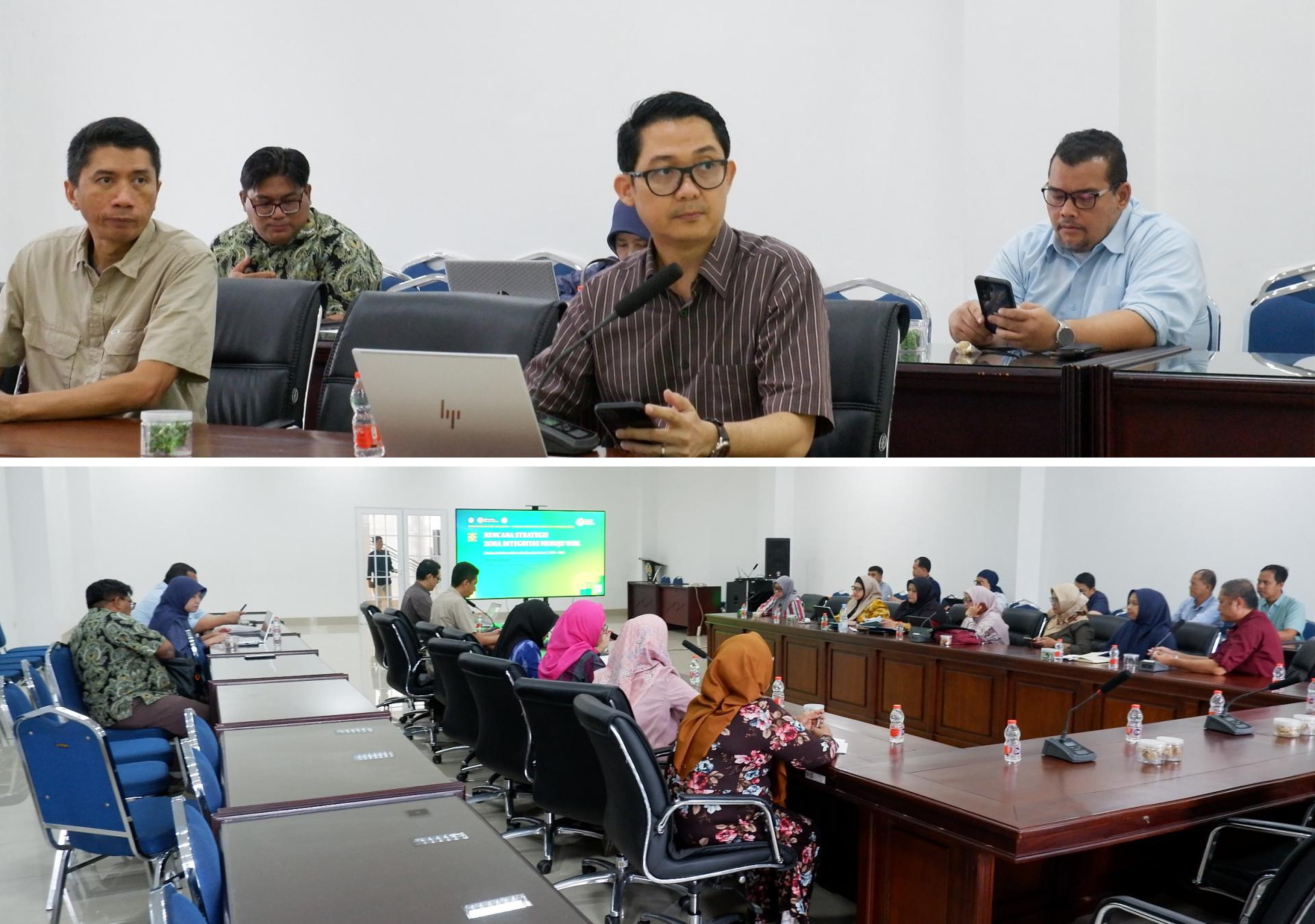 |
Subsequently, the Head of the ZI-WBK Team of FK USU, Prof. Dr. dr. Mustafa Mahmud Amin, M.Ked(KJ), M.Sc., Sp.KJ(K), presented the ZI-WBK Strategic Plan for FK USU. The presentation was attended by the coordinators and their respective team members and covered the direction and strategies for developing the Integrity Zone, strengthening organizational commitment, and the steps required to support the fulfillment of ZI-WBK development indicators and components.
Through this meeting, FK USU reaffirmed its commitment to strengthening coordination and synergy among all parties involved in the development of the Integrity Zone. The Strategic Plan is expected to serve as a guideline for establishing an integrity-driven work environment while improving the quality of academic and administrative services for the academic community and stakeholders.
The meeting also formed part of FK USU’s efforts to support the Sustainable Development Goals (SDGs), particularly SDG 16: Peace, Justice and Strong Institutions, through the strengthening of transparent, accountable, effective, and integrity-based institutional governance.
With a clear and measurable ZI-WBK Strategic Plan in place, FK USU is expected to become increasingly prepared to foster a corruption-free work culture and provide high-quality and sustainable public services.