


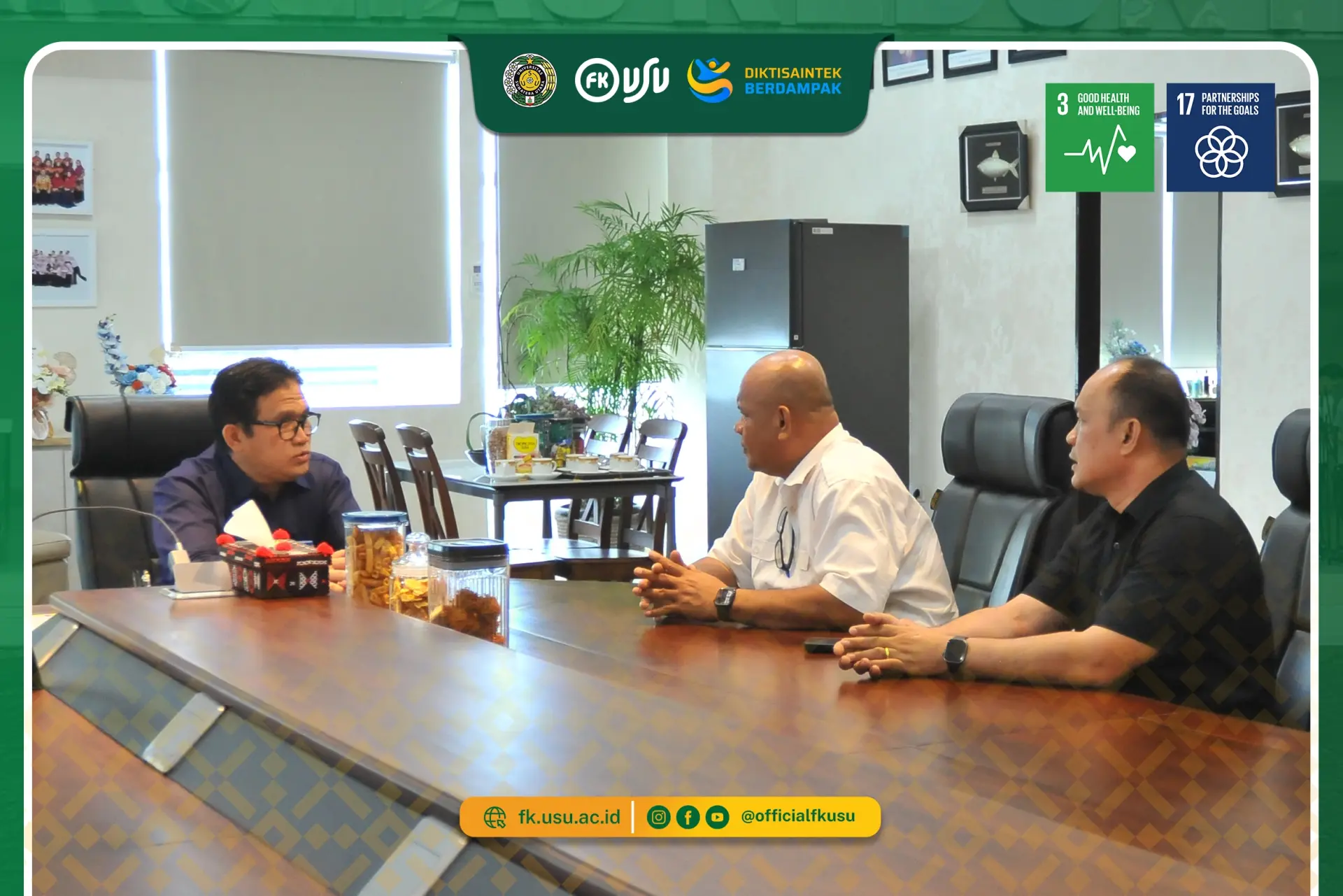
Medan, 7 July 2026 – The Faculty of Medicine, Universitas Sumatera Utara (FK USU), welcomed a delegation from the Government of North Nias Regency, led by the Regent of North Nias, during an official visit held on Tuesday (7 July 2026) in the Dean's Meeting Room on the second floor of FK USU. The meeting marked a strategic step toward strengthening collaboration between academia and local government to address healthcare challenges, particularly the shortage of specialist physicians in North Nias Regency.
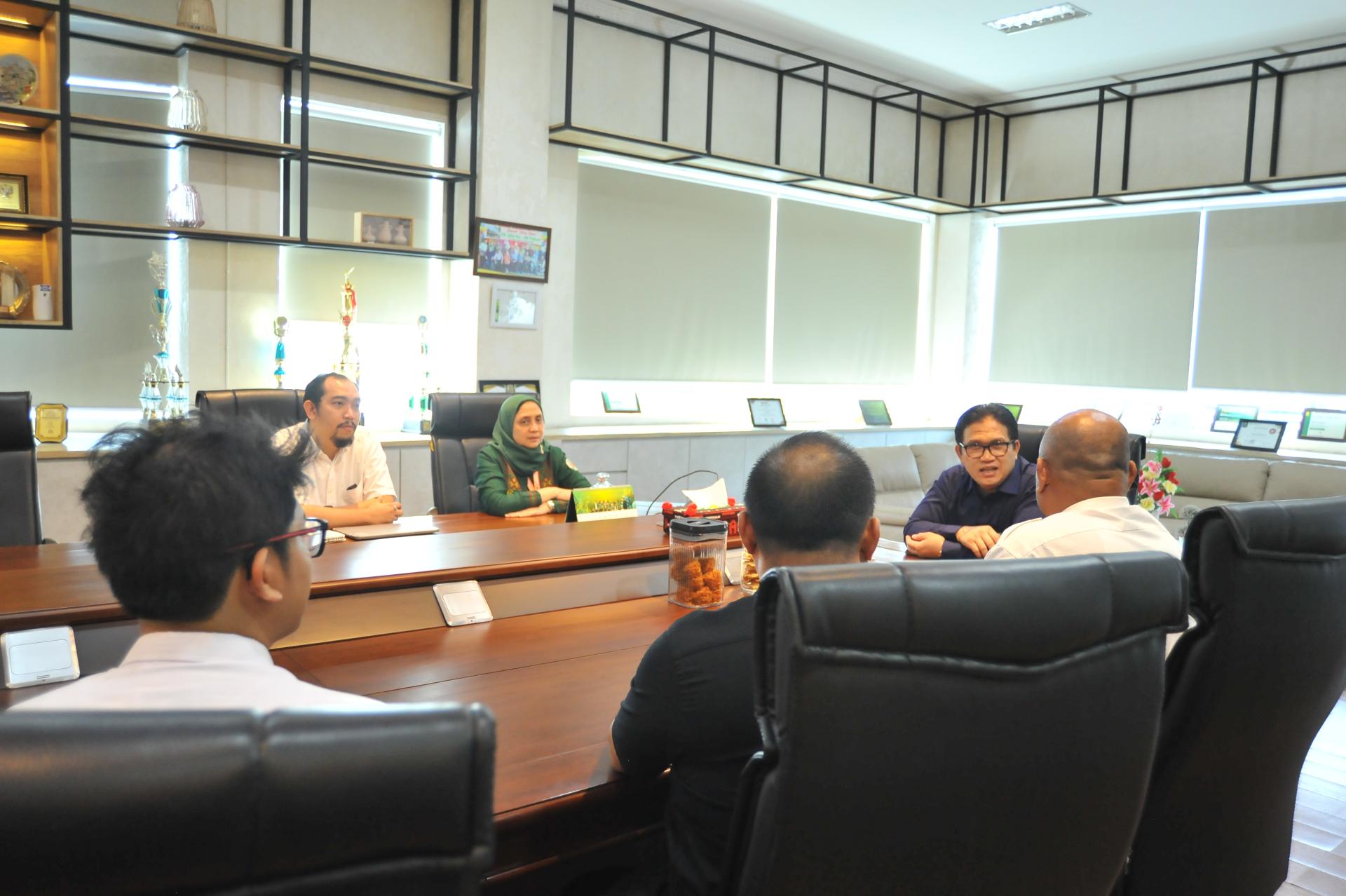
The meeting was chaired by the Dean of FK USU, Dr. dr. Muara Panusunan Lubis, M.Ked(OG), Sp.O.G., Subsp.K.Fm., together with the faculty leadership. Representing the North Nias Regency Government were Regent Amizaro Waruwu, S.Pd., M.IP., and his delegation. Discussions focused on expanding cooperation in healthcare human resource development, specialist medical education, and improving access to referral healthcare services for the people of North Nias. The meeting also served as a follow-up to the Memorandum of Agreement (MoA) previously signed between FK USU and the North Nias Regency Government at Tafaeri Regional General Hospital (RSUD Tafaeri) on 2 March 2026.
As one of Indonesia's frontier, outermost, and underdeveloped (3T) island regions, North Nias continues to face significant challenges in ensuring equitable access to healthcare, particularly the availability of specialist physicians. Its geographical separation from the mainland means that residents often require considerable time and expense to access referral hospitals outside the regency. Strengthening specialist healthcare services within the region is therefore essential to ensure that the community receives timely, high-quality, and sustainable medical care without the need for referrals outside the island.
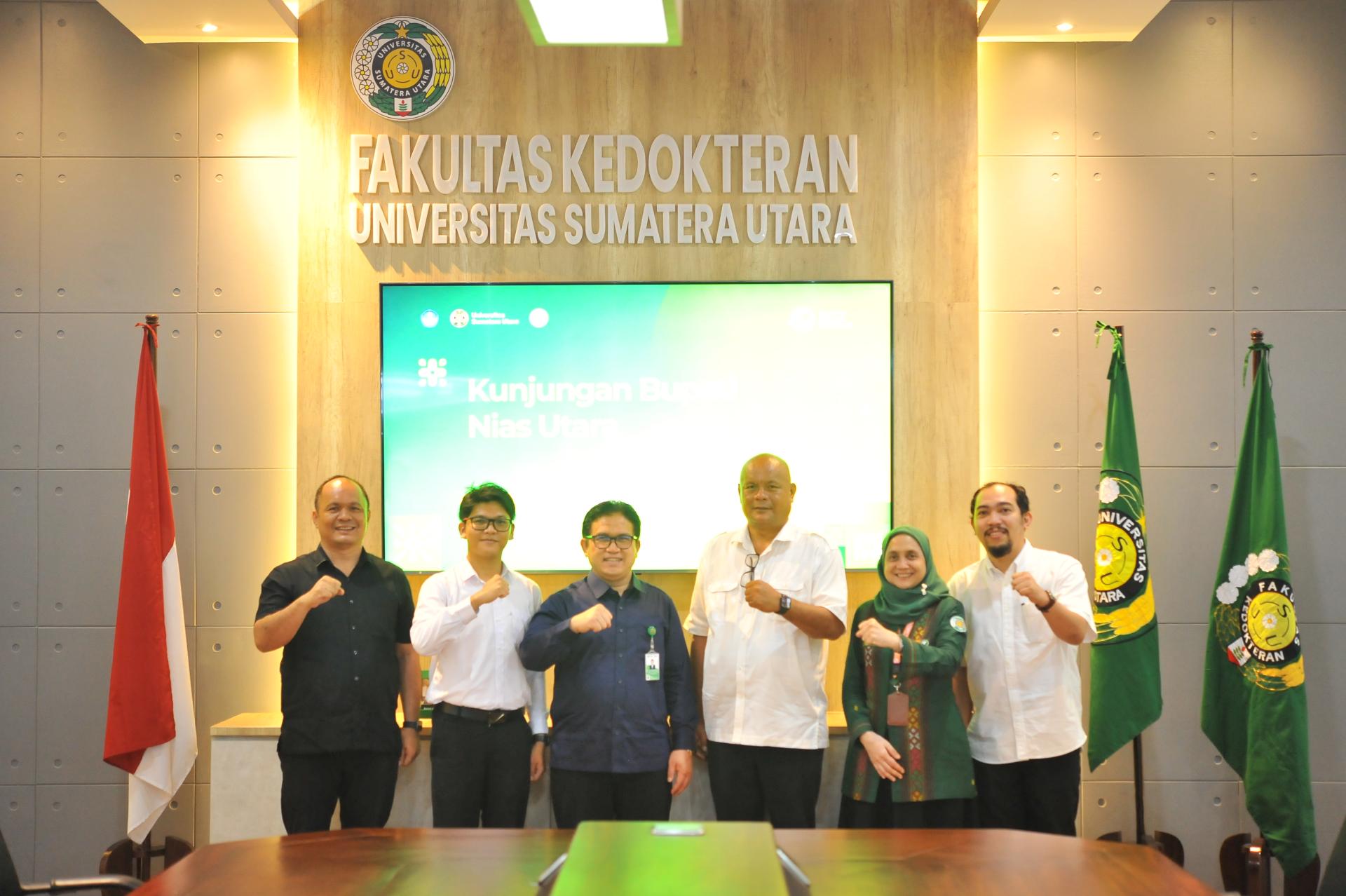
The meeting reaffirmed the commitment of both institutions to continue implementing the partnership initiated through the signing of the MoA at RSUD Tafaeri, North Nias, as part of their shared efforts to improve public health and develop a highly qualified healthcare workforce. This collaboration also supports the Sustainable Development Goals (SDGs), particularly SDG 3 (Good Health and Well-being) by improving access to quality healthcare services, and SDG 17 (Partnerships for the Goals) by strengthening collaboration between higher education institutions and local governments. As a continuation of the existing partnership, the meeting represents an important milestone in accelerating programs that promote a more equitable distribution of specialist healthcare services, particularly for communities in island and 3T regions.
As an institution that educates and produces specialist physicians, FK USU plays a vital role in supporting the equitable distribution of healthcare professionals across Indonesia's 3T regions by strengthening its networks in education, healthcare services, and community engagement. Through collaboration with local governments, the faculty aims to develop sustainable solutions that enhance healthcare quality while reinforcing referral systems in island communities.
The Regent of North Nias reaffirmed the local government's strong commitment to improving healthcare services for island communities that continue to experience shortages of specialist physicians.
"We hope this meeting serves as a concrete follow-up to the Memorandum of Agreement previously signed at RSUD Tafaeri, North Nias. We believe that our partnership with FK USU will accelerate the fulfillment of specialist physician needs, strengthen the capacity of regional healthcare services, and provide more equitable access to quality healthcare for all residents of North Nias," the Regent stated.
Through this strengthened partnership, FK USU and the Government of North Nias Regency are committed to delivering sustainable solutions for reinforcing the regional healthcare system. The collaboration is expected not only to increase the availability of specialist physicians but also to improve the overall quality of healthcare services in island communities, ensuring that residents have better access to comprehensive and high-quality medical care.