


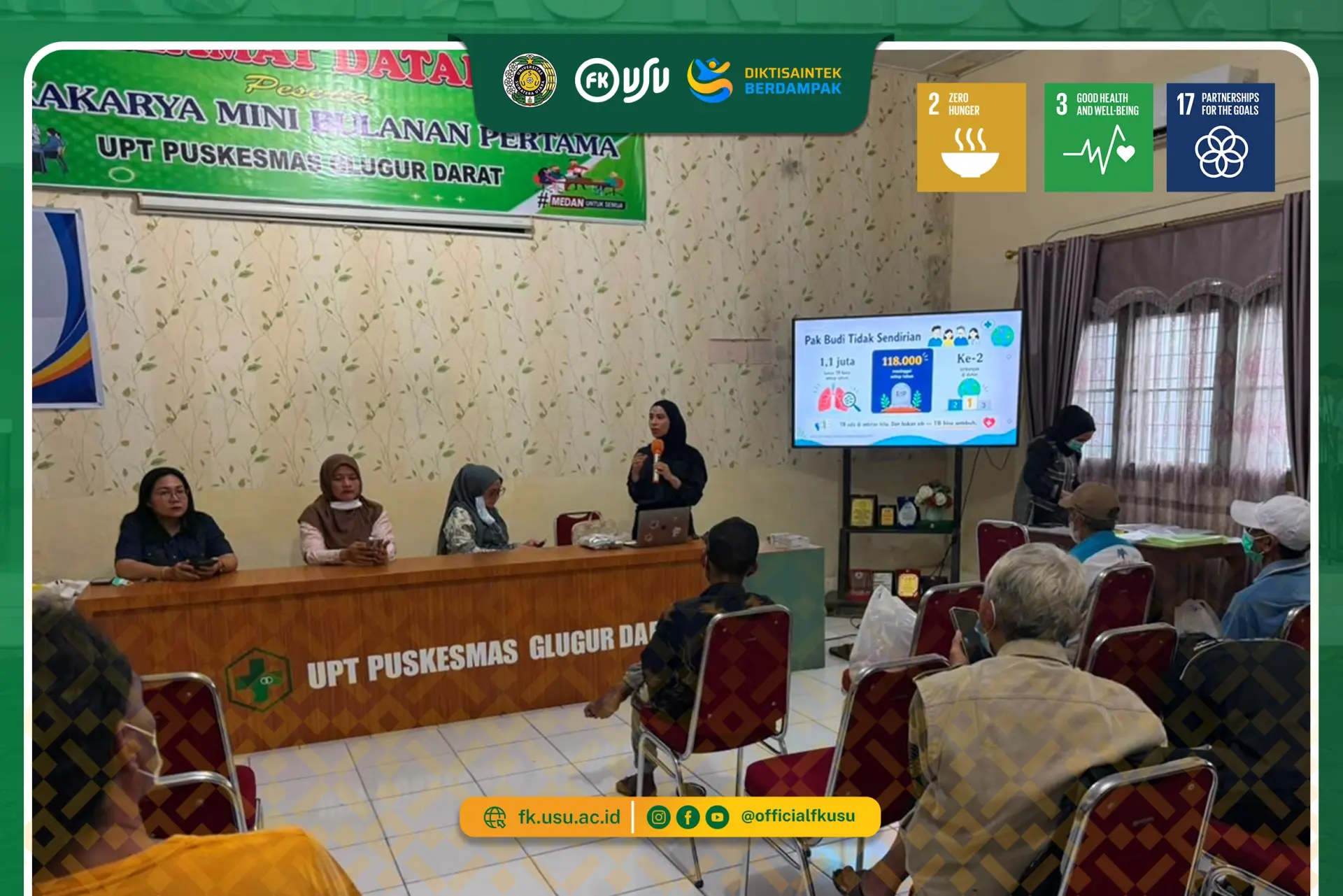
The Specialist Program in Clinical Nutrition of the Faculty of Medicine, Universitas Sumatera Utara (FK USU), held a nutrition education session for patients with pulmonary tuberculosis (TB) at Glugur Darat Community Health Center on Saturday, 1 August 2026.
The activity, held at Glugur Darat Community Health Center, 8 Jalan Pendidikan, Glugur Darat I, Medan Timur District, Medan, featured a session entitled “Snakehead Fish and Turmeric for Pulmonary TB Patients.” The education aimed to improve patients’ understanding of the importance of meeting their nutritional needs while undergoing pulmonary TB treatment.
Through health education and nutritional support, the activity also contributed to SDG 3: Good Health and Well-Being, particularly by promoting community health and strengthening tuberculosis control efforts through educational and sustainable healthcare services.
The activity began with remarks from the Head of Glugur Darat Community Health Center, dr. Sri Wirya Ningsih, M.Kes., and dr. Herlina Purba from the Cross-Cluster Division. Both welcomed the nutrition education session as an effort to improve patients’ understanding of the role of nutrition in supporting their health during treatment.
The educational materials were delivered by a lecturer from the Specialist Program in Clinical Nutrition of FK USU, Prof. Dr. dr. Dina Keumala Sari, M.Gizi., Sp.GK., Subsp.PK., together with Specialist Program in Clinical Nutrition student dr. Aprilia Kusuma Putri. Participants received information on the importance of consuming adequate, varied, and balanced meals while undergoing pulmonary TB treatment. Snakehead fish and turmeric were introduced as food ingredients that can be incorporated into daily meal planning to support patients’ nutritional needs.
Attention to adequate and nutritious food intake is also aligned with SDG 2: Zero Hunger, particularly in supporting improved nutrition among groups requiring special attention, including patients with infectious diseases. Snakehead fish and turmeric were presented as part of nutritional support, not as substitutes for anti-TB medication or treatment prescribed by healthcare professionals. Patients were encouraged to continue their treatment regularly and follow the advice of doctors and community health center staff.
In addition to the education session, participants underwent nutritional status assessments. The activity was conducted through collaboration among the Specialist Program in Clinical Nutrition of FK USU, Glugur Darat Community Health Center, and Prodia. This cross-institutional collaboration reflects SDG 17: Partnerships for the Goals by strengthening partnerships between higher education institutions, primary healthcare facilities, and health examination service providers to deliver more comprehensive care for pulmonary TB patients.
The nutritional assessments were conducted to provide an overview of each patient’s nutritional condition. Through these assessments, participants were expected to gain a better understanding of their health status and become more attentive to their nutritional needs throughout their treatment.
Through nutrition education, nutritional status assessments, and cross-institutional collaboration, the Specialist Program in Clinical Nutrition of FK USU reaffirmed its commitment to community service and to applying clinical nutrition knowledge in real-world settings to support the health and recovery of pulmonary TB patients.