


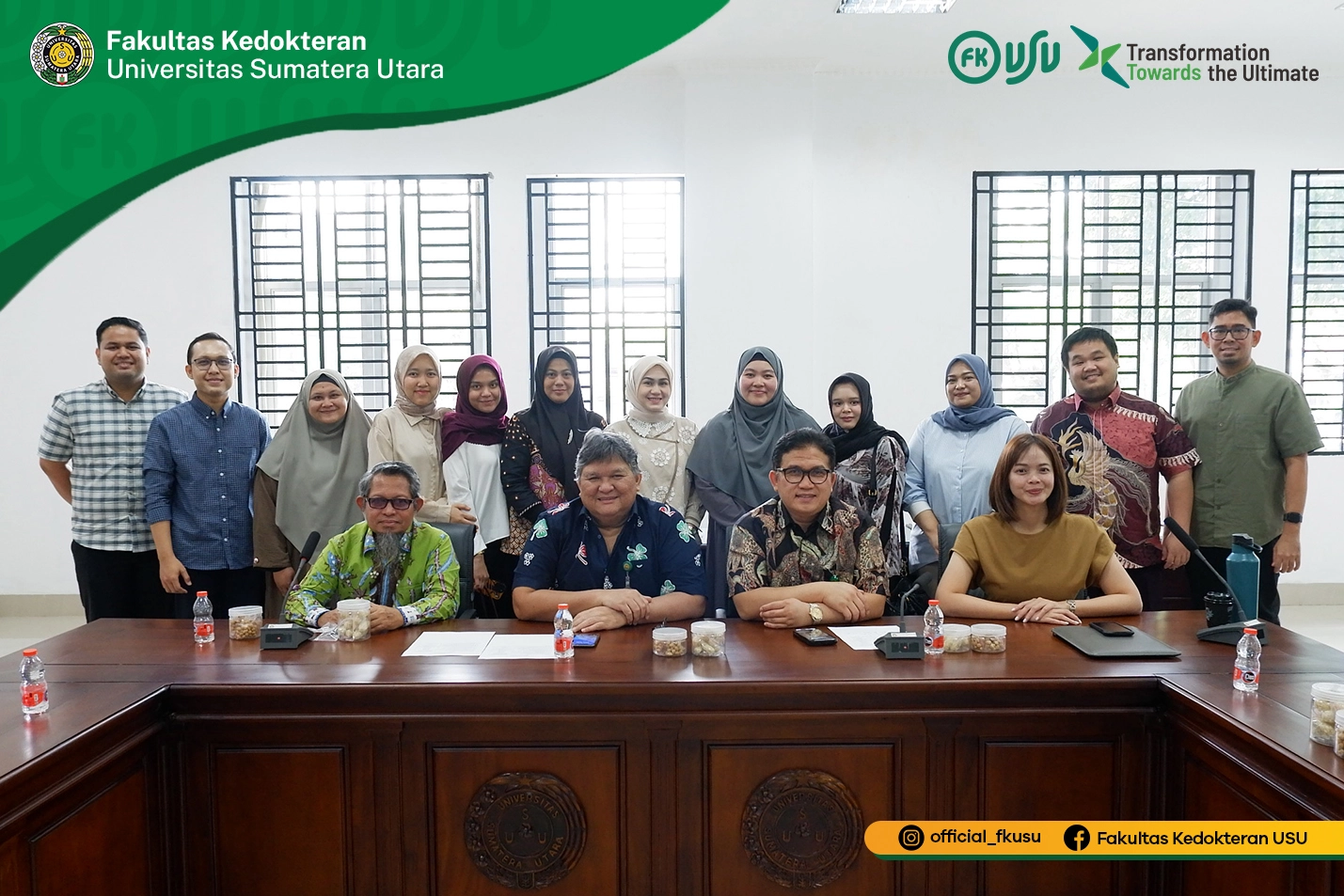
Wednesday, October 15, 2025 — The Faculty of Medicine, Universitas Sumatera Utara (USU), officially welcomed 13 new full-time lecturers from various medical specialties. Their arrival further strengthens the faculty’s academic capacity in carrying out the three pillars of higher education: education, research, and community service.
The addition of these academic staff members aligns with the United Nations Sustainable Development Goals (SDGs), particularly SDG 4: Quality Education and SDG 3: Good Health and Well-being. By strengthening its academic workforce, the USU Faculty of Medicine aims to improve the quality of medical education, enhance the competencies of future physicians and healthcare professionals, and contribute to better healthcare services. This initiative also reflects the role of higher education institutions in building inclusive, high-quality, and sustainable education and healthcare systems.
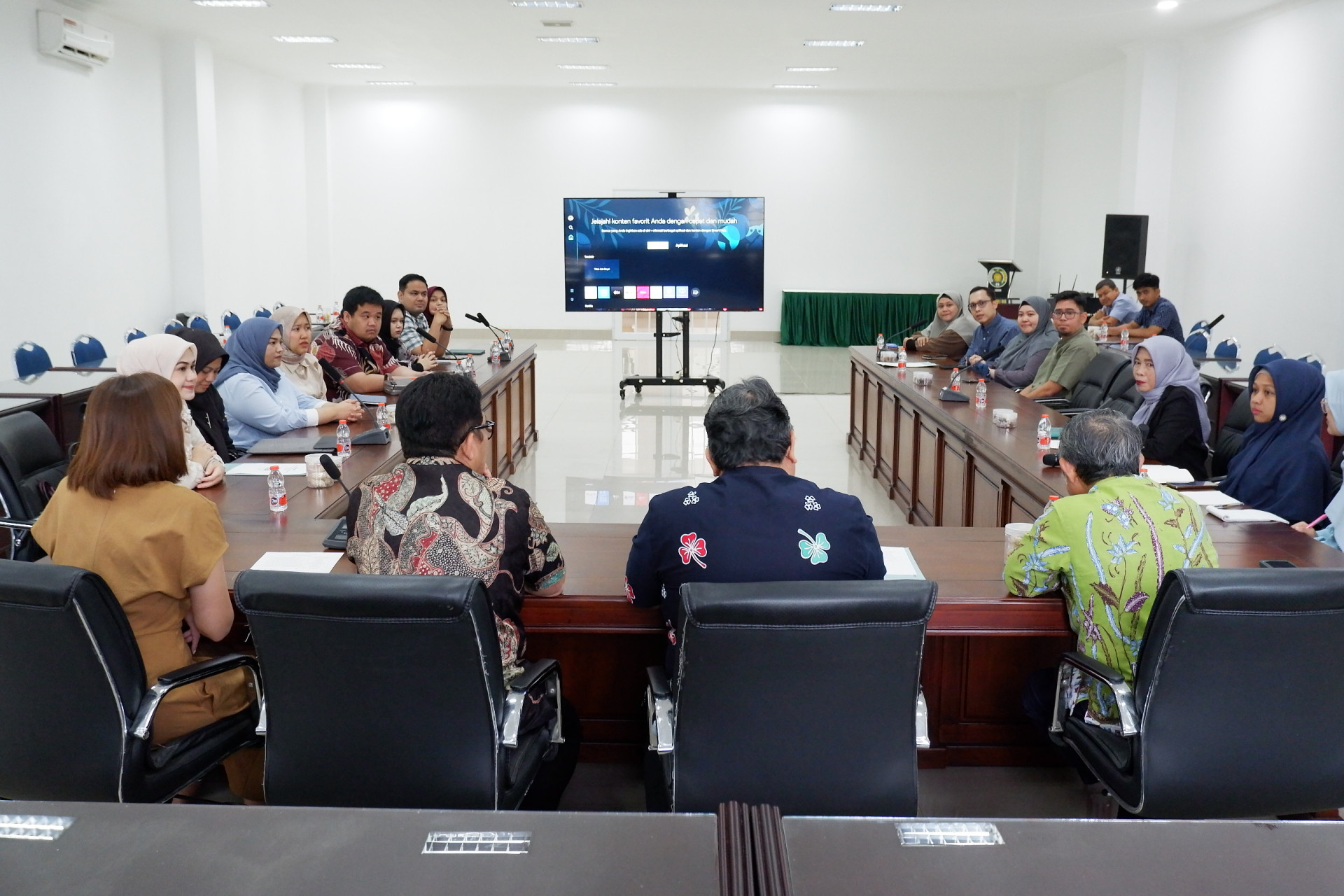
During the welcoming ceremony held in the first-floor meeting room of the USU Faculty of Medicine, the Dean, Prof. Dr. dr. Aldy Safruddin Rambe, Sp.S(K), expressed his gratitude and pride in welcoming the new lecturers to the USU Faculty of Medicine community.
“Welcome to all our new lecturers. The USU Faculty of Medicine continues to develop into an excellent institution with global competitiveness. We hope that your presence will further strengthen our commitment to providing high-quality medical education that upholds integrity and places humanity at its core,” Prof. Aldy stated in his remarks.
Meanwhile, Vice Dean I, Dr. dr. Delyuzar, M.Ked(PA)., Sp.PA(K), emphasized the importance of the new lecturers’ readiness to adapt to the academic system and competency-based curriculum implemented at the USU Faculty of Medicine.
“We hope that our new lecturers will quickly integrate into teaching and learning activities and actively contribute to curriculum development and innovative, technology-based teaching methods,” he said.
The development of competency-based curricula and the use of educational technology support SDG 4, particularly Target 4.4, which emphasizes increasing relevant technical and professional skills. Through adaptive, innovative, and healthcare-oriented learning processes, the USU Faculty of Medicine aims to produce competent and professional graduates who are prepared to meet the evolving demands of medical science and technology.
Vice Dean II, Dr. dr. Muara P. Lubis, M.Ked(OG)., Sp.OG(K), emphasized the importance of prioritizing the Undergraduate Medical Program and the Medical Profession Program, as these two educational stages form the fundamental foundation for developing a physician’s competencies. He explained that undergraduate and professional medical education represent the initial core stages that determine the quality of graduates before they proceed to advanced education, including specialist training, master’s degrees, and doctoral programs.
“When the foundation is strong, the subsequent stages of education can be developed more effectively. Therefore, our focus must be directed toward strengthening students’ academic foundations and professionalism from the undergraduate and professional medical education stages,” he stated.
Strengthening undergraduate and professional medical education also contributes to SDG 3 and SDG 4 by preparing future physicians with strong clinical competencies, a commitment to professional ethics, and the ability to deliver safe, high-quality healthcare. A solid foundation in medical education is expected to help develop healthcare professionals who can respond to public health challenges and contribute to improving quality of life.
Meanwhile, Vice Dean III, dr. Inke Nadia Diniyanti Lubis, PGDip PID., FAAET., M.Ked(Ped)., Sp.A., Ph.D., highlighted the importance of improving the quality and quantity of activities across the three pillars of higher education, particularly research, community service, and academic collaboration. These efforts are expected to contribute to improving the faculty’s standing in the QS World University Rankings and strengthen the university’s progress toward achieving World-Class University (WCU) status.
Strengthening research and academic innovation also aligns with SDG 9: Industry, Innovation and Infrastructure, particularly in promoting scientific advancement, innovation, and research capacity. Through high-quality research, scientific publications, and the application of research findings to address healthcare challenges, the USU Faculty of Medicine aims to contribute to medical innovation and strengthen a sustainable research ecosystem.
She also reminded the new lecturers that their responsibilities extend beyond teaching and learning activities. Lecturers are expected to conduct research at least once a year, participate in community service activities, and publish at least two scientific papers annually.
“As lecturers, we must play an active role not only in the classroom but also in advancing scientific knowledge and making meaningful contributions to society through research and scientific publications,” she remarked.
The implementation of the three pillars of higher education also supports SDG 17: Partnerships for the Goals, particularly through stronger academic collaboration, inter-institutional research, and partnerships with hospitals, research institutions, government agencies, and communities. These collaborations are expected to broaden the impact of research findings, improve the quality of community service, and strengthen the USU Faculty of Medicine’s contribution to sustainable healthcare development.
With the addition of these 13 new lecturers, the USU Faculty of Medicine further strengthens its position as one of Indonesia’s oldest and leading medical faculties, remaining committed to producing outstanding, ethical, and highly competent medical professionals and scientists who make meaningful contributions to society.
Through strengthening human resources, improving educational quality, advancing research and innovation, and expanding academic collaboration, the USU Faculty of Medicine reaffirms its commitment to supporting the achievement of the SDGs. The arrival of these 13 new full-time lecturers is expected not only to enhance the faculty’s capacity to fulfill the three pillars of higher education but also to contribute meaningfully to the advancement of medical education, healthcare services, and sustainable development at the local, national, and global levels.