


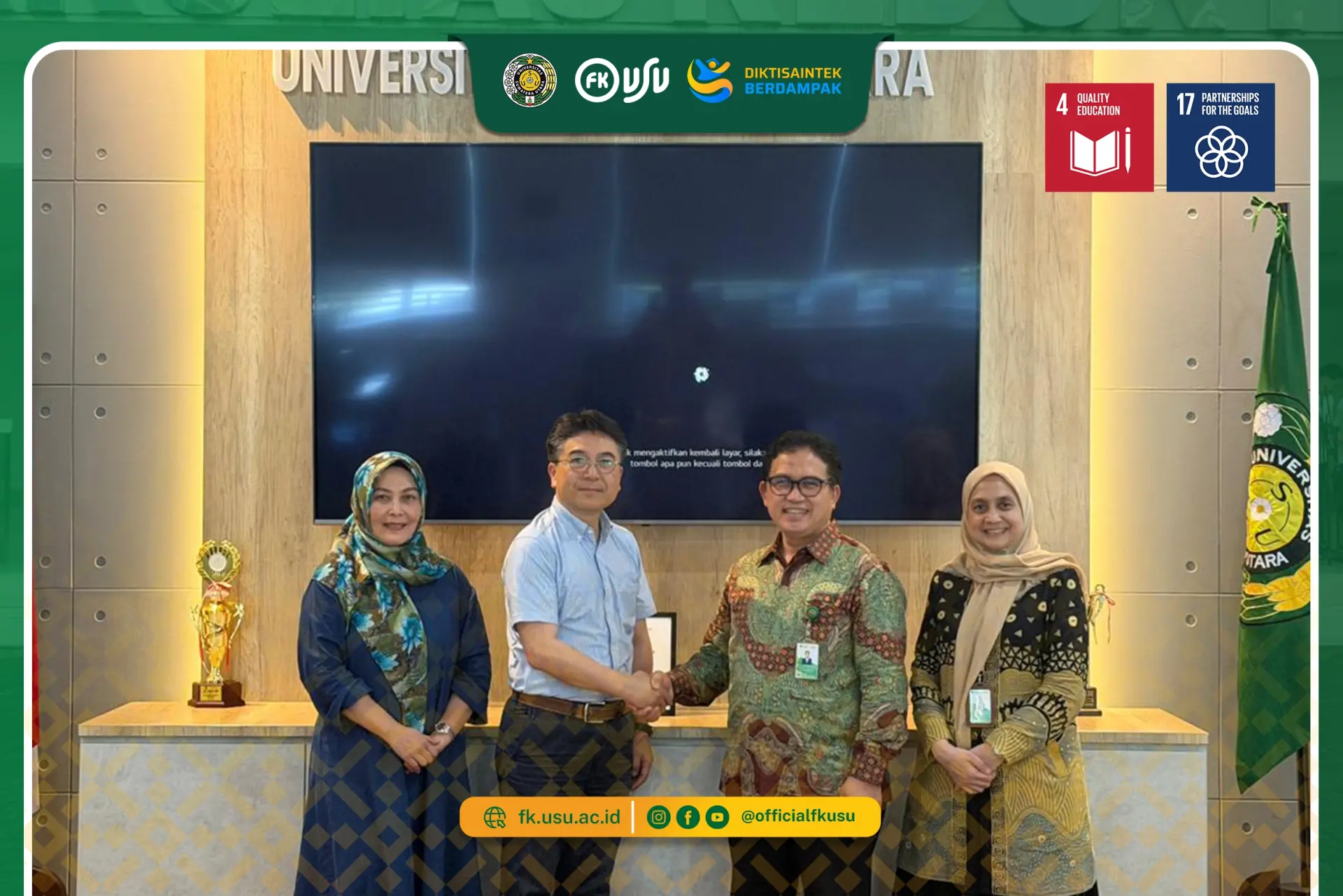
The Faculty of Medicine of Universitas Sumatera Utara (FK USU) has reaffirmed its commitment to strengthening international academic and research networks through the visit of Prof. Yasuhito Sako from Asahikawa Medical School, Japan, held from July 1–10, 2026. The visit forms part of the long-standing academic partnership between the two institutions in advancing tropical disease research, enhancing human resource capacity, and producing internationally recognized scientific publications.
Through this initiative, FK USU also reinforces its contribution to the Sustainable Development Goals (SDGs), particularly SDG 3 (Good Health and Well-being), by strengthening research on tropical diseases such as taeniasis, thereby supporting evidence-based efforts to improve public health.
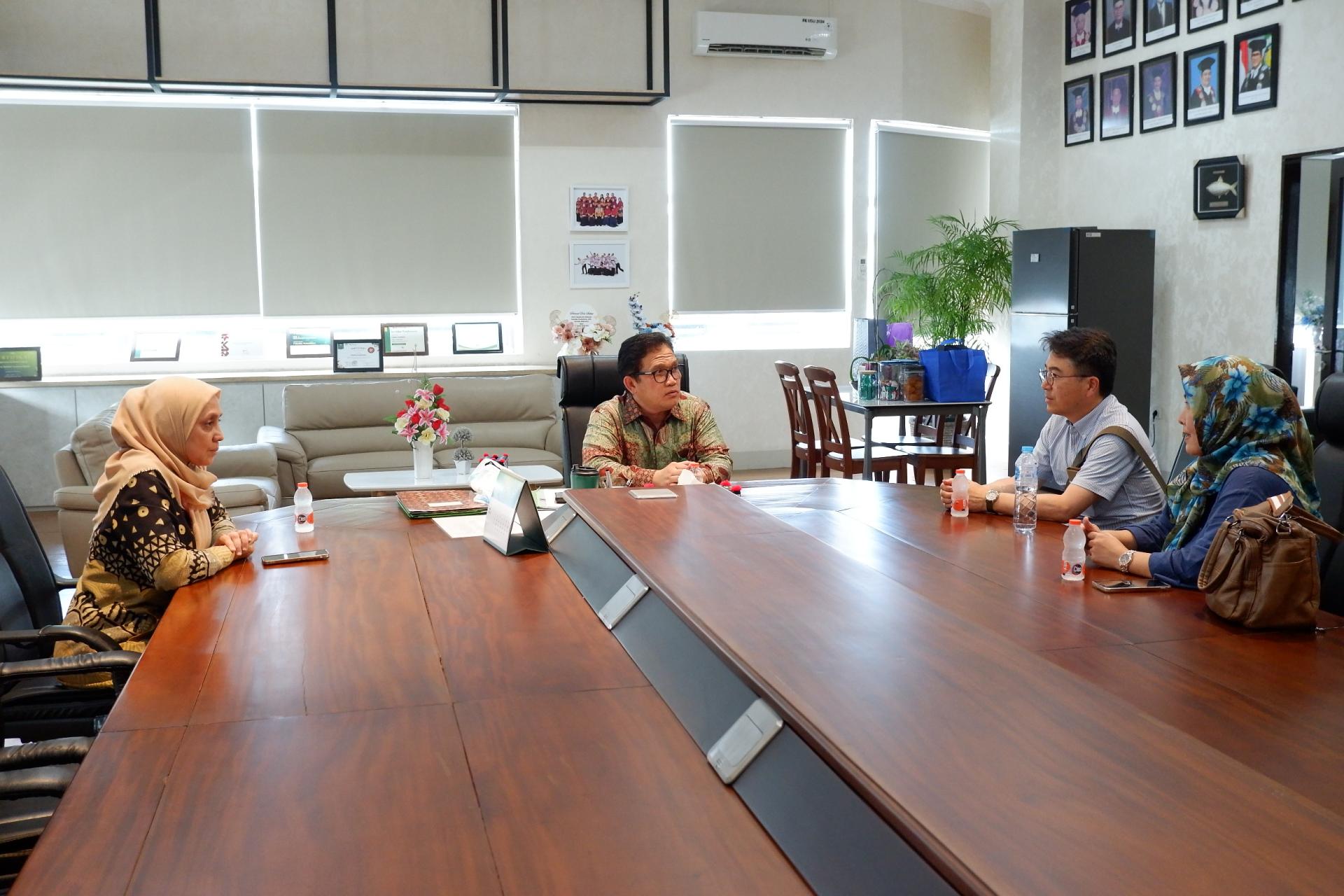
The collaboration between FK USU and Asahikawa Medical School also represents a concrete implementation of SDG 17 (Partnerships for the Goals) through the development of international partnerships in education, research, and innovation. This synergy is expected not only to generate high-impact research and internationally reputable scientific publications but also to create sustainable collaborative opportunities that contribute to scientific advancement, improve the quality of medical education, and address health challenges at both the national and global levels.
During his visit to FK USU, Prof. Yasuhito Sako carried out a series of academic and research activities involving faculty members, master's and doctoral students, and researchers from the Faculty of Medicine. One of the primary activities was a field study on taeniasis conducted in Simalungun Regency, North Sumatra.
The research was undertaken in collaboration with the FK USU research team led by dr. Hemma Yulfi, DAP&E., M.Med.Ed., a faculty member of the Department of Parasitology at FK USU, who has long collaborated with Prof. Sako on studies of parasitic diseases. The collaboration aims to strengthen epidemiological data on parasitic diseases in Indonesia while supporting evidence-based disease control initiatives.
In addition to the field research, Prof. Sako conducted molecular diagnostic training for master's (M.Sc.) and doctoral (Ph.D.) students. The training focused on enhancing participants' competencies in applying molecular diagnostic techniques, which have become an essential component of biomedical and infectious disease research.
Beyond laboratory training, Prof. Sako also mentored FK USU lecturers and students in preparing scientific manuscripts for publication in internationally reputable journals. The mentoring included discussions on research methodology, scientific writing, publication strategies, and improving manuscript quality to meet international publishing standards.
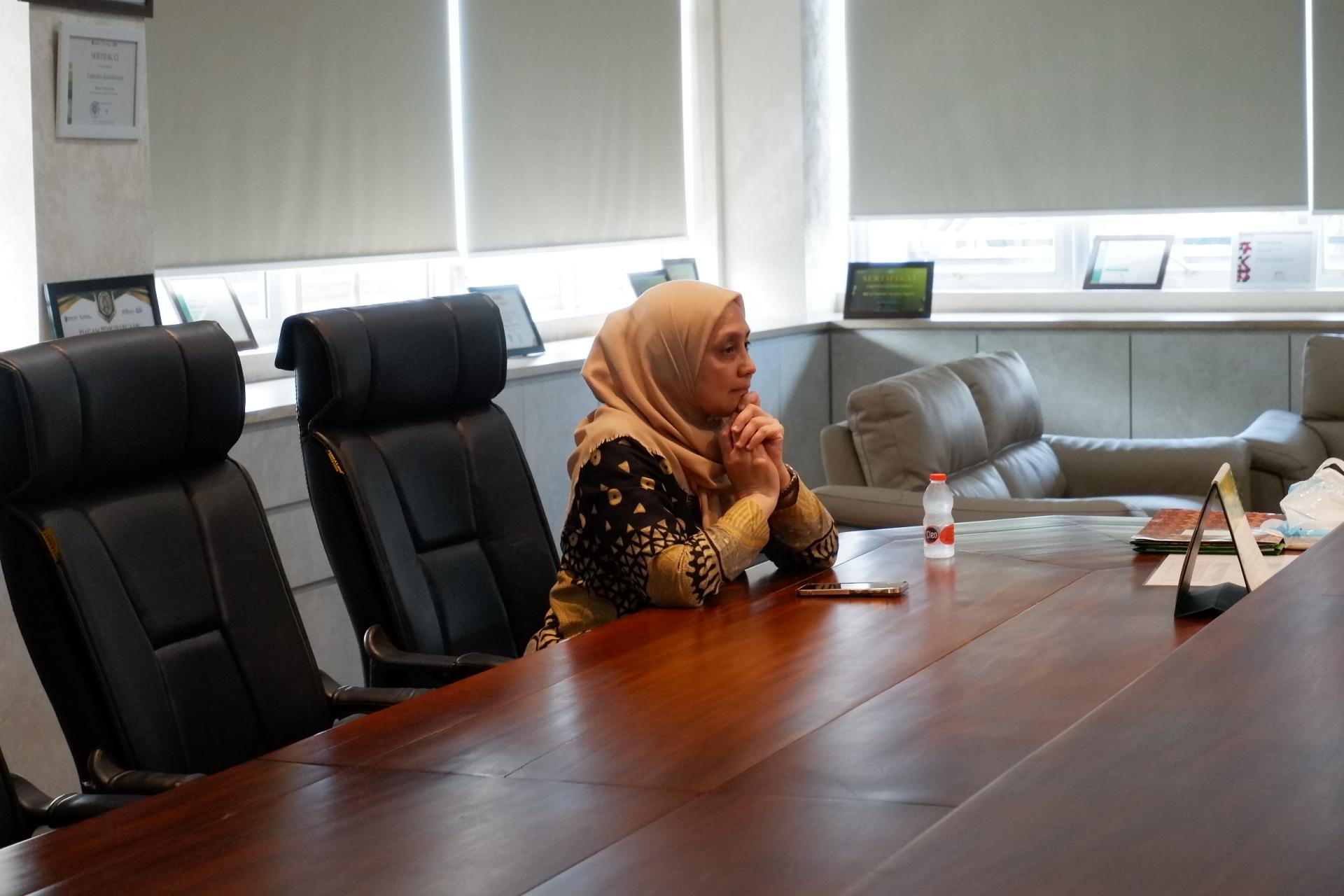
The Vice Dean for Research, Community Service, Cooperation, and Internationalization of FK USU, Prof. Dr. dr. Dina Keumala Sari, M.Gizi., Sp.GK., Subsp.PK., stated that the visit represents one of the faculty's strategic efforts to strengthen its research culture while enhancing its global academic competitiveness.
"Prof. Yasuhito Sako's visit has provided tremendous added value to the academic community of FK USU. It goes beyond knowledge and technology transfer by offering direct mentoring in research and the preparation of international scientific publications. We hope this collaboration will produce research that benefits society while enhancing the quality of publications and the international academic reputation of FK USU," said Prof. Dina.
Meanwhile, dr. Hemma Yulfi, DAP&E., M.Med.Ed., explained that the research collaboration established over the past several years with Prof. Yasuhito Sako has significantly strengthened research capacity in parasitology, particularly in the study of tropical diseases that continue to pose major public health challenges in Indonesia.
"This partnership has not only strengthened research on taeniasis but has also become an important platform for transferring knowledge and technology to FK USU lecturers and students. We hope this collaboration will continue, leading to research innovations and scientific publications that make meaningful contributions to scientific advancement and the improvement of public health," she said.
Prof. Dina further emphasized that international collaboration remains one of the key pillars supporting FK USU's vision of becoming an excellent, innovative, and globally competitive medical education institution.
Through this series of activities, FK USU has not only strengthened its research and educational capacity but also expanded opportunities for broader collaboration in scientific development, academic exchange, and multidisciplinary research aimed at addressing a wide range of health challenges, particularly tropical diseases that continue to affect Indonesia.