


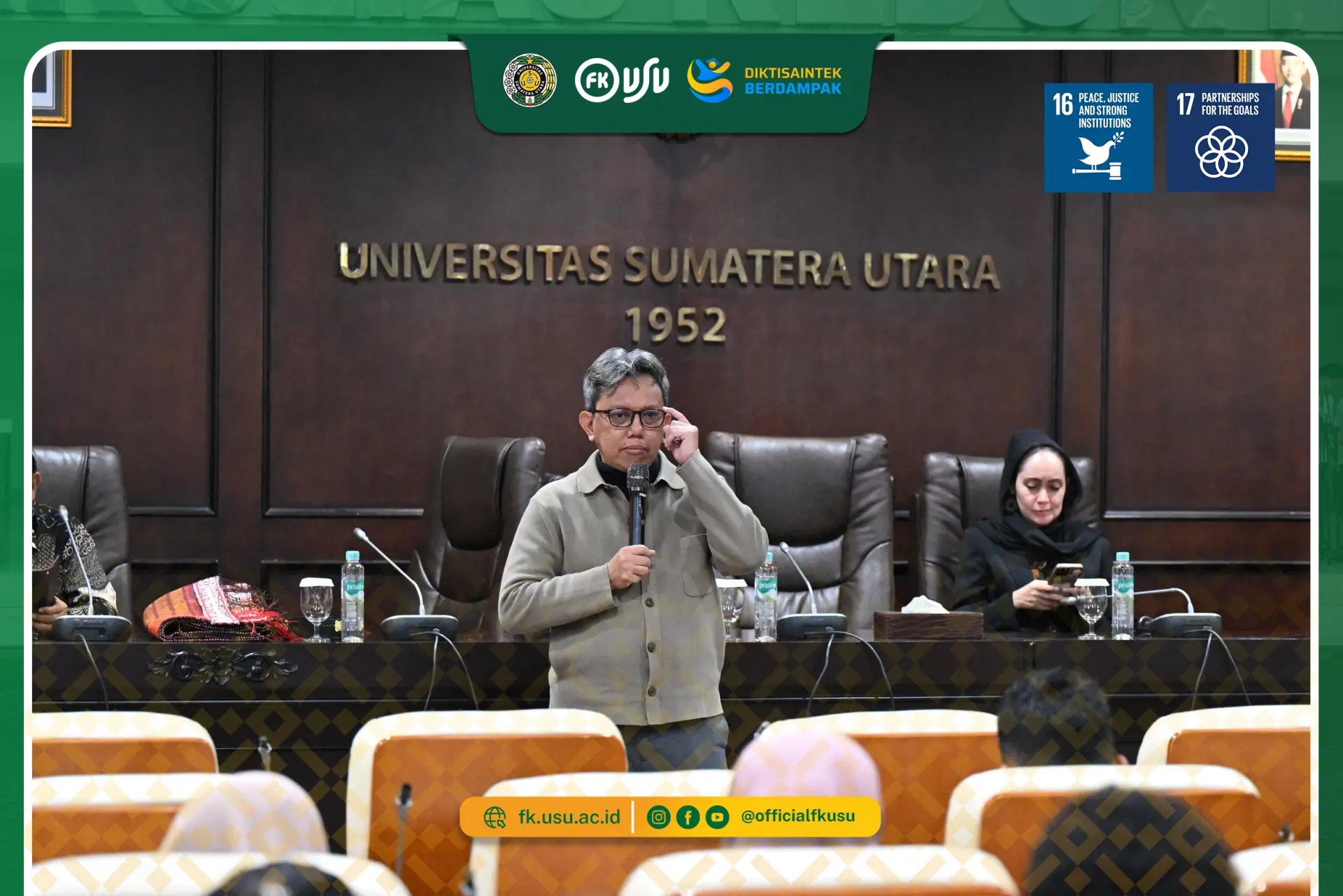
The Faculty of Medicine, Universitas Sumatera Utara (FK USU), continues to strengthen its understanding of the importance of crisis communication management in higher education institutions. This topic was one of the main focuses of the Technical Guidance on Crisis Communication Management in Higher Education, held in the Academic Senate Room on the 3rd Floor of the USU Rectorate Bureau Building on Thursday, August 6, 2026. The session featured Asmono Wikan, S.Sos., M.I.Kom., Founder and CEO of PR INDONESIA Group and a media, public relations, and communications practitioner, as the speaker.
In his presentation, Asmono explained the differences between issues, risks, and crises that higher education institutions need to understand. An issue is something that is developing and has the potential to affect an organization, while a risk refers to the possibility of losses that need to be anticipated and mitigated. A crisis, meanwhile, is an event that has occurred and caused serious impacts, requiring a rapid response. Therefore, effective issue management is an important step in reducing risks and preventing a problem from escalating into a crisis that could affect an institution’s reputation and public trust.
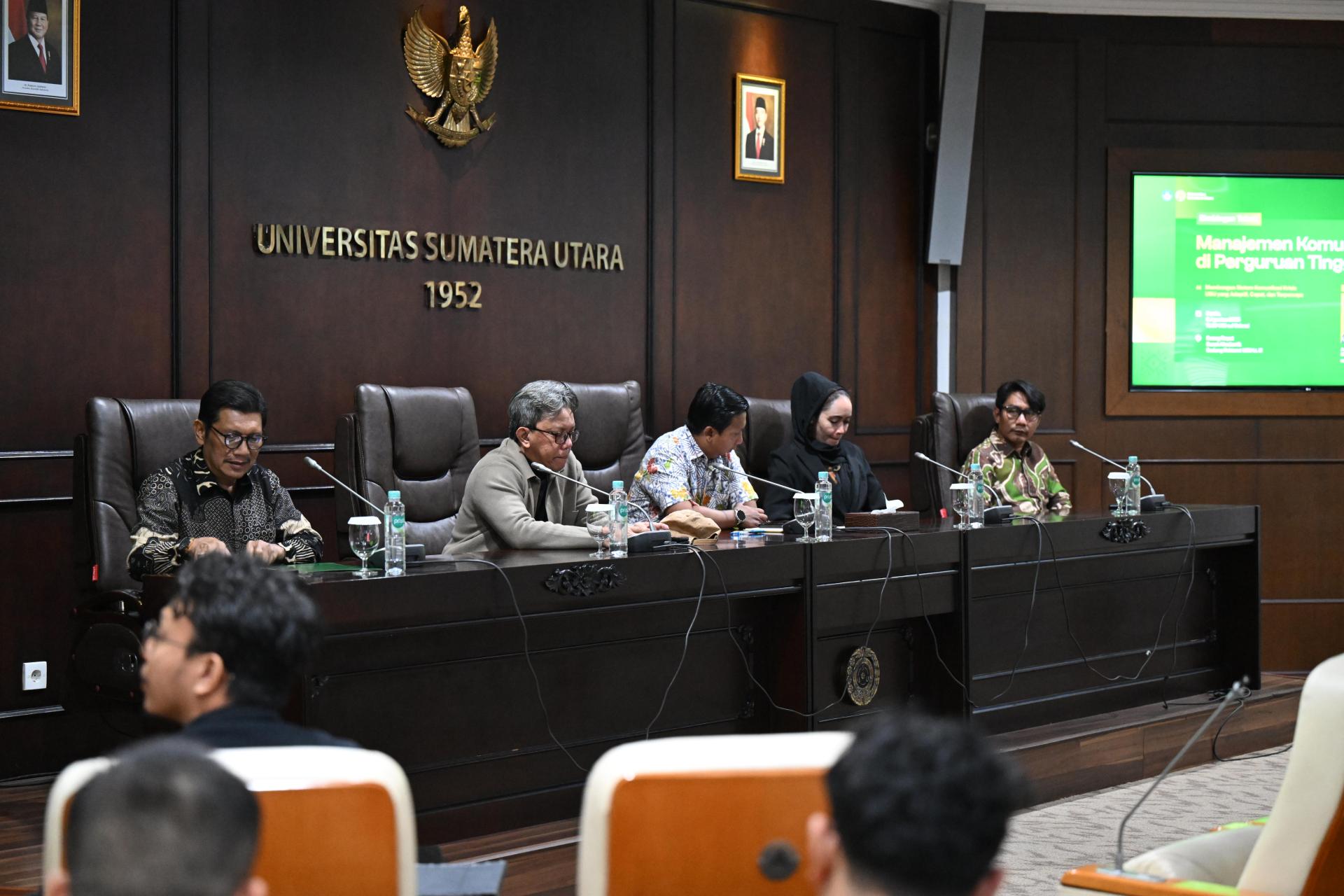
The session also highlighted the changing communication landscape in the digital era, which requires universities to respond to information more quickly. The development of social media enables students and alumni to act as opinion leaders, while public opinion can form before an investigation is completed. This situation has narrowed the concept of the “golden hour” in crisis management to “golden minutes,” making the speed of response an increasingly important factor in maintaining public trust.
Strengthening crisis communication governance is aligned with SDG 16: Peace, Justice and Strong Institutions, particularly in promoting effective, accountable, and responsive institutions. In responding to a crisis, the session emphasized the importance of acknowledging the situation promptly, prioritizing empathy before procedures, conducting credible audits or investigations, implementing systemic reforms, and developing a new narrative to help restore public trust.
Beyond governance, crisis communication requires synergy among university leaders, public relations teams, the academic community, and other stakeholders. Such collaboration is aligned with SDG 17: Partnerships for the Goals, which emphasizes the importance of partnerships in achieving shared objectives.
Through this activity, FK USU continues to encourage the development of the academic community’s capacity to understand and navigate the dynamics of communication in the digital era. Strengthening crisis management capabilities is expected to help the institution respond to various issues swiftly, appropriately, empathetically, and based on credible information, while maintaining its reputation and public trust.