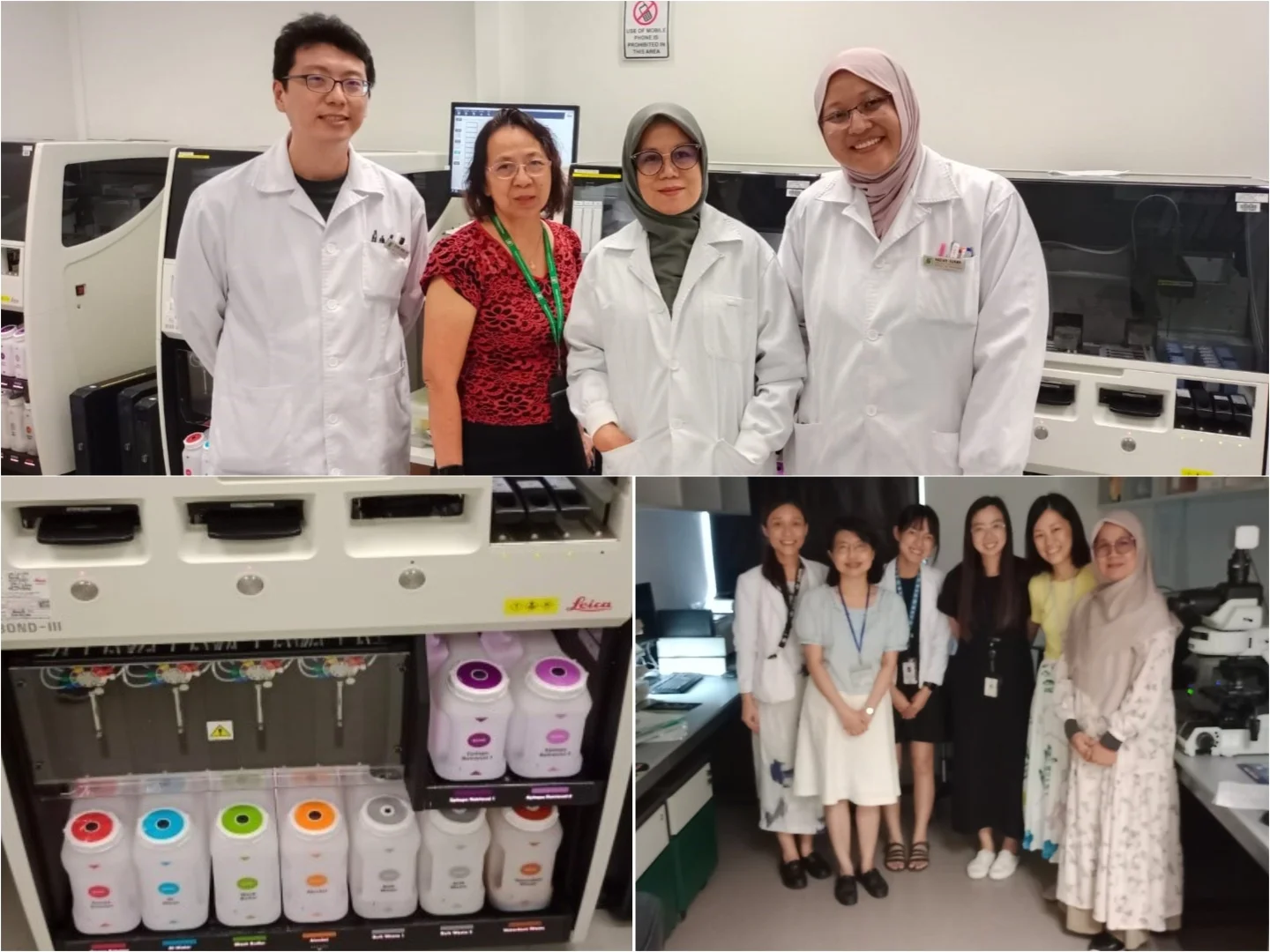
On July 15-19, 2024, a lecturer, dr. Devi Nafilah Yuzar, M. Ked (PA) Sp. PA from the Department of Anatomical Pathology and two laboratory analysts, Lavarina Winda, S.Si, M.Si from the Molecular Biology Laboratory and Nafiah, S. Si., M. Si from the Anatomical Pathology Laboratory, Faculty of Medicine, Universitas Sumatera Utara conducted observation activities at the Academia laboratory, Singapore General Hospital, in Singapore. This is part of a collaboration between the Faculty of Medicine, Universitas Sumatera Utara and the SingHealth Duke-NUS Global Health Institute.
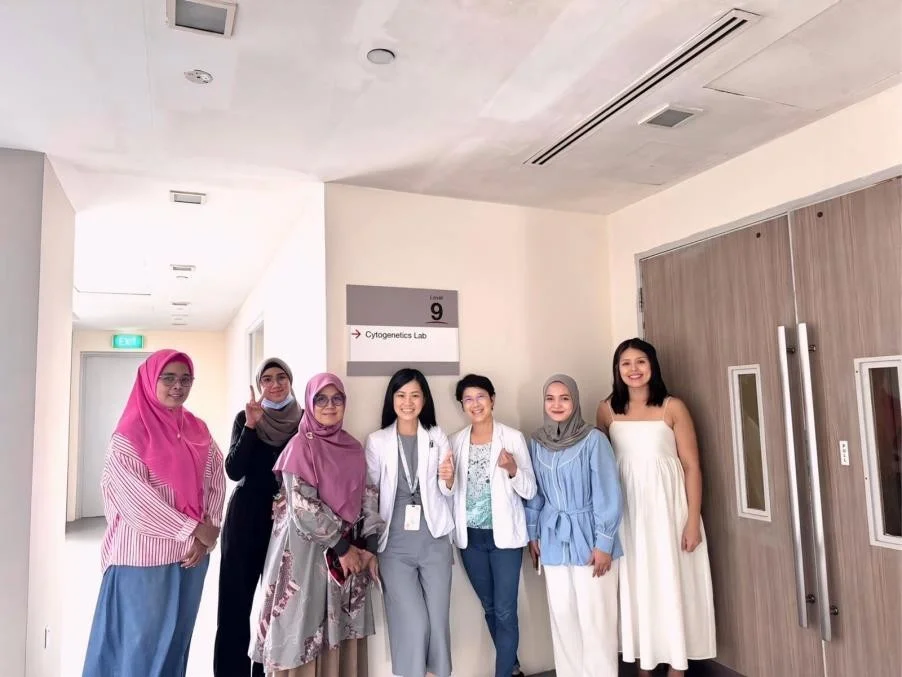
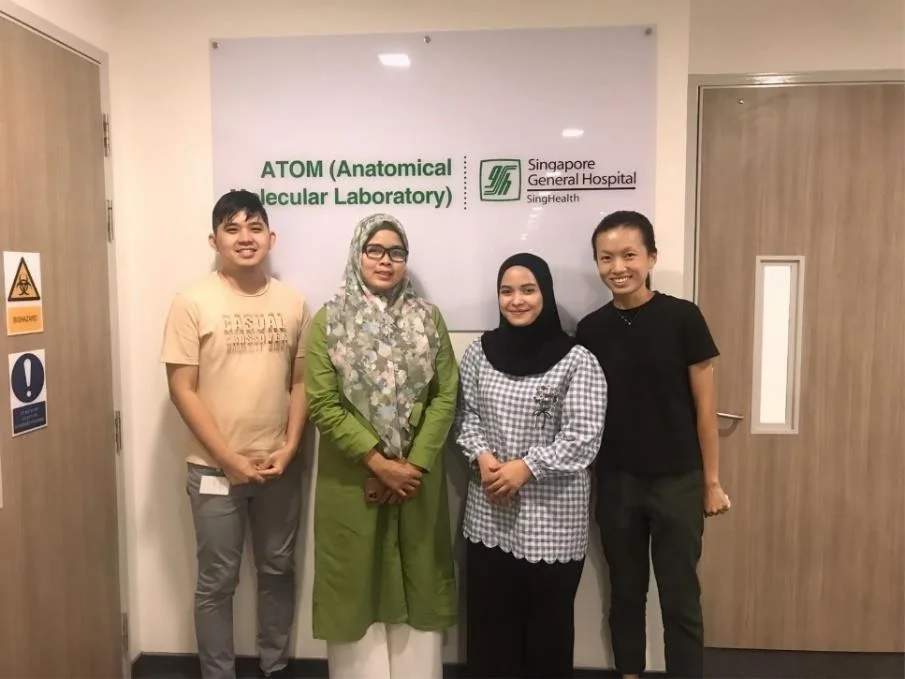
During their activities there, Dr. Devi and Lavarina Winda conducted observation activities at the Anatomical Molecular Laboratory (ATOM) under the supervision of Dr. Lim Kok Hing and Ms. Eileen Chen, while Nafiah conducted observation activities at the Cytogenetics Laboratory under the supervision of Dr. Alvin Lim and also at the Anatomical Pathology Immunohistochemistry Laboratory under the supervision of Dr. Lim Kok Hing.
The activities include reviewing the protocol and observation of all steps for the Next Generation Sequencing (NGS). During the observation, the ATOM team demonstrated and explained the steps related to the next-generation sequencing technique which aims to identify genetic changes found in lung cancer and colon cancer in the ATOM laboratory. This processes includes steps from DNA and RNA extraction techniques from formalin-fixed paraffin-embedded tissue (FFPE) and fresh lung cancer and colon cancer tissues. The Amoy Dx team from the SDGHI also discussed RT-PCR examinations for lung cancer including procedures, objectives, and genes that are often examined for lung cancer, such as EGFR, ALK, KRAS, BRAF, NTRK1, NTRK2, NTRK3, ROS1, MET, and RET.
The final observation was with the bioinformatics team regarding the analysis of sequencing data conducted at Academia. Through this observation, the USU Medical Faculty team gained insight into what information was obtained from the results of NGS examinations in cases of malignancy, especially lung cancer. This observation activity at the ATOM laboratory provided experience and knowledge regarding NGS and hopefully in the future at the USU Medical Faculty, NGS examinations, especially in the field of oncology, both for diagnostic and research purposes can be applied.
During the same visit, Nafiah conducted a FISH (Florescence in situ hybridization) observation activity to detect chromosomal abnormalities associated with cancer. During the observation, the Cytogenetics team explained the working procedure for making FISH preparations and introduced the tools used for FISH examination using samples from the formalin-fixed paraffin-embedded tissue (FFPE). The target gene was ROS1 gene which is common in several types of cancer, such as Non Small Cell Lung Carcinoma (NSCLC).
Nafiah also observed the preparation process to interpretation using an immunofluorescence microscope guided by Ms. Yit Jun. Furthermore, to improve the laboratory safety knowledge, Nafiah also attended a laboratory safety briefing guided by Ms. Kee. Nafiah was taken around the cytogenetics laboratory while showing the laboratory safety equipment that was already very complete and up to standard.
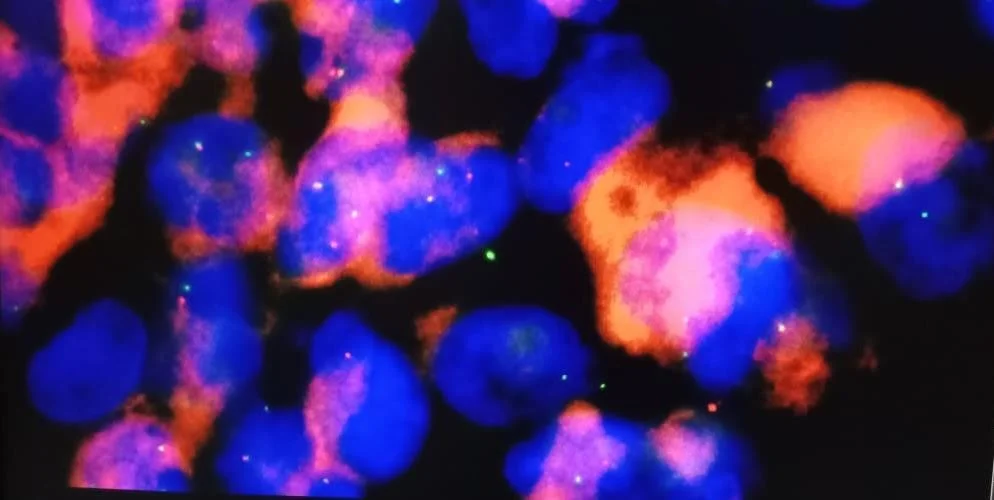
ROS1 examination using FISH
Additional activites at the Cytogenetics Lab was the observation on tumor cell cultures guided by Ms. Syarifah and observations at the Anatomic Pathology Immunohistochemistry Laboratory guided by Ms. Nadiah. Immunohistochemistry examinations at the Anatomic Pathology Immunohistochemistry Laboratory use a full automatic BON III tool, the same as the tool in the USU Medical Faculty Integrated Laboratory located at USU Hospital. The observation activities carried out provided a lot of valuable experience and upgraded scientific knowledge that can be applied and in the future can be developed at the Faculty of Medicine, Universitas Sumatera Utara.